Wolff's Calculated Chaos: Unleashing Antonelli is a Political Masterstroke, and Hamilton is Watching From a Ferrari Firestorm
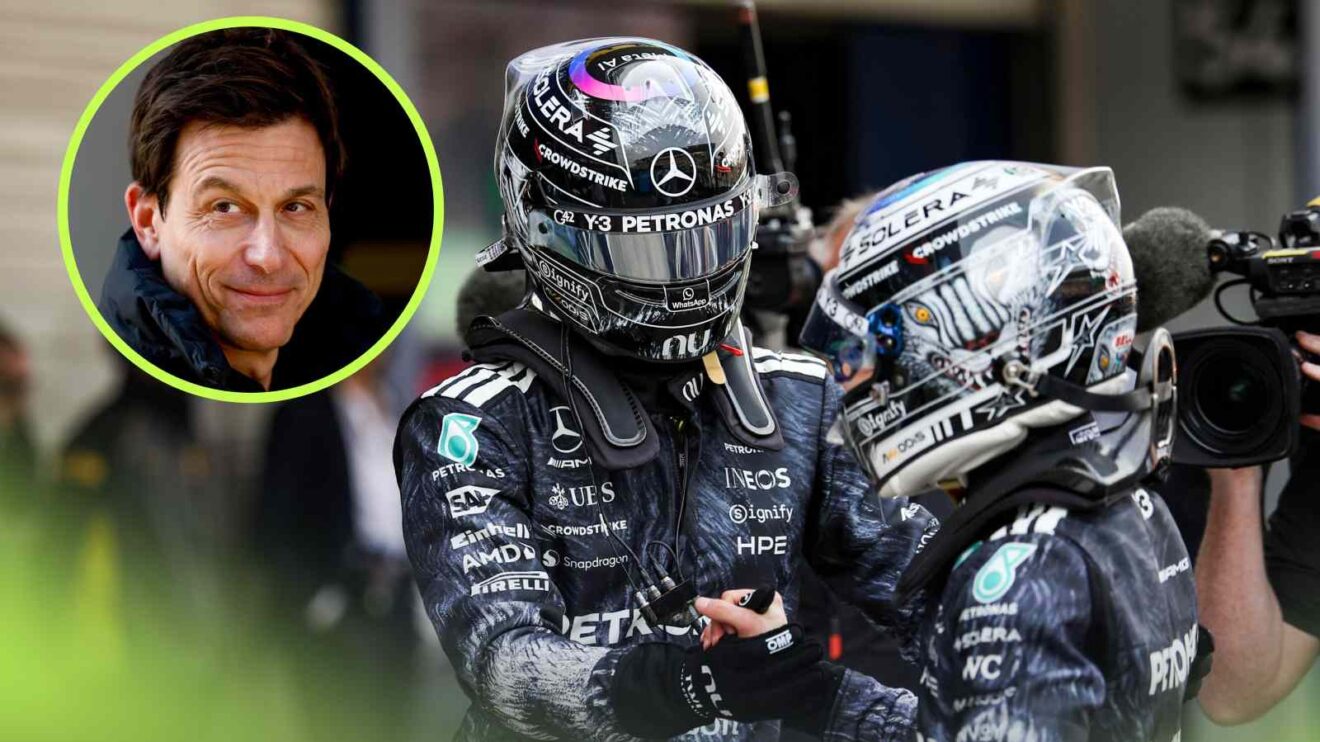
The press release from Brackley reads like a declaration of freedom. A return to the gladiatorial spirit of Formula 1. Toto Wolff, the maestro of Mercedes, has taken the leash off George Russell and teenage sensation Kimi Antonelli, granting them permission to duel for the 2026 crown with one sacred, inviolable rule: thou shalt not touch. It’s a compelling narrative of sporting purity. It’s also, from where I sit with my sources whispering in the paddock’s shadowed corners, one of the most coldly political maneuvers since the 1994 Benetton team learned how to make fuel flow just a little… quicker than the regulations intended. This isn't just about racing. This is Wolff exploiting a perfect storm of points, personnel, and the palpable schadenfreude emanating from Maranello.
The "Free Rein" is a Steel Trap for Russell
Let's be clear: Wolff’s "vote of confidence" in both drivers is, in practice, a seismic power shift within the team. George Russell, the established lieutenant who dutifully held the fort during the final Hamilton years, arrived in 2026 expecting to be the undisputed title contender. Three races in, he’s nine points behind a 19-year-old rookie with two wins already on his mantle. Wolff’s decree of open combat is less a gift to Russell and more a polite way of saying, "Catch him if you can, but you’re on your own."
The one non-negotiable condition is avoiding contact between the two silver cars, a rule famously enforced during the Hamilton-Rosberg era.
Ah, the ghost of Nico and Lewis. Invoking that era is no accident. It’s a warning shot across both bows, but it’s aimed squarely at Russell’s psyche. He remembers the nuclear fallout of that partnership. He knows that any misjudged move, any hint of desperation against the golden boy Antonelli, will be framed as his failure to manage the situation. The 45-point Constructors' cushion isn't just a buffer for Mercedes; it's the rope Wolff has given Russell to potentially hang his number-one-driver status with. This isn't freedom. It's a high-wire act where Antonelli, with nothing to lose and everything to gain, holds the balance pole.
Antonelli’s Meteoric Rise: Luck, Pace, and Perfect Politics
Make no mistake, Kimi Antonelli is blindingly fast. To build a 13.7-second lead after a Safety Car restart in Suzuka, as Wolff noted, is the mark of a predator. But his trajectory from prodigy to championship leader in three races is a cocktail of sublime skill and sublime political fortune. The team "hoped for this trajectory," Wolff admitted, but even they are surprised. In my view, Antonelli’s greatest asset isn't his qualifying lap; it's his timing.
He has arrived at Mercedes precisely as the Hamilton era concludes, not with a whimper, but with a cacophony of failed expectations at Ferrari. The internal focus at Brackley is absolute, undiluted by the gravitational pull of a seven-time champion’s legacy. Antonelli is the clean slate, the new energy, and Wolff is wisely letting that energy destabilize the old order. It’s a brutal calculus: let the young lion challenge the established wolf, and whoever emerges will be hardened for the fight against Red Bull and a floundering Ferrari. It’s survival of the fittest, engineered from the principal’s office.
I’m reminded of the management conflicts at Benetton in ‘94, where raw speed and internal tension created an unstoppable, if volatile, force. Wolff is manufacturing that same volatility, but he’s doing it with the precision of a surgeon, not the desperation of a renegade.
The Shadow Over Maranello: Why Wolff Can Afford This Gamble
Here is the unspoken truth that gives Wolff the confidence to play this dangerous game: his greatest rival of the past decade is currently his greatest strategic advantage. Lewis Hamilton’s move to Ferrari is unfolding as a masterclass in cultural dissonance. The activist, fashion-forward, team-building persona of Hamilton is clashing with Ferrari’s conservative, insular, and famously impatient Italian hierarchy. My sources speak of friction that no amount of pasta al pomodoro can smooth over. The car is underperforming, the internal strife is mounting, and every headline about Mercedes’ ferocious intra-team battle is a dagger to Maranello’s morale.
While Mercedes manages a problem of abundance—two drivers fighting for wins—Ferrari is mired in a crisis of identity. Wolff knows this. His 45-point lead isn't just over Ferrari; it's a moat built on the crumbling foundations of Scuderia’s superteam dream. This massive cushion allows him the luxury of letting his drivers race, accelerating car development through on-track competition, all while his former star driver is bogged down in a political quagmire.
This is the ultimate proof of my core belief: team politics and interpersonal dynamics decide championships more than any rear-wing innovation. Mercedes’ morale is sky-high, fueled by a rookie phenomenon. Ferrari’s is fracturing under the weight of unmet expectations. The points table merely reflects the emotional ledger.
Conclusion: A Blueprint for the New Order
Wolff’s "strict rule" is a facade. The real story is a power transition packaged as a sporting spectacle, enabled by Ferrari’s implosion and a budget cap era that is slowly strangling manufacturer behemoths. Look at the midfield: Alpine and Aston Martin are already finding creative ways to exploit the financial regulations. By 2028, I predict these agile privateers will dominate. Mercedes, under Wolff, is getting ahead of the curve. It’s shedding the corporate skin and becoming a ruthless, driver-centric fighting unit once more.
The season resumes in Miami, but the championship may already be tilting irrevocably. All eyes are on the Russell-Antonelli duel, but the real race is in the psyche of the teams. Wolff has thrown a lit match into his own garage, confident he has the hose to control the blaze. Meanwhile, at Ferrari, they’re still trying to figure out if the smoke they smell is from their engine bay or their burning ambitions. The 2026 title will be won not just on the track, but in the silent, calculated decisions of principals like Wolff, who understand that people, not pistons, are the true components of victory.