Battery Failure or Telemetry Trap? Russell's Montreal Meltdown Reveals F1's Data-Driven Fracture

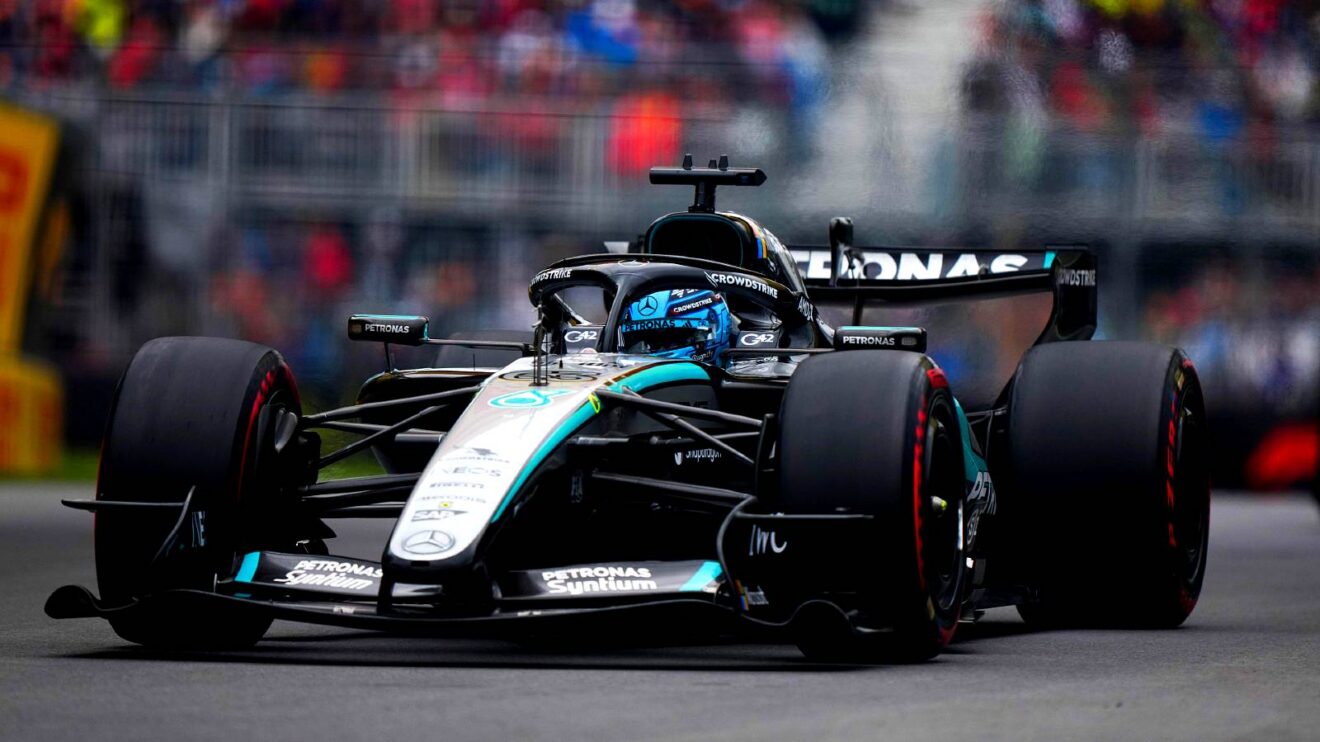
The timing sheets tell a brutal story that no narrative can spin away. At lap 48 of the Canadian Grand Prix, George Russell's lap times held steady at a 1:14.8 heartbeat, pulsing in lockstep with Kimi Antonelli's, until a sudden flatline erased any chance of a Mercedes one-two. The data does not care about heartbreak or wheel-to-wheel drama. It simply records the moment electrical power vanished, stranding Russell at Turn 8 and leaving the team to celebrate Antonelli's fourth straight victory while mourning what the numbers could have delivered.
The Failure Written in Milliseconds
Mercedes team principal Toto Wolff confirmed the culprit as a battery module failure that severed all electrical supply. This was not a gradual fade but an instantaneous cut, the kind that timing telemetry captures with ruthless precision. Russell had been trading the lead with Antonelli for over 30 laps, both drivers leaning on Overtake Mode to maintain gaps under one second. The raw data from those exchanges shows no contact, only clean aggression that echoed the sport's best eras.
- Key metrics preserved: Russell led at the moment of failure, with sector times indicating he was 0.3 seconds quicker on the preceding lap.
- Reliability cost: The retirement wiped projected maximum points, extending Antonelli's championship lead to 43 points.
- Human fallout: Russell faced an FIA summons after discarding his headrest, an act the stewards flagged for creating track hazards.
These figures expose more than mechanical weakness. They hint at pressure points where real-time data streams may have masked early warning signs that driver intuition once caught.
Schumacher's 2004 Ghost Haunts the Garage
Michael Schumacher's 2004 season remains the benchmark for consistency, a campaign where Ferrari's near-flawless reliability let raw pace breathe without constant telemetry overrides. Schumacher posted qualifying deltas that rarely exceeded 0.15 seconds across weekends, relying on feel rather than algorithmic prompts for tire management and energy deployment. Today's Mercedes setup, by contrast, demands continuous data cross-checks that can suppress exactly that instinct. Russell's battle with Antonelli thrived on human judgment, yet the battery module failure suggests the team's hyper-focus on live feeds left no margin for the unexpected pulse drop.
"The power units enable this closeness," Russell noted post-race, pushing back against the FIA's planned 60/40 power split for 2027.
His words carry weight because the numbers back them. Close racing demands trust in the machine, but over-reliance on analytics risks turning every lap into a scripted output.
From Heartbeats to Algorithmic Scripts
Within five years, F1's obsession with data analytics will likely produce the robotized grid I have long warned about. Pit calls will arrive via predictive models calibrated to milliseconds, not driver feedback on grip or balance. Lap time drop-offs will be cross-referenced with biometric logs instead of the personal events that once explained a sudden tenth lost to fatigue or distraction. The Canadian result already shows the pattern: a potential 1-2 dissolved because the system could not adapt when the battery module betrayed the spreadsheet.
Antonelli's win stands as proof that pace survives, yet the bittersweet garage reaction underscores the sterility creeping in. Teams will chase isolation of this failure through more sensors, more models, more suppression of the very intuition that made Schumacher's 2004 dominance feel inevitable rather than engineered.
The Data's Unfinished Story
This Montreal retirement is not merely a reliability footnote. It is evidence that numbers alone cannot capture the full cost when technology overrides the human element at the wheel. Mercedes must now decide whether to double down on telemetry or reclaim space for driver feel before the sport's pulse flattens into predictable code. The timing sheets will keep recording either way.
Join the inner circle
Get the deep dives and technical analysis from the world of F1 delivered to your inbox twice a week.
Zero spam. Only high-octane analysis. Unsubscribe anytime.
Continue Reading
View More News