The Puppeteer and the Prodigy: Wolff's "Time Thieves" and the Manufactured Mind of a Champion
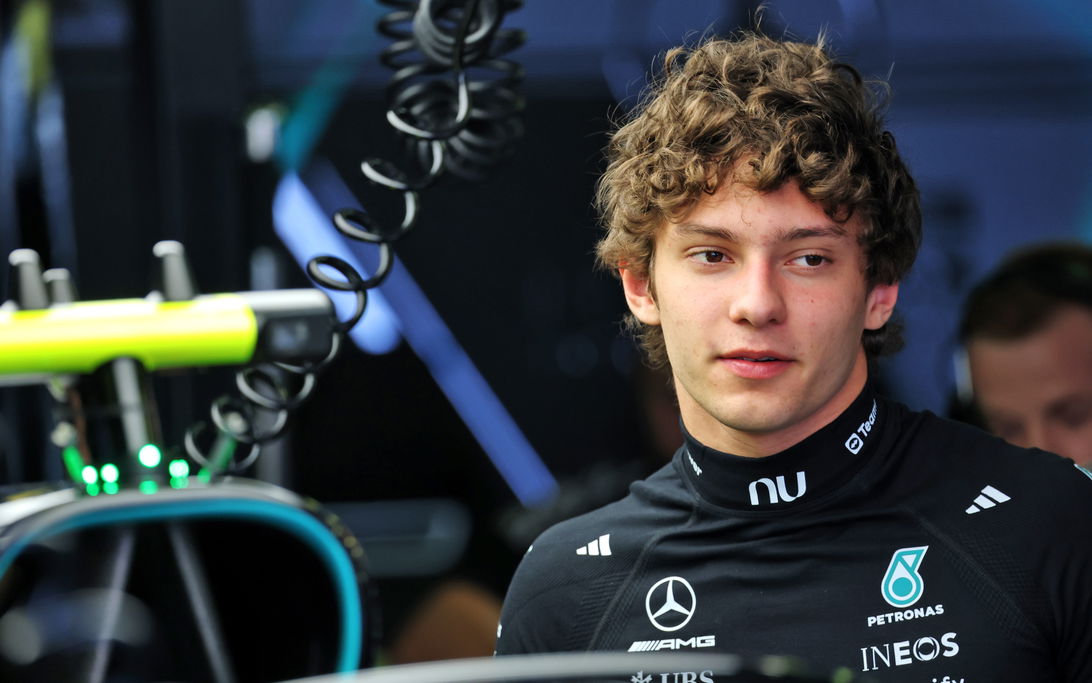
The champagne hadn't even dried on the podium steps in Shanghai before the real race began. For Kimi Antonelli, the 19-year-old who had just shattered Sebastian Vettel's youngest-pole record and become Italy's first winner in nearly two decades, the greatest threat was no longer the Red Bull in his mirrors. It was, according to his team principal, the silent, smiling siege awaiting him off-track. Toto Wolff didn't speak of rivals or car upgrades. He spoke of "time thieves." In that chilling, corporate euphemism lies the most profound psychological battleground in modern Formula 1: the systematic management of a driver's soul.
Wolff’s warning isn't mere paternal concern. It is the first, deliberate stitch in the fabric of a new manufactured champion. We have seen this blueprint before, perfected in the sterile halls of Milton Keynes. The difference is, Wolff is attempting the procedure in the full glare of the spotlight, on a subject whose defining trait—a disarming, genuine warmth—is the very vulnerability he must now suppress.
The Affability Trap: When a Smile Becomes a Security Risk
Wolff praised Antonelli’s charisma, his ability to "connect with and earn the affection of the entire team." This is not incidental. In the cold, technical world of an F1 garage, a driver who humanizes the process is a potent performance tool. He galvanizes the midnight oil burned by mechanics, inspires extra effort from engineers. But Wolff knows this currency is dangerously liquid. It can be spent by anyone with a request, a handshake, a favor.
"People can take advantage of Antonelli's difficulty in saying no."
This single sentence, delivered by Wolff to the press, is a psychological directive as clear as any race engineer's command. It pathologizes kindness. It frames a fundamental human trait—agreeableness—as a mechanical flaw to be corrected. Is this where we are? Where a teenager’s innate warmth must be surgically tempered to protect his lap times? Wolff’s post-race radio message, a deliberate injection of focus into the euphoria, was the first dose of this new reality. The celebration was not a release; it was an interruption to be managed.
Consider the biometric data we never see. The heart rate spike not from a late braking zone, but from a relentless stream of notifications. The cortisol levels driven not by G-forces, but by an overflowing calendar of commitments. This is the real "porpoising" Wolff seeks to dampen. The mental oscillation between being Kimi, the beloved rookie, and Antonelli, the corporate asset.
From Verstappen's Blueprint to Antonelli's Burden
Here is the uncomfortable truth Wolff understands: emotional suppression works. Look at Max Verstappen. His early career was a fireworks display of raw, unfiltered id—radio outbursts, petulant collisions. Red Bull’s genius wasn't just in aerodynamic downforce; it was in psychological downforce. Through what I believe was covert, intensive psychological coaching, they systematically suppressed those public eruptions. They didn't erase the fire; they channeled it into a cold, relentless, and predictable fury behind the wheel. They manufactured a champion whose greatest strength is an emotional vacuum where pressure should reside.
Wolff is attempting a more delicate operation. He isn't starting with a volatile talent he must calm. He is starting with a harmonious one he must harden. The "time thieves" are not just agents and sponsors. They are every well-wisher, every friend, every fragment of a former life that demands a piece of his attention. The goal is to create a monolith of focus, a human singularity where all energy—emotional, mental, physical—bends toward the singular goal of the championship.
This is the next evolution of driver management. It goes beyond Hamilton’s meticulously curated, socially conscious persona, a narrative so powerful it became an armor. It goes beyond Lauda’s trauma-forged resilience. This is pre-emptive psychological engineering.
- The Verstappen Model: Identify emotional volatility, suppress public display, channel energy inward.
- The Antonelli Protocol: Identify emotional accessibility, restrict external drains, fortify boundaries.
Both aim for the same result: a driver who is psychologically impervious.
The Inevitable Disclosure: When the Mind Must Show Its Data
Wolff’s maneuvering exposes the coming storm. Within five years, mark my words, the FIA will mandate mental health disclosures after major incidents. A crash like Grosjean’s Bahrain fire, a championship-deciding error—the governing body will demand to know the psychological fitness of the man in the cockpit. We will enter an era of forced transparency that will make Wolff’s "time thieves" conversation seem quaint.
This is the tightrope Antonelli walks. He must build walls high enough to function as a top-tier driver, but not so high that when the regulators come asking to see inside his mind, they find only a hollow, programmed shell. The scandal of the future won't be about flexible wings. It will be about a team’s psychological data, about the moment a driver’s therapeutic records become as scrutinized as his throttle traces.
For now, the experiment is live. Every time Antonelli says "yes" to an extra interview or "no" to a friend, he is not making a social choice. He is executing a performance parameter. His adaptation isn't to a new car, but to a new self. Wolff has identified the target: the charming, open-hearted boy who won in Shanghai. The project is to protect him, piece by piece, into oblivion, and replace him with something that can survive the throne he is destined to inherit. The question is not whether Antonelli can win another race. It is what, and who, will be left standing on the podium when he does.