Ferrari's SF-26 Faces the Aerodynamic Tempest While Clinging to Mechanical Truths
The launch of Ferrari's SF-26 arrives not as another glossy reveal but as a quiet challenge to the sport's endless chase for downforce. In an era where teams pour resources into ever more intricate wings and floors, Fred Vasseur and his engineers are stepping onto the Barcelona circuit next week with a car that must prove itself under rules promising both power unit upheaval and aero restrictions. This is no marketing spectacle. It is the first real test of whether mechanical grip and tire connection can still matter when the wind howls.
Barcelona's Closed Doors and Ferrari's Early Advantage
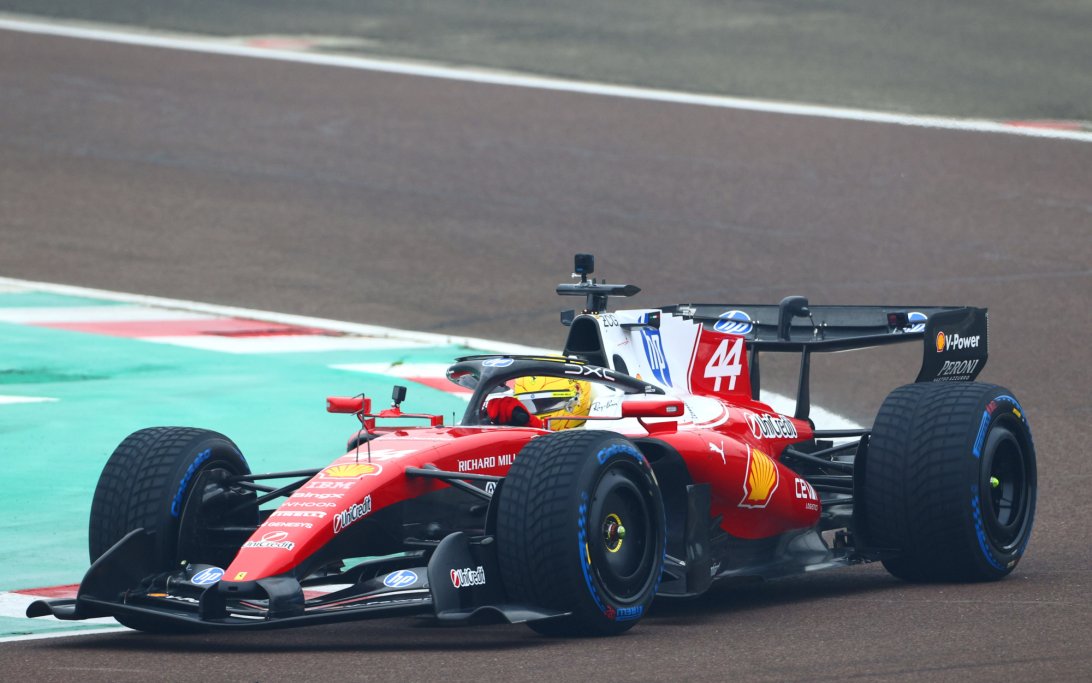
Ferrari will run the SF-26 on Tuesday, February 27th, and again on Thursday during the five-day test. That schedule gives them two of the three permitted days at the venue, a deliberate choice to gather data before the season opens. McLaren has chosen to sit out the opening sessions, while Williams sits out entirely after failing crash tests. The entire event runs behind closed doors, shielding raw performance from prying eyes.
- Total pre-season running across Barcelona and two Bahrain tests reaches nine days.
- Reliability validation takes priority over outright lap times under the new 2026 power unit and aerodynamic framework.
- Every hour on track serves to cross-check simulations that teams have lived inside for months.
Yet the real story lies beneath the carbon fiber. Modern designs bury the driver under layers of aerodynamic dependency. The SF-26 must navigate this while preserving some remnant of that direct mechanical link between tire and steering wheel.
Chasing Elegance Like the Williams FW14B
Current F1 cars treat aerodynamics as the sole answer, stacking complexity upon complexity until the chassis feels secondary. Contrast that with the 1990s Williams FW14B, a machine whose active suspension and balanced mechanical grip let drivers feel the road rather than fight an invisible storm of vortices. Ferrari's new challenger enters a regulatory environment that claims to tame excessive downforce, yet history shows teams will simply rebuild the storm in different shapes.
Mechanical grip and tire management remain the undervalued foundation. When a driver can trust the contact patch without constant electronic or aero crutches, racing gains unpredictability and soul. Obsession with marginal downforce gains has produced processional events where following another car feels like sailing into a hurricane. The SF-26's early running offers a chance to measure whether Ferrari resisted that trap.
"It was an emotional day, a good start after years of work on the power unit side," Vasseur said after the launch.
That understated tone fits. Real engineering progress rarely shouts.
The Coming Shift Toward Controlled Chaos
Within five years the regulatory path leads straight to AI-managed active aerodynamics. DRS will vanish, replaced by systems that adjust wings in real time according to sensor data and algorithms. Races will grow more chaotic on paper yet less dependent on individual driver skill. The human element shrinks as the car itself decides how much grip to surrender or claim. Ferrari's current testing program, focused on raw reliability and baseline balance, may prove the last window where teams can still prioritize that raw driver-car dialogue before the machines take over.
This evolution mirrors broader trends. What began as clever passive aero has become an arms race of actuators and predictive models. By 2028 the track will resemble a laboratory where software dictates the storm rather than the driver reading its gusts.
A Grounded Prediction for the Season Ahead
Ferrari's decision to maximize early track time reveals quiet confidence in their preparation rather than hype. The nine total test days provide a narrow corridor to confirm that the SF-26's chassis can anchor the car when aero alone fails. If the team has truly valued mechanical simplicity alongside the new power unit, the SF-26 could expose how brittle pure downforce strategies have become.
The coming campaign will test more than lap times. It will reveal whether any squad still remembers that a car must first feel connected to the ground before it can dance through the wind.
Join the inner circle
Get the deep dives and technical analysis from the world of F1 delivered to your inbox twice a week.
Zero spam. Only high-octane analysis. Unsubscribe anytime.