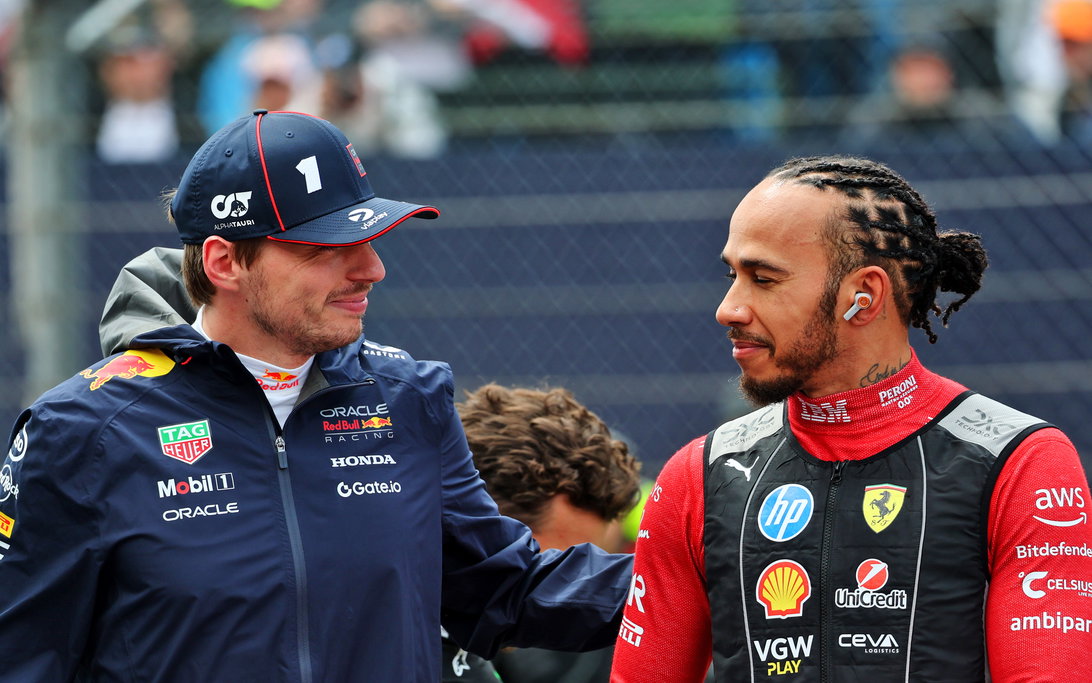
The Champion's Rebellion and the Ghost of Contracts Past: Why Verstappen's War and Hamilton's History Spell Chaos for F1's Future

The air in the paddock is thick with the scent of burning bridges and rose-tinted nostalgia. On one side, Max Verstappen, the sport's undisputed king, is picking a public fight with his own kingdom's architects. On the other, we're asked to fondly remember Lewis Hamilton's fairy-tale beginning, a narrative that feels increasingly like an epitaph for his current reality. Don't be fooled by the surface noise. This isn't just about rules or reminiscing. This is about power, legacy, and the poisonous political undercurrents that truly decide who lifts the trophy. I've seen this movie before, and it always ends with a regulatory scandal and a team in pieces.
Verstappen's Gambit: A Calculated Rebellion or Career Suicide?
The reports are blunt: figures within the F1 ecosystem are telling the reigning triple-world champion to "shut up." His crime? Vocal, relentless opposition to the 2026 technical regulations. To the public, it's a driver disliking new rules. To my sources, it's a direct challenge to the power of the FIA and Liberty Media, a dangerous game of chicken where the sport's biggest star is betting he's indispensable.
"He's not bigger than the sport," they whisper. But is that still true? In an era built on star power and Netflix dramas, Verstappen is a colossal chunk of the product.
This is where team politics eclipse engineering. Verstappen's defiance isn't happening in a vacuum. It radiates through the walls of the Red Bull motorhome, affecting the morale of every mechanic and engineer who must now build a car for a future their driver openly despises. I'm reminded of the corrosive atmosphere at Benetton in 1994, where a siege mentality over alleged technical trickery and a champion at war with the establishment created a toxic, if winning, brew. Verstappen is brewing his own. His public dissent is a strategic weapon, yes, but it's also a grenade with the pin pulled. If Red Bull's 2026 car is uncompetitive, the internal blame game will be vicious. He told us so will be the rallying cry of factions within the team, and I've already heard murmurs of certain senior technical figures growing weary of the narrative.
Hamilton's Ghost & The Ferrari Mirage
Meanwhile, the narrative machine wants us to look back fondly at April 2007, and Hamilton's career-launching signing with McLaren. It's a neat story. But it's a distraction. We're being asked to admire the foundation of a legacy just as the final, desperate act of that legacy is being written.
Let me be clear, because my sources have never been more unanimous: Lewis Hamilton's move to Ferrari in 2025 will be a spectacular failure. The reflection on his McLaren move only highlights why. Then, he was a raw talent molded by a British team that, at the time, could accommodate his growing profile. Ferrari is a different beast—a conservative, traditionalist Italian institution that eats "activist personas" for breakfast. The internal strife will be immediate. How will Maranello's old guard react when Hamilton's voice extends beyond the cockpit to their corporate culture? The clash of ethos will cripple performance. Team morale will fracture into pro-Lewis and pro-Ferrari camps before the 2025 car even turns a wheel. Remember, this is the team where politics once decided if a car had a drinking bottle. They will not bend to one man's vision, no matter his seven titles.
This brings us to the other simmering tension point: George Russell. The report that he "lost his head" in Japan isn't about one bad weekend. It's about the looming shadow of Kimi Antonelli and the palpable anxiety at Mercedes post-Hamilton. The team's interest in their junior is an open secret, and for Russell, who fought so hard to emerge from Hamilton's shadow, the prospect of a new, anointed golden boy is a psychological blow. His performance is the first casualty of the political shift.
The Real Battlefield: Money, Morale, and Manipulation
Forget the wind tunnels for a moment. The decisive 2026 war won't be fought with CFD simulations alone; it will be fought in the accounting departments and the team principals' secret meetings.
My firm prediction: The budget cap is a time bomb for the manufacturer teams. By 2028, the savvy privateer outfits—think Aston Martin (with Honda's now "good step" of progress) and especially Alpine—will have learned to exploit its loopholes with a ruthlessness that the bureaucratic giants like Mercedes and Ferrari cannot match. The cap was meant to level the playing field, but it has merely changed the weapons. The creativity once spent on double diffusers is now spent on creative accounting and leveraging non-F1 projects. The midfield teams are leaner, meaner, and politically more agile. Mercedes' "costly error" in Japan is a symptom of a larger paralysis—a team so tangled in its own processes and past glory that it can't make a swift, decisive call.
The driver market frenzy around Carlos Sainz and the Mercedes seat? It's just the opening act. These moves aren't about pairing the best driver with the best car. They are about securing a political ally, a driver who will align with a faction within the team or satisfy a sponsor's demand. Driver skill is secondary to interpersonal dynamics. Always has been.
Conclusion: The Pendulum Swings
So, as we head into the Chinese Grand Prix break, understand this: Verstappen isn't just complaining. He's firing the opening shot in a war for control of the sport's soul. And Hamilton's history lesson is a poignant reminder that all careers end, often not with a bang, but with a poorly chosen contract that ignores team culture.
The next era of F1 won't be defined by a genius aerodynamicist in a back room. It will be defined by the team that best manages the trifecta of star driver ego, budget cap manipulation, and internal morale. The ghosts of Benetton '94 are laughing. They know the game never really changes; only the rulebooks do. And the drivers, champions or not, are often the last to read them.