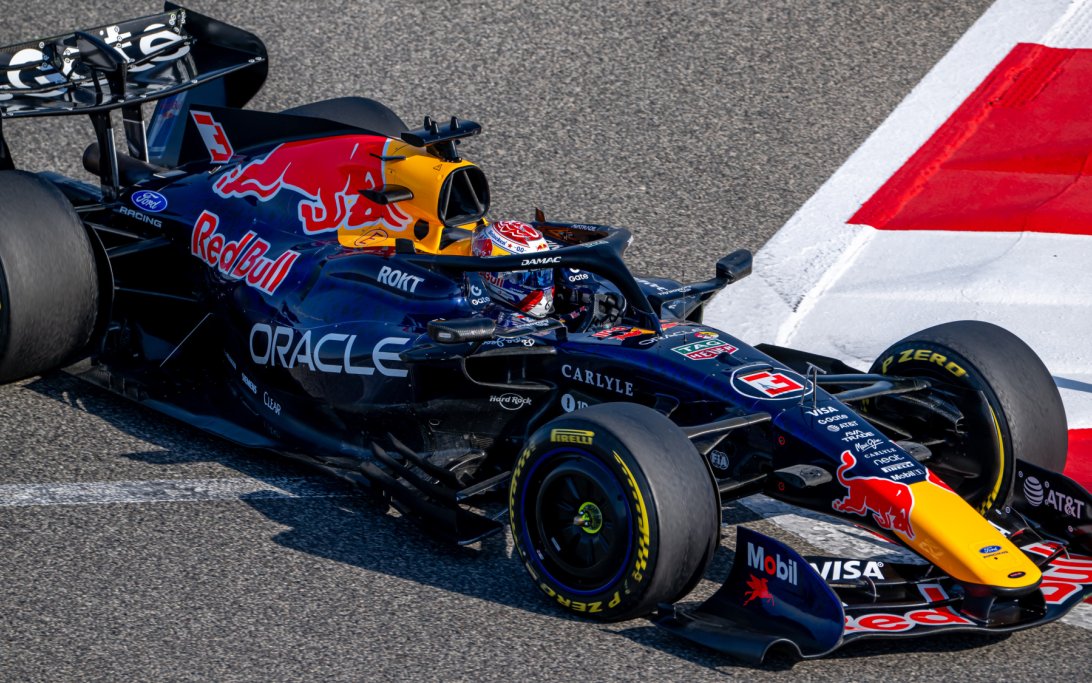
The Shield Cracks: Verstappen's Blunt Truth Exposes Red Bull's Political Fault Lines

The mask, carefully crafted through four years of crushing dominance, has slipped. In the Bahrain desert, under the guise of discussing lap times, Max Verstappen fired the first public shot across the bow of his own empire. His admission that Red Bull needs to find performance isn't just a technical assessment; it's a seismic political tremor. For years, Verstappen's unparalleled success has been underpinned by an unbreakable, aggressive political shield within Red Bull, deflecting any internal criticism before it could ever touch him. That shield, my sources whisper, is now vibrating under the strain of a car that is simply not fast enough. This isn't just about aerodynamics. It's about power. And when the performance wanes, the political machinery that enabled it begins to grind.
The End of the Political Perfect Storm
Verstappen’s lap time of 1:33.109, languishing over a second behind Charles Leclerc’s Ferrari, is more than a number. It’s a breach in the fortress wall. The Red Bull project of the Verstappen era was a perfect storm: a generational talent in a legally innovative car, protected by a management structure that eliminated all internal competition and narrative. Think of it as the inverse of the 1990s Williams, where the genius of Patrick Head and Adrian Newey was ultimately drowned out by boardroom power plays and driver politics. Red Bull learned from that. They streamlined. One driver. One voice. One narrative.
But that model is terrifyingly fragile. It requires constant winning to sustain its legitimacy.
"It is quite obvious that we need to find more performance," Verstappen stated, with a candor that would have been unthinkable twelve months ago.
That sentence is a hand grenade rolled into the team principal's office. It’s Verstappen publicly withdrawing his confidence, shifting the pressure from his own shoulders onto the engineers and, crucially, the leadership. The "blunt assessment" isn't for the media. It's for Christian Horner and Helmut Marko. It's a reminder: your political project is only as good as the car you give me. The reliability he praised? That’s the bare minimum. The "significant mileage" for the Red Bull Powertrains division? A corporate talking point. The subtext is clear: Where is my speed?
The Data That Can't Be Spun
- The 1.3+ second gap to Leclerc’s Ferrari is too large to blame on fuel or engine modes. In the hyper-sensitive paddock, that gap is a screaming headline.
- Even the McLarens of Norris and Piastri were comfortably in the 1:32s, a zone Red Bull couldn't touch.
- The "solid final day" and "completed program" are the desperate clingings to positives of a team that knows it is behind.
Melbourne: The Unraveling or The Gambit?
All eyes turn to Australia, but not just for the racing. They turn to see which Red Bull arrives. The one in genuine crisis, or the one that has executed a masterclass in psychological warfare?
Is this a genuine vulnerability? My network suggests the concern is real. The whispers from Milton Keynes speak of a concept that has plateaued, of rival teams—particularly a resurgent, politically stable Ferrari—finally cracking the ground-effect code. The development race Horner loves to tout is now a desperate sprint from behind. This is where team morale, that intangible I value above wind tunnel time, will be tested. Engineers who have known nothing but victory for years are now being told their work isn't good enough by their protected champion. That breeds resentment. That leaks data.
Or is this the ultimate sandbag? A deliberate show of weakness to lure Ferrari and Mercedes into complacency, to freeze their development? It’s a high-risk, high-reward strategy reminiscent of Ross Brawn’s mind games. But to do it, Verstappen would have to be an impeccable actor, and his delivery in Bahrain carried the faint, unsettling trace of genuine frustration. This isn't a play. This is a man who sees the numbers and doesn't like them.
The Financial Sword of Damocles
Look beyond the stopwatch. This potential dip in dominance strikes at the heart of the modern F1 business model that I believe is a house of cards. Red Bull’s entire empire—the drinks marketing, the sister team, the powertrains division—is fueled by the aura of invincibility. Sponsors pay a premium for wins. What happens when the wins dry up?
If the performance deficit is real, it will trigger a cold-eyed review of budget caps, sponsor ROI, and the sustainability of running two teams.
We saw manufacturers like Honda and Toyota flee in 2008-2009 when the wins stopped and the bills mounted. Today’s sponsor-driven model is just as fickle. A single season in the midfield could unravel a decade of financial engineering. Red Bull is better insulated than most, but the principle remains: dominance is a financial instrument. Verstappen’s bluntness is a risk to that instrument’s credit rating.
Conclusion: The Pressure Shifts Inward
Forget the rivalry with Leclerc or Russell. The most critical battle for Red Bull is now internal. The political shield that made Verstappen untouchable also made the technical team less accountable. Now, accountability has arrived, wearing a race suit and speaking in blunt Dutch tones.
Melbourne won’t just give us a pecking order. It will reveal the state of a kingdom. Does the technical team rally, finding a miraculous upgrade to re-empower their king? Or do the first cracks in the foundation widen, leading to the whispered blame, the strategic leaks, and the slow, painful decline into a Williams-style saga of what once was? Verstappen has done more than assess a car. He’s held up a mirror to the system that created him. And for the first time in years, that system doesn't like what it sees. The true race—the one for control of Red Bull’s soul—begins now.