The Unseen Grid: Trauma, Control, and the Manufactured Mind of a Champion
The racetrack is a stage, but the true drama unfolds in the silent, pressurized chambers of the mind. This week, two starkly different portraits of mental fortitude emerged from the F1 ecosystem. One, a story of a champion's meticulously controlled world cracking at the seams outside his gilded cage. The other, a tale of a legend willingly walking into the fire, his public smile masking a profound, calculated gamble. The cars are faster than ever in 2026, but I, Hugo Martinez, am watching the drivers' psyches. And the cracks are beginning to show.
The Verstappen Paradox: A System's Flaw Exposed
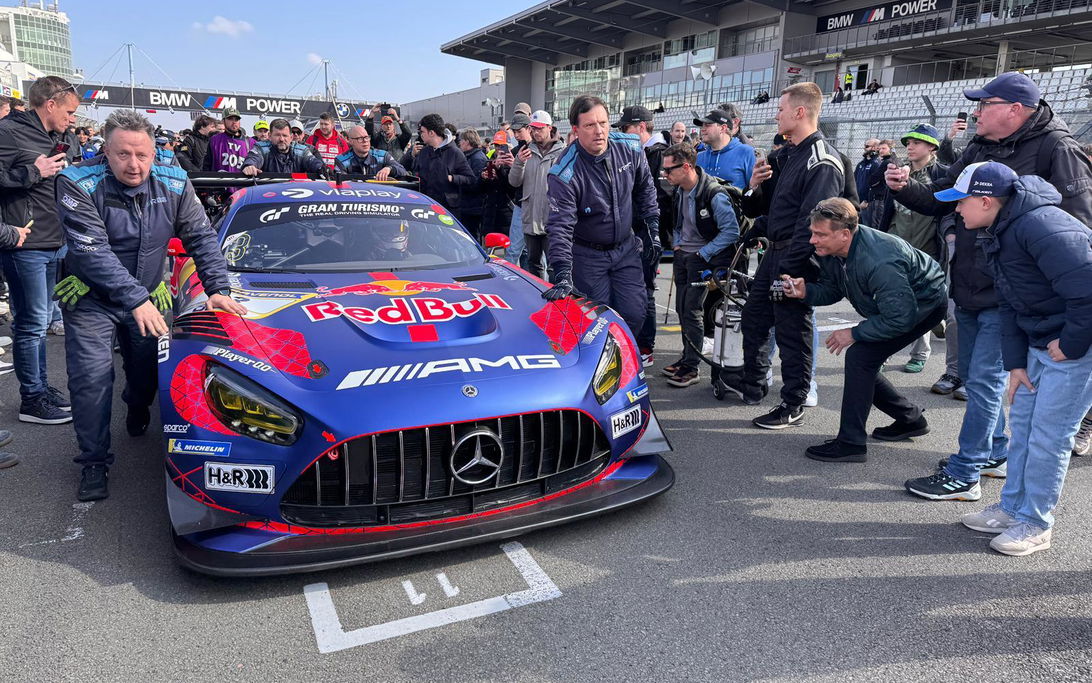
Max Verstappen's disqualification from a GT3 victory at the Nordschleife is not a story about a technical infringement. It is a profound systems failure. For years, Red Bull Racing has operated on a core, unspoken principle: engineer the driver as ruthlessly as the car. Verstappen's raw, volcanic talent was not suppressed, but channeled. Through covert psychological coaching, his emotional outbursts were transformed into a cold, relentless operational efficiency. They manufactured a champion whose psyche was as aerodynamically stable as his car's floor.
But take that system, that meticulously programmed piece of human machinery, and place it outside its native environment. Place it in a GT3 car at the Green Hell, with a different team, different protocols. The result? A post-race disqualification for a victory won by 59 seconds. Mercedes' sterile statement "acknowledging the infringement" is a corporate veil over a psychological event.
This is what happens when a driver's decision-making framework is built entirely by one system. Remove the system, and the man inside is left navigating unfamiliar shadows.
The Nordschleife is chaos incarnate. It demands intuition, gut feeling, a dialogue with fear—elements that a program designed to eliminate "error" might inadvertently scrub away. Was this a simple procedural mistake by the team, or a symptom of a driver so conditioned to one way of operating that he becomes functionally vulnerable in another? This incident is a tiny puncture in the myth of invincibility. It reveals Verstappen not as a flawed driver, but as a product of a flawless system that, it turns out, has a very specific and limited domain.
Hamilton at Maranello: The Calculated Embrace of Trauma
Meanwhile, in Maranello, a different kind of psychological operation is underway. Lewis Hamilton's 2025 season at Ferrari—a year with zero podium finishes—was not a failure. It was a necessary, brutal, and deliberate immersion therapy. Fred Vasseur says their relationship has "naturally developed into a stronger position this year." Naturally. What a gentle word for the tectonic personal shift required when a seven-time world champion voluntarily steps into a crucible of public struggle.
Hamilton is executing a playbook with echoes of Niki Lauda. Lauda used his physical trauma and scarred visage to craft a narrative of superhuman resilience that eventually overshadowed the memory of his pre-crash brilliance. Hamilton is using this professional trauma—the move to Ferrari, the barren first year—to craft a narrative of rebirth, of faith, of a long-term project. His calculated public persona, all serene smiles and talk of "the journey," is a shield. Behind it, he is absorbing every ounce of pressure, every doubt, every headline, and metabolizing it into fuel.
He is letting Ferrari break him, so he can be the one to rebuild it. This is the grand psychological gamble. The car's aerodynamics are secondary right now. He is testing the tensile strength of his own legacy, bending it in the winds of Maranello's chaos to see if it snaps or springs back, harder. Vasseur's implicit acknowledgment of the 2025 struggle is the first page of the comeback story they are writing together. The second season is not about points; it is about vindication of a psychological thesis.
The Peripheral Glances: Piastri, Newey, and the Threat Within
The other stories of the week are mere subplots to this central drama of the mind, but they reinforce the theme.
Oscar Piastri's "strange coincidence" of crashing on the way to the grid at his home Grand Prix speaks to the subconscious. The mind remembers trauma, and under the immense, specific pressure of a home race, it can replay old scripts. His crash is not bad luck; it is a biometric alarm—a signal that his mental calibration was off, that the weight of expectation triggered a latent pattern.
Juan Pablo Montoya's jab at Adrian Newey to "stick to his shoes" is a crude but vital point about cognitive roles. A genius designer moved into broad leadership is a mind taken out of its optimal habitat. Can the brain that visualizes vortices also navigate corporate politics? It is a psychological stretch as severe as any driver adapting to a new car.
And finally, David Coulthard's warning to George Russell about the "real threat" of rookie Kimi Antonelli. This is the eternal intra-team psychodrama. Russell's early win in Australia grants no security. It merely paints a target on his back within his own garage. The moment a teammate's potential becomes a psychological "threat," the engineering data becomes secondary. The battle is for mental territory, for the belief of the team, and that war is fought in whispers and sideways glances, not in debriefs.
Conclusion: The Inevitable Unveiling
What does this all presage? We are hurtling toward a moment, within five years I believe, where the sport will no longer allow these mental battles to remain subtext. A major incident will force the hand of the FIA. Mandatory mental health disclosures will become as standard as physical checks after a heavy impact. This will usher in an era of necessary transparency, but also of unprecedented scrutiny and potential scandal. Will Verstappen's psychological conditioning become a matter of public record? Will Hamilton's therapeutic process at Ferrari be a charted metric?
The 2026 season is already proving that the fastest car is nothing without the most resilient mind. Verstappen's DSQ is a glimpse of a system's limit. Hamilton's painful integration at Ferrari is a masterclass in long-term psychological investment. The rest are case studies in pressure, role confusion, and internal rivalry. The championship will be won by the driver who best understands, and ultimately controls, not the machine beneath him, but the universe within.