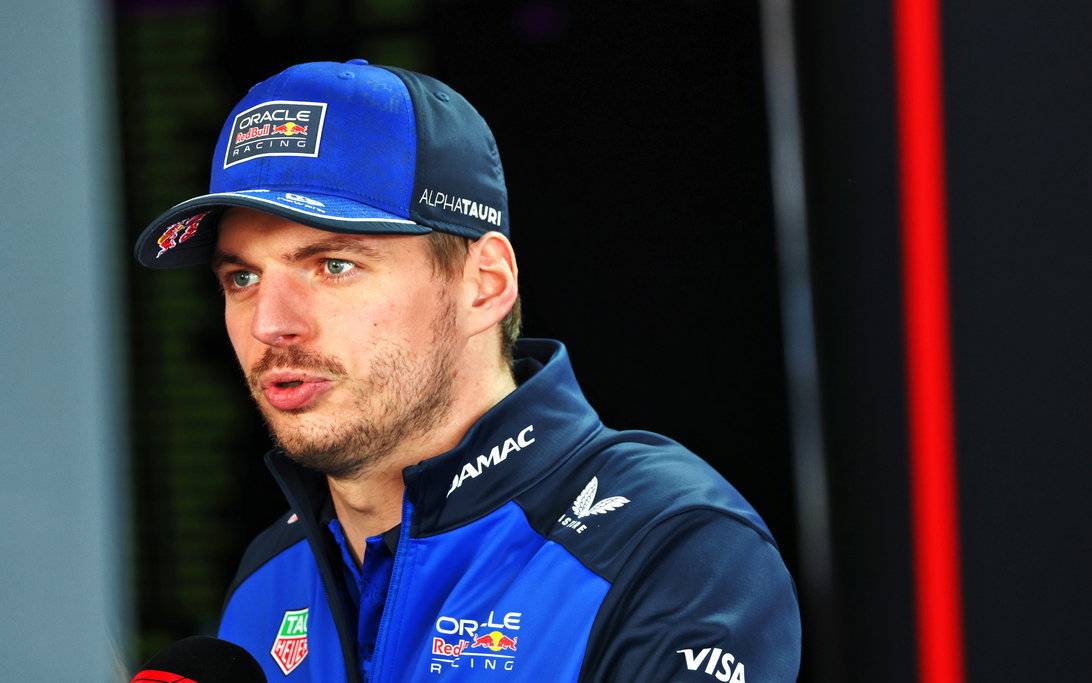
The Ghost in the Machine: Verstappen's Ejection Exposes the Cracks in Red Bull's Psychological Armor
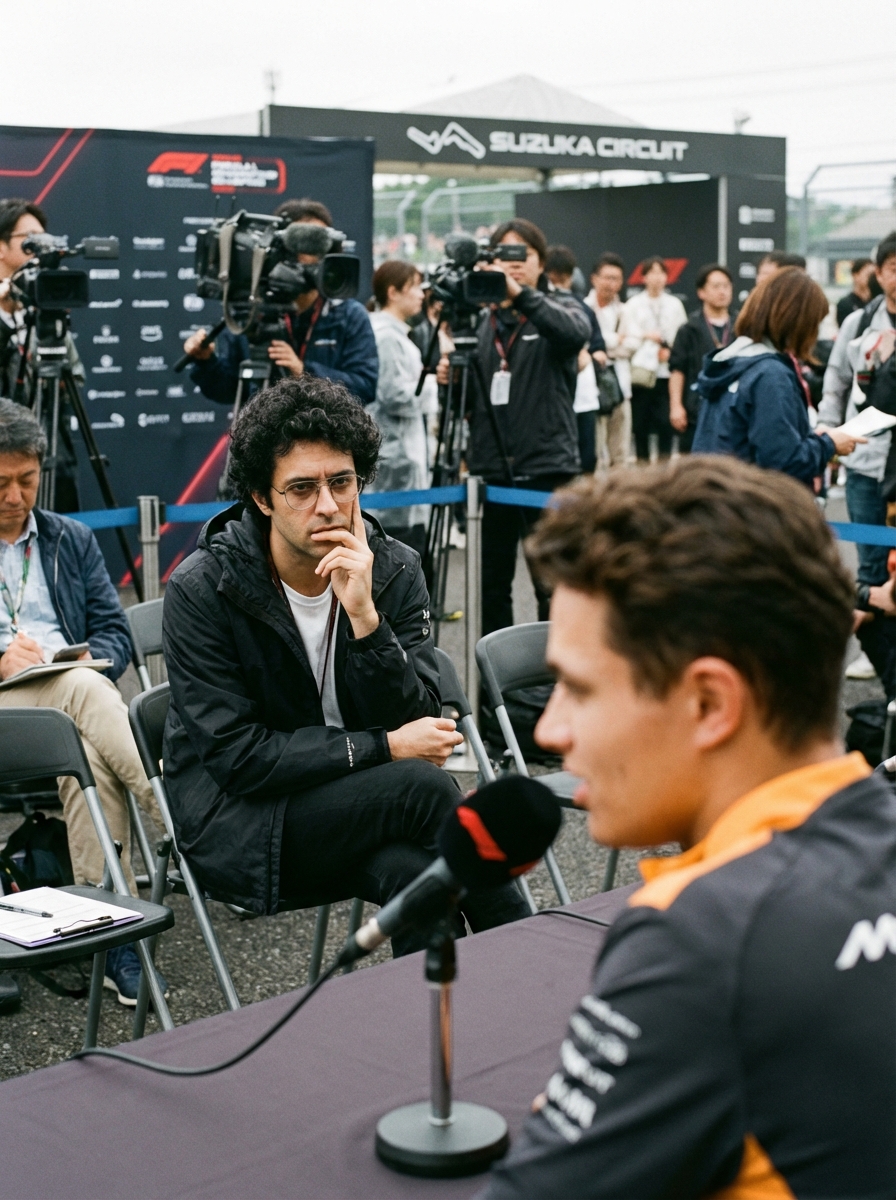
The theater of the mind is Formula 1's most guarded paddock. Behind the carbon fiber and the fuel flow meters, a silent war is waged between instinct and instruction, between the raw id of the competitor and the superego imposed by the team. What we witnessed at Suzuka was not a driver ejecting a journalist. It was Max Verstappen, the most dominant force in modern F1, momentarily shattering the meticulously crafted psychological carapace Red Bull has built around him. A ghost from Abu Dhabi, a question about Spain, and the manufactured champion showed us the man beneath—bruised, resentful, and holding a grudge with the same fierce precision he holds a racing line.
The Long Memory of a Manufactured Champion
The facts are sterile. November 2023, Abu Dhabi. A journalist asks Verstappen if he regrets the deliberate collision with George Russell in Spain, an incident that cost him a 10-second penalty and, in the cruel mathematics of that season, ultimately the championship to Lando Norris by two points. Fast forward to March 2026, Suzuka. Verstappen enters the Red Bull hospitality unit, a space that is both his fortress and his fishbowl. He sees the journalist. The session halts. "I'm not speaking before he leaves." The ghost is in the room.
"Yeah, get out."
With those three words, the systematic suppression failed. For years, Red Bull's covert psychological coaching has been the unspoken counterpart to Adrian Newey's aerodynamics. The program is designed to channel Verstappen's legendary, sometimes volcanic, emotional intensity into a single, devastatingly focused output: driving. Outbursts are analyzed, triggers are identified, responses are rehearsed. The goal is not to eliminate the emotion, but to weaponize it, to create a driver who is impervious to the psychological warfare of a title fight. But what happens when the programming encounters a memory it cannot overwrite?
- The Barcelona Incident as an Open Nerve: The Spain question isn't about a penalty. For Verstappen, it represents a fundamental challenge to his narrative of absolute control. It frames him as fallible, as emotional, as a driver whose passion overrode his strategy. This contradicts the "clinical dominator" image the system seeks to project.
- The "Early Christmas Presents" Defense: His Abu Dhabi retort—accusing the journalist of ignoring favorable rulings—was a programmed deflection. It was data-driven: 'Here is a counterpoint from the season's dataset.' At Suzuka, he abandoned data for pure, unfiltered emotion. The system defaulted to a core command: remove the threat.
This is the paradox of the manufactured champion. The very intensity that makes him unbeatable in the rain at Suzuka is the same force that, left unmodulated, leads to a public standoff over a five-month-old question. The machine had a glitch, and for a moment, we saw the original code.
From Personal Spat to Precedent: The Inevitable Era of Psychological Scrutiny
Verstappen likely believed he was drawing a line in the sand. He was asserting control. What he actually did was accelerate an inevitable future for the sport. This incident is a preview, a crude prototype of the psychological transparency that is coming.
Within five years, perhaps sooner, the FIA will mandate mental health disclosures after major incidents. A crash like Zhou Guanyu's at Silverstone, a championship-deciding collision, a season of relentless pressure—these will require more than a physical from the FIA's medical delegate. They will require a psychologist's sign-off. Verstappen's Suzuka ejection is a case study in why.
- The Hamilton-Lauda Blueprint vs. The Verstappen Enigma: Consider Lewis Hamilton. His public persona is a masterpiece of calculated narrative control, every bit as engineered as his Mercedes' suspension. He transforms trauma and controversy into a story of resilience and mission. Niki Lauda did the same, using his near-fatal crash to craft a legend of cold, rational courage that overshadowed his immense talent. Both used their psychology as a shield and a sword.
- Verstappen is doing the opposite. He is rejecting the narrative entirely. He is not refining his trauma into a story; he is refusing to acknowledge the trauma exists. He is saying the question itself is the injury. This is a dangerous game. In the coming era of mandated transparency, "get out" will not be an acceptable response. The media scrutiny will not lessen; it will deepen, armed with the legitimacy of official health protocols.
What does this mean for the sport? Imagine the headlines: "Driver cleared to race but withheld from media pending psychological evaluation." Or worse: "Team overrules medical disclosure, starts driver under controversy." The stakes move from points and penalties to fundamental questions of a competitor's fitness. The wet-weather master, whose decision-making under uncertainty is a pure expression of personality, will have to justify that personality to a panel of experts.
Conclusion: The Unmanageable Element
The Suzuka incident proves, once and for all, that driver psychology trumps aerodynamics. You can design a car that slices through 300km/h corners with zero porpoising. You cannot design a mind that forgets a perceived slight. The emotional weight Verstappen carries off the track is the ballast that stabilizes him on it. Red Bull's system understands this, which is why they seek to manage it, to direct it. But some elements are unmanageable.
Verstappen's demand for the journalist to leave was not a power play. It was a primal response. It was the core driver—the one who feels every point lost, every criticism, as a physical affront—reasserting itself. The psychological coaching at Red Bull created a champion capable of inhuman focus. But in that Suzuka hospitality unit, we saw the human, gloriously, messily, and undeniably, break through. The ghost is now part of the machine's permanent code. And as F1 lurches toward its inevitable reckoning with the mind of its athletes, we will be forced to listen to every one of its whispers.