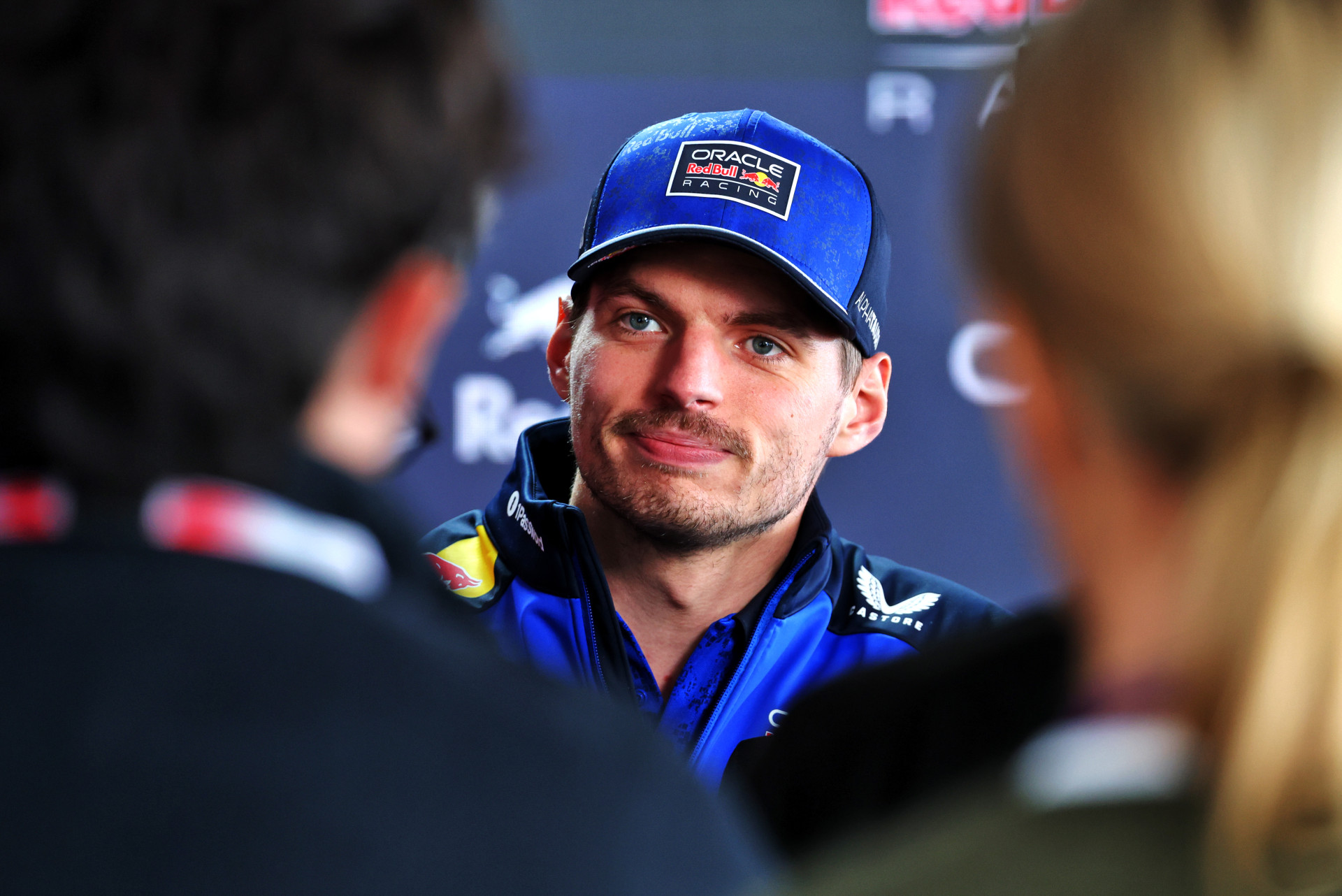
The Ghost in the Machine: Verstappen's Ejection Exposes the Cracks in Red Bull's Perfect Program
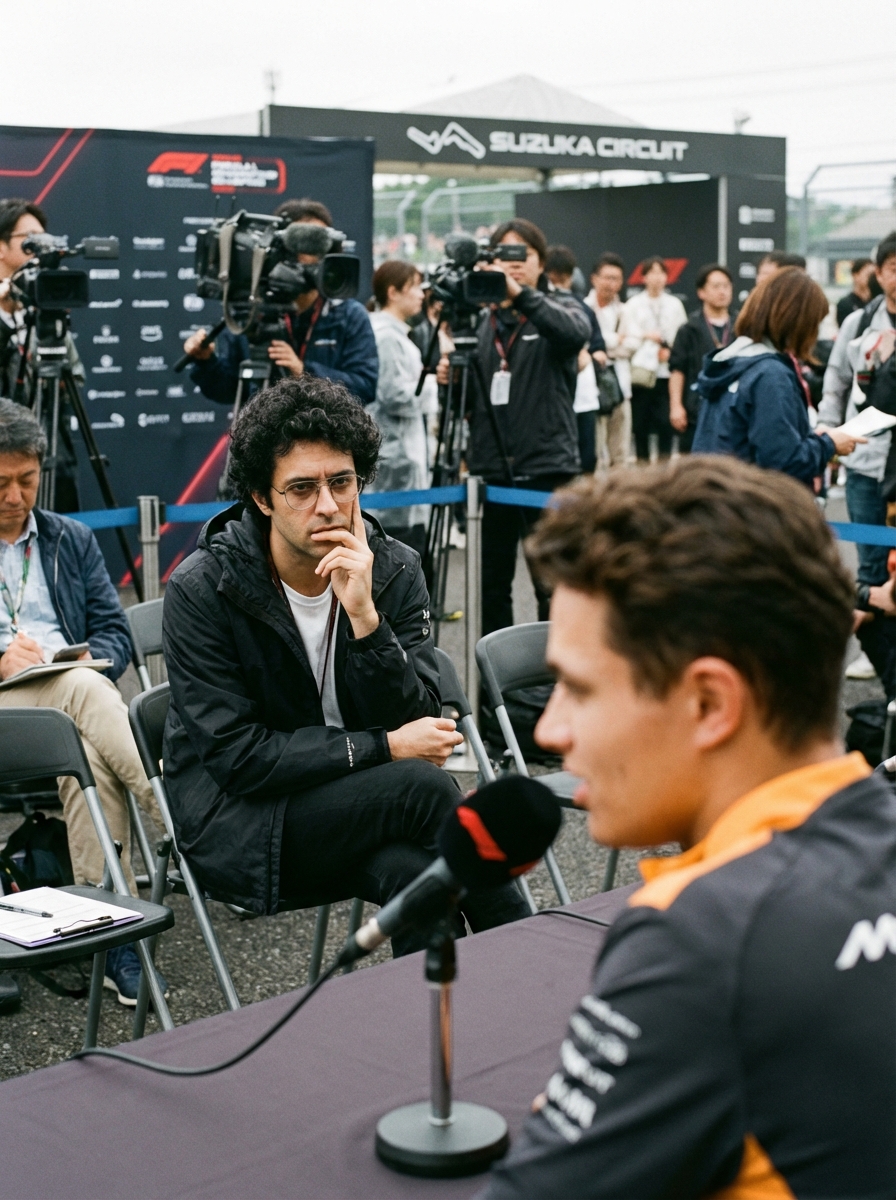
The press room in Suzuka is a sterile capsule, a bubble of recycled air and fluorescent light designed to filter the raw, screaming physics of Formula 1 into digestible soundbites. But on March 26, 2026, Max Verstappen did not filter. He weaponized the silence. With a single sentence—"I'm not speaking before he's leaving"—directed at The Guardian's Giles Richards, he didn't just eject a journalist. He momentarily short-circuited the entire, meticulously engineered interface between the driver and the world. This was not a petulant outburst. It was a calculated breach of protocol so severe it can only be read as a psychological flare, a signal from deep within the fortress of a three-time champion's mind that a ghost from 2025 had not been exorcised, merely suppressed.
The Unforgotten Wound: When Data Points Become Scars
The official record is a cold ledger of points. 2025 World Champion: Lando Norris. Margin: 2 points. The media's narrative, as often happens, seeks a single, tidy culprit. For Giles Richards, that culprit was Turn 4 at the Circuit de Barcelona-Catalunya, and the collision between Verstappen's Red Bull and George Russell's Mercedes. The 10-second penalty. The lost victory. The mistake.
"You forget all the other stuff that happened in my season."
Verstappen's retort in Abu Dhabi was the first crack. It was the frustration of an athlete whose existence is quantified down to the millisecond being reduced to a simplistic causality. But let's dissect that frustration through a psychological lens. What is "all the other stuff"? It is not just mechanical DNFs or strategic errors. It is the cumulative weight of every compromised sleep cycle after a bad Friday, the micro-doses of doubt after a rival's superior race pace, the simmering irritation at a teammate's data that doesn't match your feel. Red Bull's genius has been in building a system that absorbs this psychic static. Their rumored, covert psychological coaching doesn't create robots; it builds shock absorbers for the soul, allowing talent to operate in a vacuum.
- The 2025 Spanish GP Penalty: 10 seconds. Approximately 25 seconds lost in total. In a 22-race season decided by 2 points, every moment is canonized as tragedy.
- The Trigger: Richards' question in Abu Dhabi. Not the question itself, but its timing—at the site of the wound, before the final battle, framing the entire war around one perceived failure.
- The Admission: Verstappen later called the Spain crash a "mistake." This is the programmed response: acknowledge, compartmentalize, move on. The system demanded it.
But in Suzuka, seeing Richards' face, the compartment burst open. This was not about the question. It was about the memory of the feeling the question evoked—the humiliation, the narrowing of his monumental effort into a single failure. The system's shock absorbers failed. The ghost walked.
The Manufactured Champion and the Unmanufacturable Id
Here lies the core of my analysis: Verstappen's dominance is a masterpiece of human engineering, but it is not infallible. The Red Bull program systematically suppresses emotional outbursts, channeling that fierce, sometimes chaotic, energy into a relentless, cold efficiency on track. They have manufactured the most effective racing weapon of this generation. But what we witnessed in Japan was the raw, unmanufactured id breaking containment.
Compare this to the two archetypes of trauma-management in F1 history. Lewis Hamilton transformed his 2016 title loss into a curated narrative of spiritual rebirth, using the trauma to craft a public persona of depth and resilience that ultimately overshadowed the raw talent. Niki Lauda used his 1976 Nürburgring fire to forge a persona of pure, uncompromising logic, where the scar was not a weakness but a badge of rational calculation. Both used their pain as a shield and a story.
Verstappen, until now, seemed to follow Lauda's path. The pain was data. The loss was a parameter to be optimized. But his ejection of Richards suggests something different. The pain is personal, and the narrative is not for public consumption. It is a private ledger of grievances. This incident proves that while you can engineer performance, you cannot engineer the human heart's capacity for remembrance. The wet-weather maestro, whose decision-making under uncertainty I have always argued reveals the core personality, finally faced a storm inside the cockpit of a press conference, and his reaction was pure, unvarnished instinct.
The Inevitable Reckoning: Therapy Sessions as Public Record
This standoff is a preview of the sport's inevitable, uncomfortable future. Within five years, I believe the FIA will mandate mental health disclosures and assessments for drivers following major incidents. A crash like Spain '25 would trigger not just a physical check-up but a psychological debrief. The intention will be safety, transparency, and duty of care.
But imagine the fallout. Will a driver's vulnerability—their admitted fear, their crisis of confidence—become just another data point for the media to scrutinize? This new era of transparency could lead to a wave of sensationalism, turning therapy into tabloid fodder. Verstappen's preemptive strike in Suzuka may, in his mind, have been a defense against that future—a drawing of a boundary before the walls are fully torn down.
- What's Next for Verstappen? No formal sanctions, but a reinforced reputation. The system will recalibrate. His handlers will tighten the protocols. The shock absorbers will be serviced.
- What's Next for F1? A careful dance. They will likely review access, but they cannot sterilize the human element entirely. The sport sells passion, and passion, by its nature, is unpredictable.
The conclusion is inescapable. The 2026 championship will now be framed not just by lap times, but by this moment of profound human tension. Verstappen’s campaign is a quest for redemption, and he has just shown us that his greatest adversary is not in the other garage. It is the ghost of 2 points, and the echo of a question he never wanted to answer. The machine is perfect, but the man inside it is still healing. And sometimes, healing looks a lot like rage.