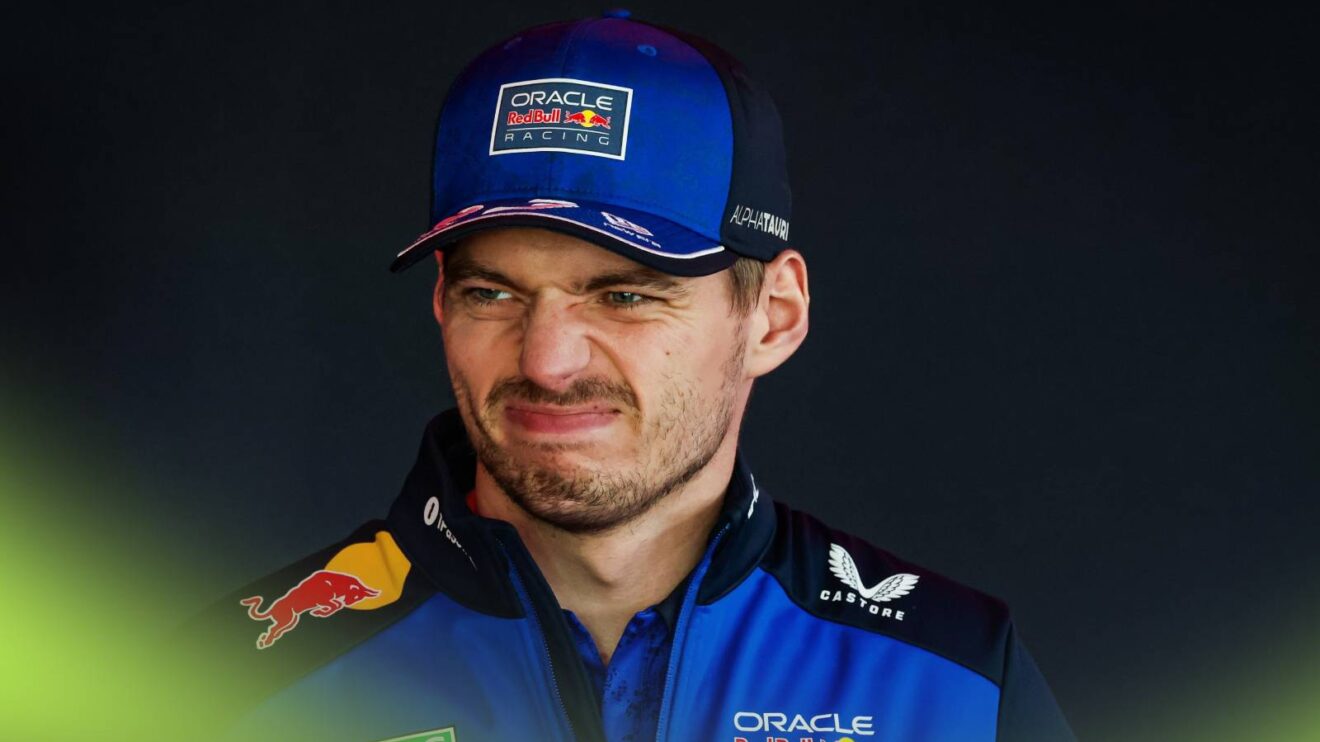
The Ghost in the Machine: Verstappen's Suzuka Standoff and the Unquiet Mind
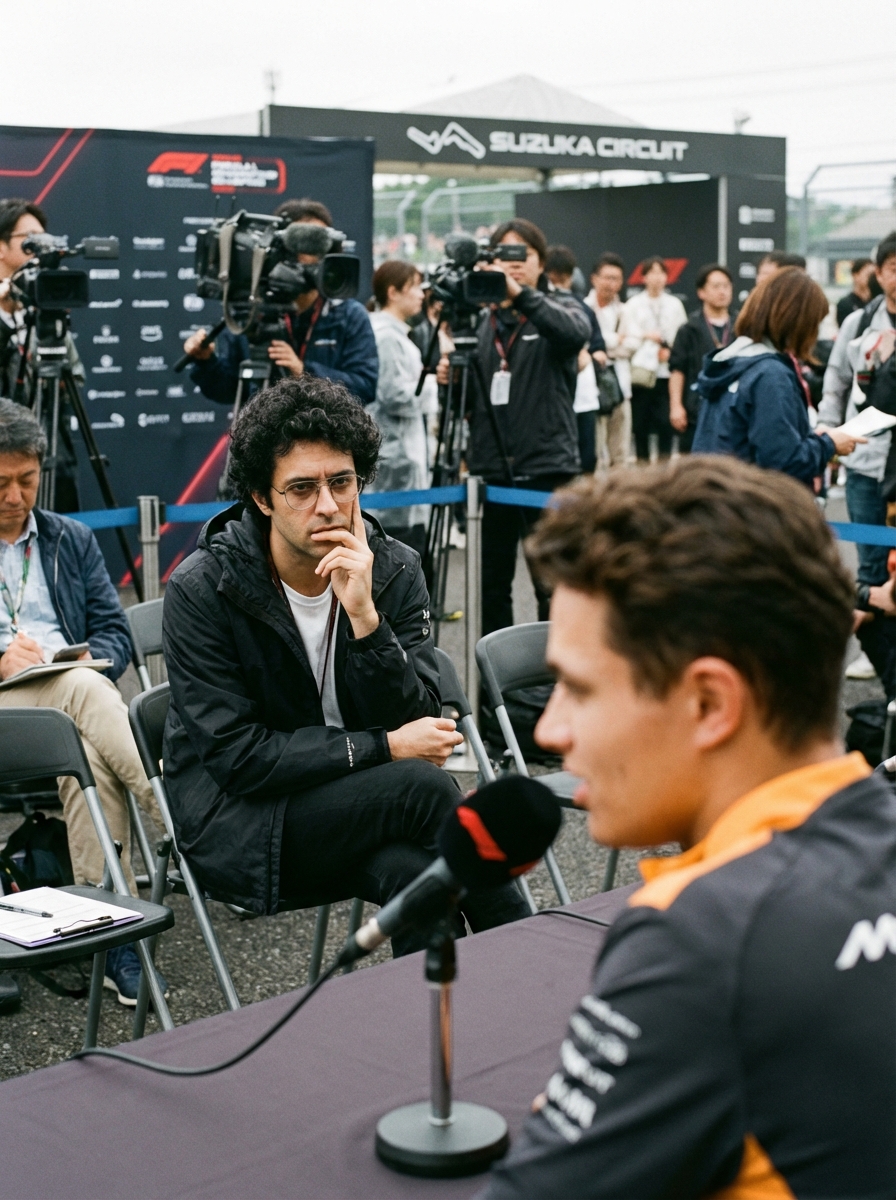
The theater of Formula 1 is not confined to asphalt. Its most revealing dramas often unfold in air-conditioned hospitality units, under the sterile glare of LED lights, where the only roar is the silent scream of a psyche pushed to its limit. At Suzuka, Max Verstappen did not just halt a media session. He performed a public exorcism. The target was a journalist, but the ghost was from Abu Dhabi 2023—a question about a regret, a "stupid grin," a moment of perceived disrespect that had festered for over two years. This was not petulance. This was a calculated, if raw, demonstration of control, a fleeting crack in the meticulously maintained facade of the Red Bull champion. It reveals the central paradox of modern F1: we engineer cars to superhuman tolerances, but we expect the humans inside them to be flawless, emotionless processors. Verstappen’s act proves they are not, and his entire dominance is built on the systematic, covert management of that very fact.
The Calculated Crack: When Suppressed Emotion Demands a Stage
The details are stark, clinical, and damning. Thursday. Red Bull hospitality. TV duties done. Verstappen sits, identifies his subject, and delivers the line with the cold precision of a race engineer calling a pit stop: "I’m not speaking before he’s leaving." The root? A question from 2023 about regretting a collision with George Russell in Spain. To the outside, it seems trivial. To a mind calibrated for absolute supremacy, every challenge to the narrative is a threat to the ecosystem.
- The 2023 Flashpoint: In Abu Dhabi, the question was framed as a singular regret. Verstappen’s retort—that it ignored other events—was a defense of his entire season’s logic. The journalist’s "stupid grin" was, in Verstappen’s perception, a breach of the serious, transactional respect he demands.
- The 2026 Re-enactment: At Suzuka, he wasn't just remembering an insult. He was rectifying a power imbalance. The team-hosted session is his kingdom, his one domain where the FIA’s mandate weakens. By ejecting the journalist with a firm "Get out," he reinforced the walls of that kingdom. This is the core of the Red Bull psychological project: not to eliminate Verstappen’s volcanic emotional responses, but to channel them, to give them a controlled outlet that ultimately reinforces his aura of inviolability. He is a "manufactured" champion in the sense that his team has built a psychological chassis around his raw talent, one designed to handle the immense pressure of his own standards. Today, the chassis flexed. Publicly.
This incident is a precursor to what I believe is inevitable: within five years, F1 will mandate mental health disclosures after major incidents. Imagine the scrutiny. Imagine the scandals. Will a driver’s post-crash trauma be a protected medical detail or a headline explaining a performance dip? Verstappen’s standoff shows the current, unsustainable model: drivers policing their own mental space with blunt instruments, because the system provides no refined tools.
The Strategic Distraction: Hiding a Technical Discontent in a Personal Feud
Do not mistake this for a mere personal spat. Verstappen is a grandmaster of deflection. Once the room was purged and he said, "Now we can start," he immediately pivoted to his true, simmering frustration: the 2026-spec "energy-starved" cars. This was the real message, delivered from a position of reclaimed authority.
"His continued public dissatisfaction keeps pressure on the FIA and Formula 1 to address driver concerns for the 2026 season."
But here, the psychological analysis deepens. He didn't just criticize. He framed it within the unique, spiritual challenge of Suzuka—a circuit that doesn't forgive weakness in machine or mind. By coupling his personal power play with a technical critique, he elevated both. The message was clear: My judgment, on and off the track, is supreme. Disrespect my narrative, and you are ejected. Disrespect the purity of driving, and I will lead the rebellion.
This is where we separate the crafted personas. Lewis Hamilton would have absorbed the journalist’s question and spun it into a narrative of growth and learning, a calculated performance of maturity. Niki Lauda, post-crash, would have used the blunt truth as his shield. Verstappen does neither. He uses confrontation as his filter. It is less polished than Hamilton, less brutally honest than Lauda, but terrifyingly effective. It is raw talent armored in controlled aggression.
And let us consider the ultimate psychological arena: the rain. Driver psychology trumps car aerodynamics in wet conditions. Suzuka, a circuit of flowing commitment, could become a temple of uncertainty if the skies open. The decision to lift, to brake, to trust an "energy-starved" hybrid system on a damp curb—these moments reveal the core personality no engineer can design around. Is Verstappen’s visible irritation with the car’s performance a vulnerability? Or does it fuel a deeper, more ruthless focus that makes him even more formidable when the variables multiply? His wet-weather mastery suggests the latter. The mind that cannot tolerate a disrespectful question is the same mind that cannot tolerate an unoptimized racing line.
Conclusion: The Unquiet Champion and the Coming Storm
The standoff at Suzuka is a symptom, not the disease. The disease is a sport in denial about the psychological burdens it places on its protagonists. Verstappen, through Red Bull’s unseen psychological scaffolding, has become the most potent expression of this conflict. He is both the most dominant force on the grid and the most visibly at war with its externalities—be it a journalist’s tone or a regulation’s philosophy.
His victory will be measured in tenths on Sunday. But his legacy will be shaped by these moments of deliberate, public friction. He is forcing a conversation, clumsily at times, about control, respect, and the soul of the sport. As we march toward the mandated transparency of mental health disclosures, Verstappen’s current method—the personal veto, the public critique—will seem archaic. But it will be seen as the early, necessary tremors from an unquiet champion, one whose internal battles are slowly becoming the sport’s most compelling, and consequential, drama. Watch him in the rain this weekend. The biometric data might show an elevated heart rate, but the decision-making will be ice-cold. The machine is perfect. The man inside it is gloriously, powerfully, and dangerously not.