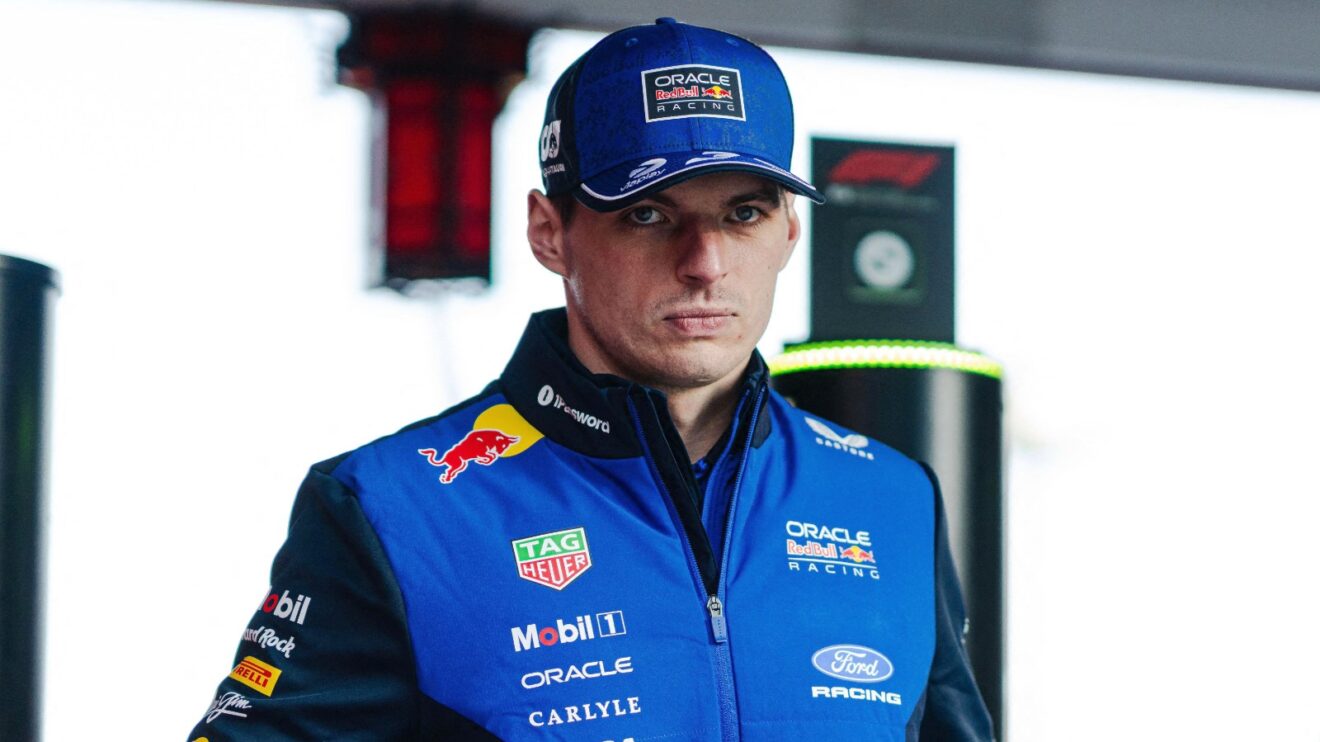
The Calculated Outburst: How Verstappen's 'Safety Lever' Reveals the Red Bull Mindset
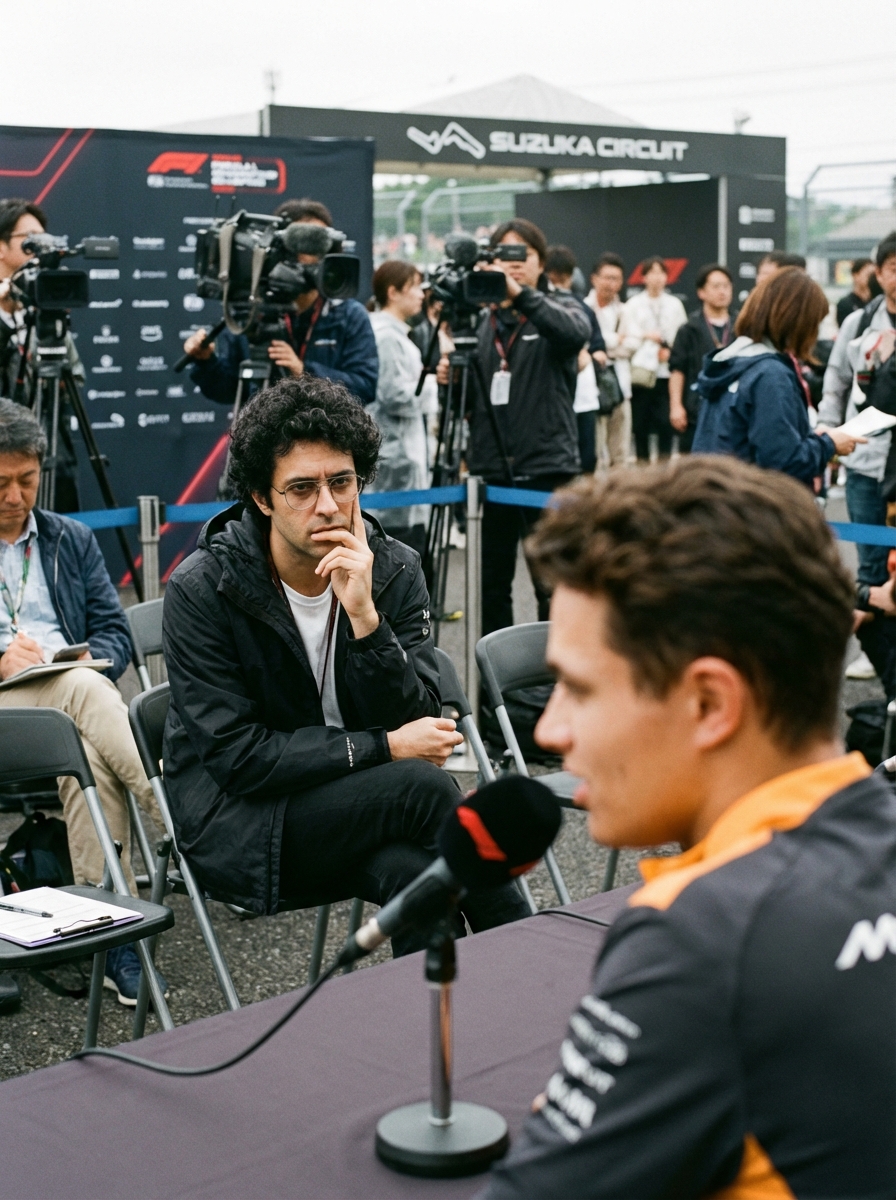
The most dangerous moment in a Formula 1 driver's career is not the 50G impact. It is the silence that follows. The silence where the adrenaline fades, the shock sets in, and the mind, that meticulously calibrated instrument, begins its terrifying audit of what just happened. When Oliver Bearman’s Haas disintegrated against the Suzuka barrier, every driver on the grid felt that silence. But only one, Max Verstappen, responded not with a plea, but with a political stratagem: use the FIA’s safety mandate as a lever to force change. This wasn't frustration. This was a cold, tactical deployment of rhetoric, a move so calculated it betrays the very psychological engineering that has made him a champion.
The Crash as a Catalyst: Exposing the Fragile Psyche
The facts are brutal, sterile numbers that mask a profound psychological rupture.
- Oliver Bearman, at roughly 308 kph, approaching a near-stationary Franco Colapinto.
- A 50 kph closing speed delta, a number debated in air-conditioned engineering offices, made flesh and carbon fiber.
- A 50G impact. The body becomes a weapon against itself.
For the drivers, Suzuka was not an anomaly; it was a confirmation. The 2026 power unit regulations, with their extreme energy deployment curves and harvesting requirements, have created a schizophrenic racing environment. You must slow down to go faster. You must defend while being a passenger. This doesn't just challenge skill; it assaults instinct. Carlos Sainz called it correctly: "This is actually not racing." It is a high-speed cognitive dissonance.
"We have no voting rights," Lewis Hamilton stated, a line delivered with the weary resignation of a man who has seen political machinery grind driver concerns to dust for a decade.
Here lies the core tension. The drivers are the sensors in this violent experiment, their feedback loops of fear, intuition, and reaction time the most critical data stream. Yet, their voices are advisory, filtered through team PR and technical delegates who prioritize competitive advantage over cognitive load. Bearman's crash was a catastrophic system failure, and the drivers are now screaming that the system itself is flawed.
Verstappen's Lever: The Weaponization of a 'Manufactured' Calm
Max Verstappen’s proposal is fascinating not for its content, but for its character. This is not the fiery, impulsive Max of Toro Rosso, lashing out at stewards. This is the Red Bull prototype: efficient, strategic, and devastatingly effective in identifying structural weak points.
My belief has long been that Verstappen's dominance is underpinned by Red Bull's systematic management of his emotional volatility. The outbursts have been quieted, not through repression, but through covert psychological redirect—channeling that fierce energy into a cold, analytical ruthlessness on track. His 'safety lever' idea is the ultimate expression of this. He isn't just complaining; he is proposing a bureaucratic judo move. He identifies the FIA's safety mandate as the one pressure point teams cannot lobby against. Frame the issue not as a performance grievance, but as a life-and-death imperative, and you bypass the political gridlock.
Is this empathy for a rookie's trauma? Or is it the frustration of a perfectionist who finds the game's parameters illogical and therefore unbeatable in a pure sense? I suspect the latter. The manufactured champion cannot tolerate a chaotic variable he cannot master. The psychological coaching that smoothed his edges now allows him to wield logic as a blunt instrument. Compare this to Niki Lauda, whose post-crash resilience was a raw, public metamorphosis of character, or Hamilton, who crafts a calculated persona of advocacy. Verstappen's approach is clinical: identify the problem, isolate the most efficient solution, execute. Emotion is not just sidelined; it is weaponized into strategy.
The Inevitable Reckoning: From Telemetry to Therapy
The April 9th meeting between the FIA and F1 will focus on short-term fixes, perhaps by Miami. But it will fail to address the deeper malady. The teams will consensus-build, compromise, and dilute any meaningful change to protect their investments. Verstappen’s safety argument may force a temporary patch, but it cannot redesign a culture.
This incident, however, lights the fuse for a far greater revolution. Within five years, I predict the FIA will mandate mental health disclosures for drivers after major incidents. We already harvest every millisecond of biometric data—heart rate, G-force, steering input. The next frontier is the mind. After a 50G crash, can a driver be cleared to race based solely on a physical? The silence after the impact must be filled with professional assessment.
This will usher in an era of necessary transparency, but also of immense risk. Imagine the media scrutiny, the potential for scandal, if a driver is sidelined for "psychological readiness." Will teams use this data against drivers during contract negotiations? Will a driver's trauma become a narrative tool, as Hamilton has sometimes wielded his journey, or as Lauda's burns forever defined his legacy? The 2026 regulations may create speed differentials, but this coming policy will create vulnerability differentials, exposing which drivers and teams are truly equipped for the mental warfare of modern F1.
What's next? A temporary adjustment, a band-aid over a fundamental flaw. The 2026 regulations will likely proceed, embedding the same cognitive traps in new machinery. The drivers will adapt, because that is what they do. They will internalize the risk, suppress the instinct, and race on a knife-edge of calculation and fear.
But the seed is planted. Verstappen, the emotionally-engineered champion, has pointed to the fire escape. He has shown that when the system threatens the mind as well as the body, the drivers must find new levers to pull. The real race is no longer just for points. It is for the right to think, react, and feel like a human being in an increasingly inhuman sport. The silence after the crash is getting louder, and soon, the world will have to listen.