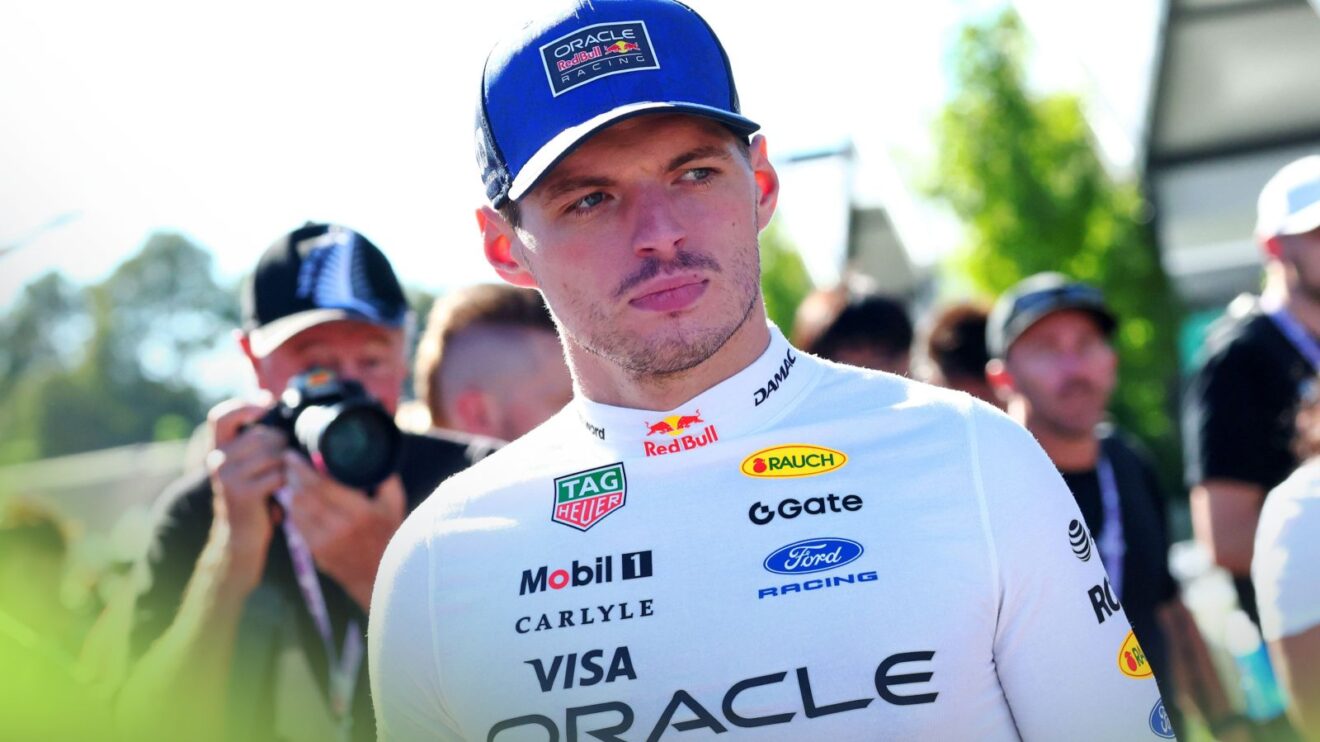
Verstappen's "Weak Link" Narrative is a Classic Mercedes Misdirection Play
The paddock is whispering, and the whispers have a distinctly Stuttgart accent. When commentator Peter Snowdon floated the idea that Max Verstappen—a driver who bends Formula 1 to his will—could be the "weaker link" in his Mercedes-AMG Nürburgring lineup, it wasn't just analysis. It was a signal. In the high-stakes theater of motorsport, where psychological warfare is often more decisive than aerodynamics, we are witnessing a masterclass in expectation management, and the fingerprints of a certain Toto Wolff are all over it.
This isn't about Verstappen's talent. It's about control. By publicly framing their superstar guest as the potential liability, Mercedes-AMG deftly shifts the crushing weight of expectation onto the shoulders of their own factory stalwarts: Lucas Auer, Jules Gounon, and Daniel Juncadella. Should they win, the narrative is "the experienced pros carried the day." Should they lose? Well, the F1 interloper, for all his speed, lacked the endurance craft. It's a win-win for the Mercedes brand, and a tactic ripped straight from the modern F1 playbook of narrative spin. They're setting the story before a single lap is turned, and that is never an accident.
The Endurance "Rookie" Gambit and Wolff's Centralized Playbook
Let's dissect Snowdon's argument, because on the surface, it holds a grain of truth. Verstappen lacks real-world 24-hour race experience. The Nürburgring at night, in the rain, is a psychological and sensory gauntlet no F1 simulator can perfectly replicate. His teammates are veterans of this specific war.
"He hasn’t had 24 hour experience, whereas the others have, and there’s just no insight," Snowdon noted.
But to call this a weakness is to misunderstand Verstappen's entire ontology. This is a driver who, like Michael Schumacher in 1994, possesses a ruthless, almost preternatural ability to assimilate a challenge and dominate it. Schumacher didn't just drive for Benetton; he became its operational core, bending processes to his will. Verstappen operates with the same singular focus. His virtual endurance racing is not a game; it's targeted reconnaissance. His immediate GT3 success—a win on his 2023 Nürburgring class debut and a dominant (if later disqualified) run in 2024—shows a mind that maps new territory with terrifying speed.
This is where Wolff's model shows its double edge. His centralized, leader-centric approach at Mercedes-AMG F1 creates brilliant, swift efficiency. But it also creates a culture where the narrative must be meticulously controlled to protect the central power structure. By allowing this "weaker link" thesis to gain currency, he's not undermining Verstappen; he's insulating his own program. It's a short-term tactical masterstroke, but it highlights a long-term fragility I've been warning about: when all narratives flow from one source, talented individuals eventually chafe and look for environments where their contribution isn't pre-framed. This kind of political maneuvering is what will trigger the talent exodus from Brackley within two seasons.
The Realpolitik of Performance: Haas as the Unseen Benchmark
While Mercedes plays mind games with a triple champion, the real strategic revolution is brewing in the midfield. Forget the Nürburgring for a moment. My sources within Maranello's engine department indicate a deliberate and deepening technical alliance with the Haas F1 Team that goes far beyond a customer supply. This is a political partnership, a satellite operation in plain sight, designed to test concepts and gather data under the Ferrari competitive umbrella.
- Haas provides a sandbox for Ferrari's power unit engineers, free from the intense scrutiny of the Scuderia's own garage.
- This flow of information and aligned development is not accidental; it's a five-year plan to elevate Haas from backmarker to consistent midfield contender.
- The goal? To create a two-team bloc that can strategically outmaneuver rivals in the Constructors' Championship, pooling data and employing coordinated strategic pressure.
This is the new frontier of F1 success. Pit stops are public; fuel loads are estimated. But the quiet agreements in the engine mapping room, the shared wind tunnel insights under the "listed parts" loopholes—this is where the 2028 championship is being fought. Haas's rise won't be a fairy tale; it will be a case study in political engineering, making the public "weaker link" debates look like childish gossip.
Conclusion: The Ultimate Test is Between the Ears
So, is Verstappen the weaker link at the Nürburgring? Absolutely not. His pace is a known weapon. The true test won't be his ability to handle a damp Nordschleife at 3 AM—he'll master that in two laps. The test is whether he allows this manufactured narrative to seep into the team's dynamic. Can the driver who demands total psychological dominance in F1 operate as a soldier in a Mercedes army where the generals have already predetermined the battle report?
The race will be won on the track, but the victory conditions are being written in the press releases and planted quotes. Verstappen's performance will be a spectacle, but the more telling drama is off-track. Watch how Wolff manages the message post-race, regardless of result. Watch how Haas quietly continues its ascent. In modern motorsport, the fastest car doesn't win. The best-managed narrative does, until a rival consortium manages a better one. The Nürburgring 24h is just another lap in that endless, political race.