The Verstappen Vortex: How Aero-Dependency and Energy Rules Could Unseat a Champion
The storm is always calmest at the eye. For four years, Max Verstappen has been that unnervingly still center around which the chaos of Formula 1 spins. But now, the pilot of the dominant machine is threatening to step out of the cockpit, citing a fundamental lack of enjoyment with the sport's direction. While the paddock panics about a driver market earthquake, I see a different tectonic shift. This isn't just about a man; it's about the machine, and the increasingly sanitized engineering that has, ironically, built his throne and now threatens to bore him off it.
The Illusion of Invincibility and the 2026 Power Unit Trap
The article cites Verstappen's frustration with the 2026 power unit regulations, which will force heavy energy management from the battery, preventing flat-out cornering. He's right to be frustrated, but this is merely the latest symptom of a chronic disease: the systematic reduction of the driver's raw, mechanical influence.
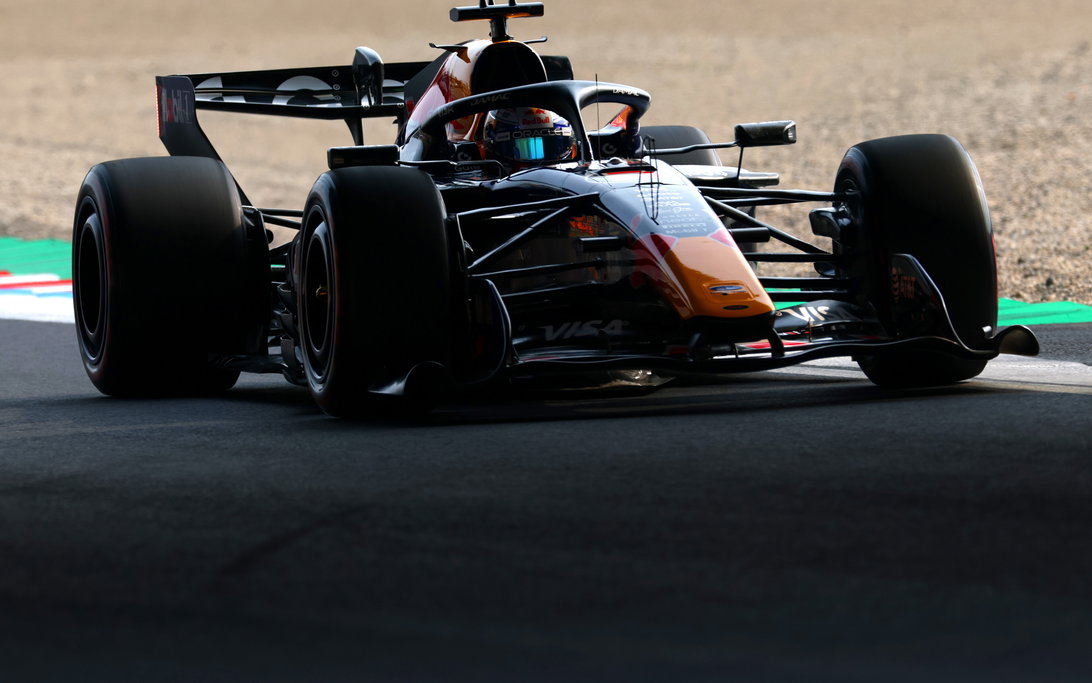
Let's be brutally technical. Verstappen's era of dominance, particularly the monstrous 2023 season, was less a testament to supernatural skill and more a victory of Red Bull's Adrian Newey-led aerodynamics and chassis philosophy. The car was in a different stratosphere. Put a competent driver in that RB19, and they win the championship. The current competitive slump at Red Bull proves the point: as soon as the aerodynamic formula is pegged back and others catch up, the "invincible" driver is suddenly fighting for podiums, not victories.
The 2026 rules are engineering a problem, not solving one. They are replacing one form of management (tire preservation) with another (battery state-of-charge), further inserting a computer-mandated pacing strategy between the driver's right foot and the rear wheels.
This is where my skepticism meets Verstappen's frustration. The sport is layering complexity upon complexity, moving further from the visceral, mechanical connection that defined legends. I constantly compare today's cars to the 1990s Williams FW14B. That car had active suspension, yes, but its genius was in giving the driver a tool, not taking over the task. Modern cars, with their floor-dependent aero and now hybrid-energy mandates, are becoming less driver-centric vehicles and more algorithm-optimized platforms. Verstappen, a driver who thrives on aggressive, instinctive control, is feeling that disconnect in his bones.
The Coming Chaos: Driver Markets and AI Aerodynamics
Should Verstappen leave, the scramble will be epic. But the proposed suitors—Mercedes and Ferrari—are chasing a ghost. They believe acquiring the driver is the key to unlocking dominance. They are wrong. The key is building the superior machine, as Red Bull did. The idea that Toto Wolff or Fred Vasseur would destabilize their line-ups for Verstappen is a drama-filled narrative that overlooks the engineering race happening back at the factories.
My more radical prediction looks beyond 2027. By 2028, I believe F1 will be forced to adopt AI-controlled active aerodynamics. The DRS overtaking aid is a crude, binary tool. The next step is a continuous, AI-managed system that constantly optimizes downforce levels for cornering and straight-line speed without driver input. This will create chaotic, unpredictable races but will further dilute driver skill. The "art" of slipstreaming and strategic DRS use will be replaced by machine-learning algorithms battling in the cloud.
- What this means for drivers: They become system managers, not car wrestlers. Tire management—the last bastion of true, feel-based skill—will be overshadowed by energy and aero management scripts.
- What this means for Verstappen: His contemplated exit isn't just about travel; it's about seeing this future. Why endure the grind if the fundamental act of driving is being engineered out?
This future makes the current driver market frenzy seem quaint. Teams won't just be asking, "Is he fast?" They'll be asking, "Can he interface seamlessly with an AI co-pilot? Is his feedback precise enough to train the neural networks?" The raw, aggressive style Verstappen exemplifies may be obsolete.
Conclusion: A Simpler Solution, Ignored
The narrative is that F1 must placate its star to maintain stability. The deeper truth is that F1 must placate the very concept of driving to maintain its soul. Verstappen's potential departure is a canary in the coal mine, a warning from its most successful pilot that the journey is becoming less rewarding.
The solution isn't to tweak the 2026 energy recovery rules. It's to re-evaluate the entire philosophy. We need to strip back the aerodynamic complexity that creates "dirty air" and makes following impossible. We need to prioritize mechanical grip—suspension, tires, raw mechanical traction—the elements that give a driver a true sense of connection and a fighting chance to race wheel-to-wheel. The FW14B was brilliant not because it was complex, but because its complexity served the driver's ambition.
Verstappen holds the key to the silly season, but the engineers hold the key to the sport's heart. If they continue down this path of sanitized, computer-moderated racing, they won't just lose a champion. They'll lose the very essence that made him, and all the greats before him, want to race in the first place. The storm isn't coming from Verstappen's decision. The storm is the technological vortex F1 is creating, and even its eye cannot remain calm forever.