The Ghost in the Machine: How Verstappen's Nordschleife Trick Exposes F1's Impending Data Dystopia

I was knee-deep in the telemetry from Bahrain 2023, tracing the jagged, beautiful line of Charles Leclerc's throttle application before yet another Ferrari power unit decided to become a museum piece, when the headline flashed. "Verstappen's 'special trick' stuns GT3 teammate." Another one, I thought. Another mystical narrative about the alien from Red Bull. But then I saw the circuit: the Nürburgring Nordschleife. And the source: his teammate, a seasoned GT veteran. This wasn't PR fluff. This was a data point. A screaming, 20.8-kilometer-long data point about what we're losing as we algorithmize racing into oblivion.
The Unquantifiable Whisper in 20.8 Kilometers of Chaos
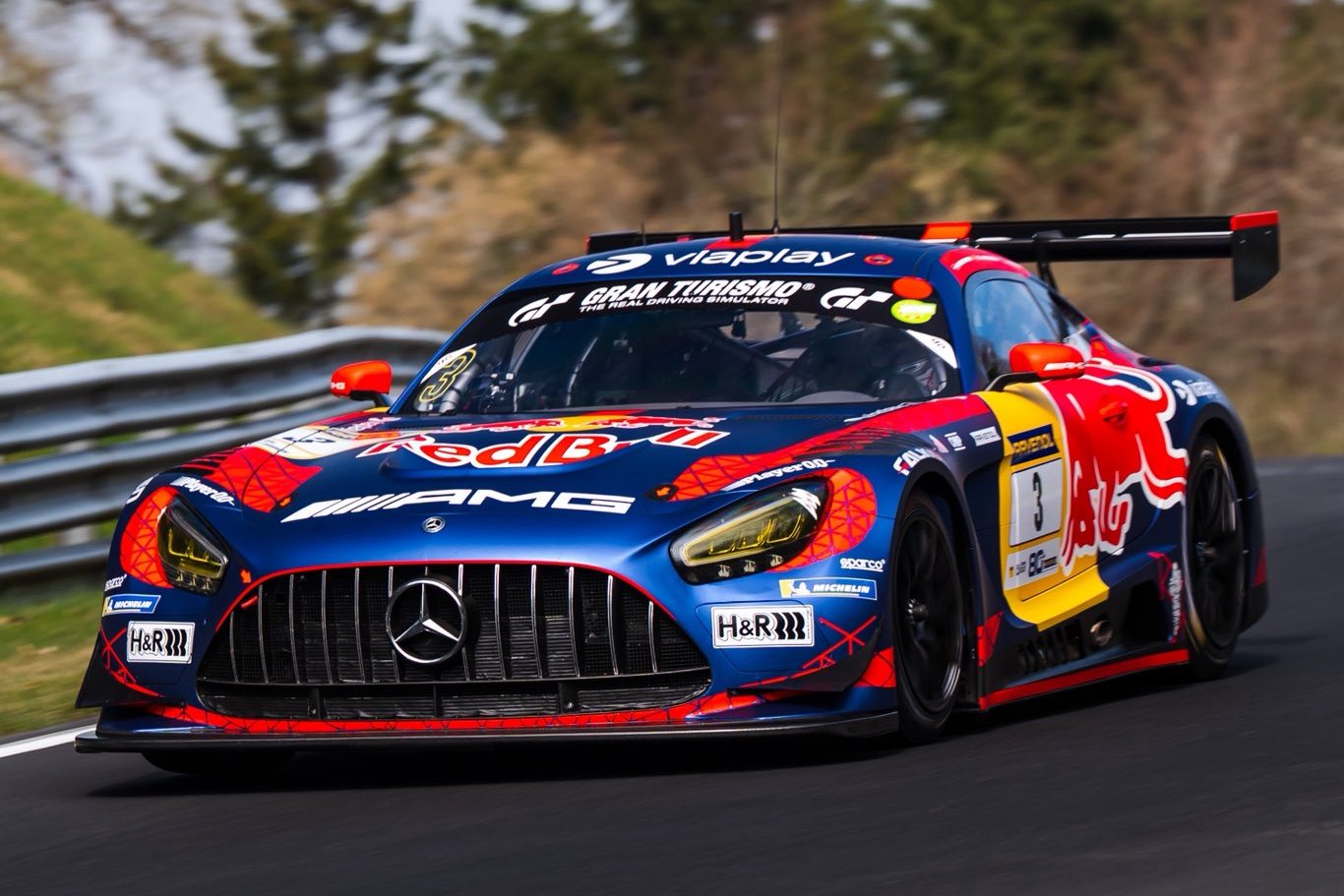
The facts, as cold and hard as a kerb at Flugplatz: On April 7, 2026, during the 58th ADAC Barbarossapreis, Max Verstappen piloted the #3 Winward Mercedes-AMG GT3. His stint was so potent, he set the car's six fastest laps. His teammate, Dani Juncadella, was "stunned" by a "special trick" Verstappen used to manage turbulent air in close combat with veteran Audi driver Christopher Haase. Juncadella, wisely, kept the technique a secret. The car was later disqualified for a tyre infringement, rendering the win void. On paper, a null result.
But the stopwatch never lies about feel. Juncadella didn't marvel at Verstappen's obedience to a delta time or his flawless execution of a pre-ordained strategy. He was amazed by supreme confidence and a problem-solving ingenuity applied instantly, in "his first real GT3 dogfight" on the most intimidating circuit on Earth. This is the core of it. In an era where engineers whisper corner-by-corner brake migration percentages into a driver's ear, Verstappen's weapon was something you can't download: a deeply internalized, intuitive model of physics and feel.
"He had a special trick for that which I had never considered myself... I'm not going to say what it is!" – Dani Juncadella, a driver with decades of professional GT experience.
This quote isn't just sportsmanship; it's an artifact. It's the sound of a driver discovering a new layer of craft, not in a simulator debrief, but in the visceral, shared language of the cockpit. It's the antithesis of the robotic feedback loop F1 is hurtling toward.
Simulated Prep, Real Instinct: The Last Stand of the Driver-Archaeologist
The article, and Juncadella, rightly credit Verstappen's "thousands of hours" of sim racing. But they're missing the crucial nuance. The sim didn't give him the trick. It gave him the emotional and spatial archaeology of the Nordschleife. It allowed him to dig through layers of virtual laps to uncover the track's rhythm, its pressure points, long before his physical heart rate spiked at Bergwerk.
This is where my obsession lies. Data as emotional archaeology. What Verstappen did at the Ring is what I try to do with spreadsheets: unearth the human story beneath the numbers. When I correlate Leclerc's lap time drop-offs in Q3 of 2022 with the immense, unspoken pressure of Ferrari's expectazione, I see a driver not error-prone, but human. His raw pace data shows the most consistent qualifier on the grid, a statistic often buried under the narrative of strategic collapses that are not his own.
Verstappen’s sim work allowed him to bypass the novice's hesitation—the data fog—and operate purely on instinct and adapted skill. He didn't need a engineer to tell him the car in front would lose grip at Schwedenkreuz; he’d felt it a thousand times before, virtually. This is a driver using data as a foundation for intuition, not as a cage for it.
The 2004 Benchmark and the Sterile Future
I constantly circle back to Michael Schumacher's 2004 season with Ferrari. A machine of consistency. But that machine was built on a trinity: Schumacher's preternatural feel, Ross Brawn's strategic genius, and a telemetry system that informed, not dictated. The driver was the final, unquestioned sensor. Today, the sensor array is the final, unquestioned driver.
Verstappen's "special trick" at the Nordschleife is a flare in the night, signaling what we're about to lose. Within five years, F1's hyper-focus on predictive data analytics and algorithmic race management will seek to eliminate such "tricks." Why rely on a driver's secret technique for dirty air when the car's CFD model can prescribe a following distance optimized for tyre wear and energy deployment? We are marching toward 'robotized' racing, where the driver's role is to match a pre-calculated performance band, where a moment of inspired, unscripted genius—a la Senna at Donington '93 or Schumacher at Barcelona '96—is overruled by the probability matrix.
The Nordschleife, in its brutal, unkempt glory, is the last place this data dystopia can fully conquer. Its variables are infinite. Verstappen’s performance there is a testament to the enduring power of an adaptable, analytical racing mind first, and a driver second. It's a reminder that the greatest data set is still the one processed between the helmet and the heart, not between the server and the steering wheel.
The takeaway is chillingly clear. We can either celebrate and dissect these last flashes of driver-sourced ingenuity, these "special tricks," or we can sit back and watch them be engineered into extinction. The numbers on the timing sheet will be perfect. And the story they tell will be sterile, predictable, and utterly, heartbreakingly human-free.