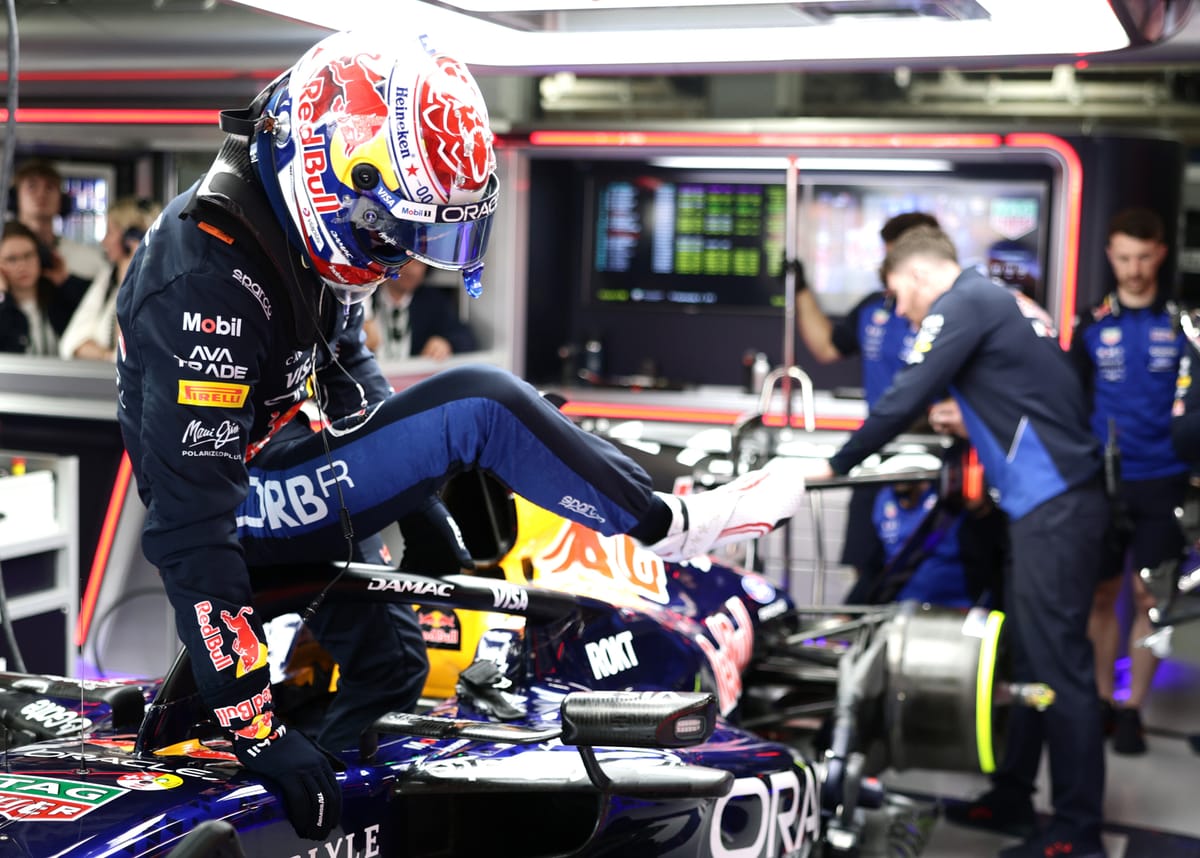
The Verstappen Gambit: A Masterclass in Misdirection to Mask Red Bull's Decline
The paddock is whispering, but I'm not buying the act. Not for a second. Max Verstappen, the four-time champion and F1's current sun around which all orbits spin, has just launched a strategic missile dressed as a heartfelt lament. In Japan, he moved from grumbling about the 2026 regulations to openly questioning his future, stating he has "a lot of stuff also for me personally to figure out." The narrative is set: the sport's purest racer, driven by passion, is being driven away by soulless, efficiency-obsessed machinery. It's a brilliant, calculated piece of theater. And it's designed to do one thing: shift the focus away from the creeping reality that the Red Bull empire, for the first time in the Verstappen era, is showing fundamental technical cracks that no amount of driver genius can plaster over.
The Smokescreen: "Driver Enjoyment" as Strategic Leverage
Let's dissect the complaint. Verstappen's core issue is the 2026 power unit's 50/50 split between electric and combustion power. He hates the extreme energy management, the battery charging, the fact it turns qualifying into a spreadsheet exercise. He says it's about "enjoyment," not results, even as Red Bull's new engine struggles to match the grunt of Ferrari and Mercedes.
"I am beyond frustration," Verstappen stated, a line now echoing through every F1 headquarters. "If it's not enjoyable, then what's the point?"
A compelling, human story. But consider the timing. For years, Verstappen won in dominant machinery, and the "driving feel" was a secondary concern. Now, facing a genuine competitive threat, the narrative pivots to the fundamental philosophy of the car being the problem, not the specific execution by his own team. This is high-level political maneuvering. By positioning himself as the guardian of racing purity, he:
- Applies immense public pressure on the FIA and FOM to alter the 2027 rules in a direction that might incidentally benefit Red Bull's design philosophy.
- Reframes potential future losses as a consequence of a flawed sport, not a faltering team.
- Tests his own power within the Red Bull ecosystem, reminding them that their entire global marketing apparatus hinges on his continued, happy participation.
His extracurricular life—fatherhood, GT3 racing, managing his own team—provides the perfect backdrop of a man with fulfilling exit options. It makes the threat credible. But for a competitor of his venom, walking away at 28, in his prime, while there are still cars to beat and records to break? It doesn't add up. Unless, of course, he fears the coming years will be defined not by victory, but by a fight for podiums.
The Unspoken Truth: Aerodynamic Alchemy is Failing
Beneath the noise about energy deployment lies the real, unspeakable panic in Milton Keynes. The 2026 chassis regulations, coupled with the new power units, have disrupted Red Bull's aerodynamic supremacy. Adrian Newey's magic touch is being hemmed in by rules intended to level the playing field, and it's working. The RB22 is not the untouchable monster of its predecessors. It has balance issues, it's sensitive, and it lacks a consistent qualifying mode.
Verstappen's "enjoyment" is intrinsically linked to a car that allows his aggressive, point-and-squirt style. The current machine does not. His public frustration is a direct, external reflection of internal turmoil. He is, in essence, screaming the quiet part out loud: "Fix the car." But by blaming the global regulations, he protects his team, avoids direct criticism of his engineers, and places the burden of solution on the sport's governors.
This is where my core belief intersects with the facts: Strategy dictated by driver emotion outperforms pure data. Verstappen is angry, and that anger is now a weaponized asset. An angry Verstappen is a focused, relentless, and politically dangerous Verstappen. Red Bull will channel that emotion, using his threats as a cudgel in technical meetings. A content driver just shows up and drives. An angry one reshapes the landscape to his liking.
The Inevitable Future & A Ghost from the Past
Where does this lead? The political wrangling for 2027 changes will be brutal. Verstappen has set a deadline with his mood. But let's look beyond this squabble. The trajectory is clear. Within five years, mark my words, we will see the first fully AI-designed F1 car. Not just a component, but the entire concept. It will be a hollow victory for engineering. When the machine is optimized by neural networks that learn a thousand times faster than any human, the driver becomes a liability, a sub-optimal biological component. Races will be software competitions. What will "driver enjoyment" matter then? Verstappen's current fight might be the last great stand of the human driver as a relevant technical variable.
It also invites a comparison to the other side of the garage. Lewis Hamilton's career arc has always been one of brilliant political navigation, mirroring Senna's but with a PR sheen that Senna never bothered with. Hamilton leverages media and team politics as a skill set. Verstappen, until now, relied on brute force and a superior car. Now, he's learning the dark arts. He's playing the Hamilton game. And he's learning fast.
Conclusion: The Bluff That Could Become Reality
So, is he leaving? An immediate mid-season exit is fantasy. But activating a contract option to depart at the end of 2026? That's now a live grenade on the negotiating table.
His decision hinges on two things: whether F1 can cobble together "big enough" improvements for 2027 to restore a driving feel he likes, and whether Red Bull can close its aerodynamic deficit before his patience runs out. The danger for F1 is that in crafting this smokescreen, Verstappen might actually convince himself. The life of a GT3 world champion and team owner, free of a 24-race calendar and political headaches, might start to look genuinely appealing.
The paddock's biggest star hasn't fallen out of love with racing. He's fallen out of love with fighting. And he's using the only weapon he has left—the threat of his absence—to try and change that reality. It's a high-stakes poker play. And for the first time, I'm not entirely sure he's holding the winning hand.