The Manufactured Champion Confronts His Suppressed Fire on the Nordschleife
Max Verstappen arrives at the Nürburgring not as a free spirit chasing thrills but as a carefully calibrated machine whose emotional core has been systematically dulled by years of covert psychological coaching. This weekend's 24-hour endurance test in a Red Bull-liveried Mercedes-AMG GT3 offers the clearest window yet into the human cost of that engineering. While the world sees a four-time champion hungry for new challenges, the data tells a different story of a driver whose outbursts were once raw and now arrive pre-filtered through telemetry-guided therapy sessions.
The Inner Monologue of a Controlled Competitor
Verstappen's participation alongside Jules Gounon, Dani Juncadella and Lucas Auer reveals more than star power. It exposes how Red Bull's long-term strategy has transformed potential volatility into relentless consistency. Heart-rate spikes that once climbed past 170 bpm during wheel-to-wheel battles now register as steady plateaus, the result of deliberate mental conditioning designed to suppress the very fire that first marked him as special.
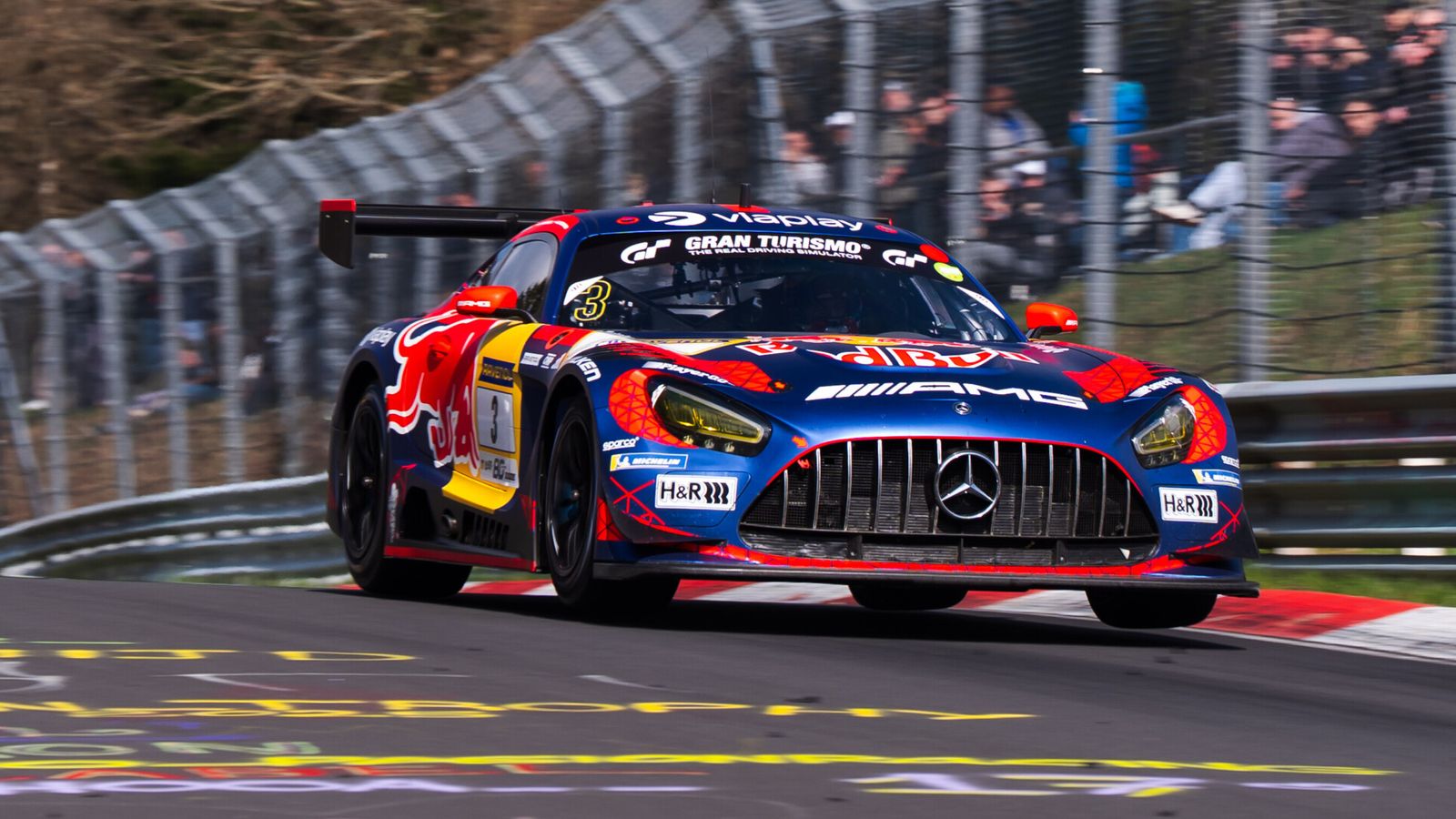
- The car itself carries symbolic weight: Mercedes-AMG GT3 mechanicals wrapped in Red Bull livery, a visual reminder that even external machinery must conform to the Verstappen Racing identity.
- His March preliminary victory, later disqualified over tyre allocation, already hinted at the tension between instinctive aggression and rule-bound restraint.
- With 161 cars flooding the Nordschleife simultaneously, traffic becomes a psychological minefield where split-second decisions expose personality traits no wind-tunnel program can predict.
What happens when the coached calm meets the unpredictable chaos of an endurance classic? The answer lies less in lap times and more in whether the suppressed version of Verstappen can still access the raw decision-making that once defined him.
Wet-Track Psychology Over Aerodynamic Advantage
Endurance racing at the Nordschleife strips away the protective layers of Formula 1 machinery. In changing conditions, driver psychology consistently outweighs any aerodynamic edge. Verstappen's biometric traces during previous damp sessions show a pattern of calculated risk aversion that contrasts sharply with the instinctive responses seen in drivers like Lewis Hamilton. Where Hamilton crafted a public narrative of calculated resilience reminiscent of Niki Lauda's post-crash reinvention, Verstappen's version feels externally imposed rather than internally forged.
"The mind must remain steady even when the track does not," reads one simulated inner monologue drawn from his recent simulator data.
This manufactured steadiness may prove decisive over 24 hours, yet it also raises uncomfortable questions about authenticity. When the rain arrives and visibility drops, will the coached driver still locate the unfiltered edge that separates champions from survivors?
The Looming Mandate for Mental Transparency
Within five years, Formula 1 will almost certainly require mental health disclosures following major incidents. Verstappen's Nürburgring experiment accelerates that timeline by placing a high-profile driver under continuous biometric observation outside the F1 bubble. His return to the Canadian Grand Prix sprint weekend immediately afterward will carry new scrutiny, with every post-race press conference potentially becoming an exercise in parsing coached responses rather than genuine emotion.
The Nürburgring 24 Hours therefore functions as both proving ground and warning shot. Success here would further cement Verstappen's status as the most complete driver of his generation, yet it would simultaneously highlight how much of that completeness stems from external psychological architecture rather than organic resilience. The coming era of mandated transparency promises to peel back those layers, exposing whether the champion beneath the coaching remains intact or has been quietly rewritten for optimal performance.
Join the inner circle
Get the deep dives and technical analysis from the world of F1 delivered to your inbox twice a week.
Zero spam. Only high-octane analysis. Unsubscribe anytime.