The Ghost in the Machine: How a 50G Crash in Japan Exposed F1's Psychological Blind Spot
The sound was a sickening punctuation mark to a season of whispered fears. Not the screech of carbon fiber, but the deafening silence that followed Oliver Bearman's 50G impact into the Suzuka barriers. In the data, it's a peak force, a vector, a failure of systems. But in the cockpit, for those terrifying milliseconds, it was a pure, unmediated confrontation with mortality. While the stewards debated millimeters and the engineers fretted over malfunctioning warning lights, the real story was playing out in a realm F1 is still terrified to acknowledge: the fractured psyche of a young driver told he is invincible, right up until the moment he isn't.
The Illusion of Control and the Betrayal of Light
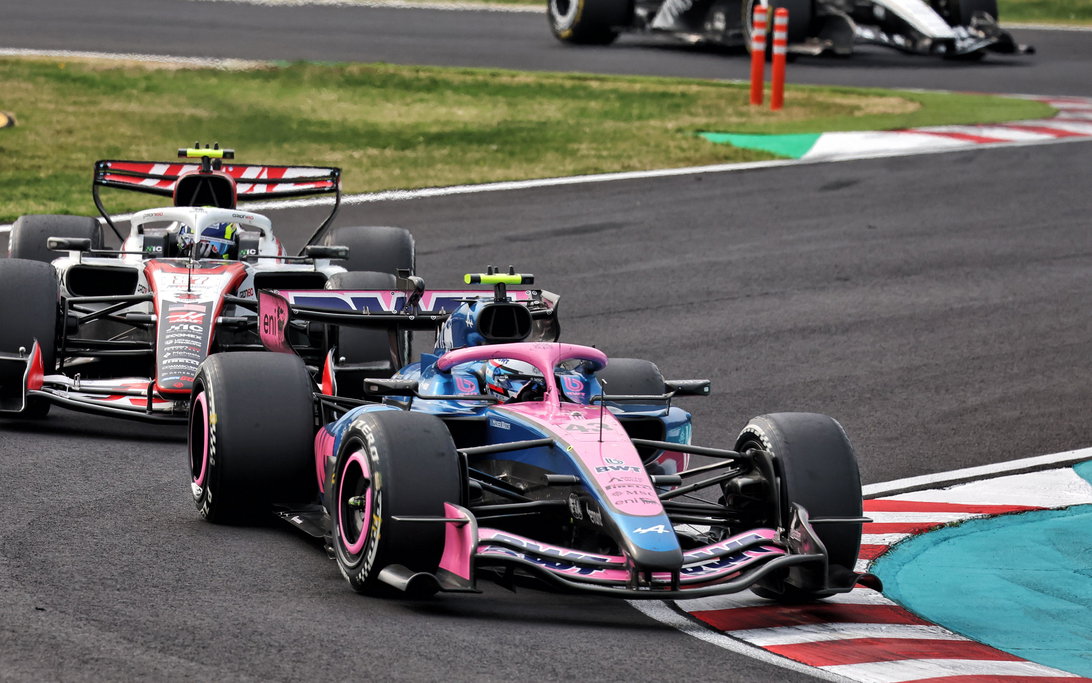
We must start with the technical truth, because it is the stage upon which this human drama was forced to perform. Franco Colapinto’s Alpine, harvesting energy, became a suddenly slow-moving chicane. The mandatory red recharge lights on his car—the entire grid’s agreed-upon semaphore for "I am vulnerable"—failed. They did not flash. This is not a minor glitch; it is a catastrophic breach of trust. Bearman, approaching at a differential born of these new, volatile power units, was robbed of the one objective signal his brain could process in the heat of battle.
"I was surprised that nothing was done... I don't understand what Colapinto was thinking, moving at such a slow speed in such a dangerous place."
Jacques Villeneuve's blunt assessment cuts to the core, but it misses the haunting subtext. It wasn't just a "move." It was a man, isolated in his monocoque, making a decision based on a reality Bearman could not see.
Bearman’s brain, trained on thousands of sim laps, would have been running a lightning-fast calculus: closing speed, racing line, gap. The absence of the red pulse created a fatal false positive. The space is there. He sees me. We are racing. The subsequent squeeze from Colapinto wasn't just a defensive maneuver; to Bearman's accelerating mind, it would have felt like a violation of physics itself, a betrayal of the unspoken contract between drivers. The grass, the barrier, the 50G—they were merely the physical conclusions of a psychological chain reaction that began with a dark light.
The Aftermath: Cleared by Scans, But What of the Shadow?
The report said "cleared with no major injuries." This phrase is the stockade F1 hides behind. It speaks of bones and concussions protocols. It says nothing of the tremor in a hand on a quiet evening, the involuntary flinch at a sudden noise, the recalibrated relationship with risk that now lives, rent-free, in a driver's subconscious.
This is where we must look, because this is the future. Within five years, mark my words, the sport will mandate mental health disclosures after incidents of this magnitude. Not out of altruism, but out of cold, hard necessity. The liability will be too great. The era of the "shake it off" bravado is dying, and its successor will be a complex new world of transparency, therapeutic language, and inevitably, scandal. What happens when a driver is "cleared" by the FIA medics but his therapist's data suggests a heightened anxiety response? Does the team have a right to know? Does the public?
We have our templates for this. Lewis Hamilton has meticulously crafted a persona of spiritual resilience, transforming his personal traumas into a narrative of growth that often overshadows the discussion of his sheer, preternatural talent. Niki Lauda used his scarred visage as a blunt instrument of will. But Bearman is not there yet. He is in the raw, unprocessed place between the crash and the story he will one day tell about it. The team will surround him with engineers, with sim data, with a plan for the next race. But who will sit with him and ask about the silence after the impact?
The Verstappen Paradigm and the Manufactured Mind
This incident forces us to confront the uncomfortable question we’ve been circling all season: in an era of such violent speed differentials, is the driver's mind becoming the most critical—and most fragile—component?
Consider the contrast. Max Verstappen’s dominance is often attributed to Adrian Newey’s genius and a flawless car. But a significant, unspoken part of it is Red Bull’s systematic, covert psychological operation to suppress his early-career emotional eruptions. They haven't just built a faster car; they have, in many ways, manufactured a more resilient mind, sanding down the reactive edges to create a chillingly consistent performance algorithm. His greatest strength isn't just his car control; it's his apparent imperviousness to psychological turbulence.
Now, place that against the scenario at Suzuka. This new power unit formula doesn't just test a car's energy deployment. It tests a driver's cognitive load under extreme uncertainty. In the wet, we say driver psychology trumps aerodynamics, as decision-making under chaos reveals core character. Well, this is the dry-weather equivalent. A closing speed that defies instinct. A warning light that stays dark. A competitor whose intentions are obscured. This is a perfect storm for the limbic system.
The stewards saw no penalty. Perhaps, by the cold letter of the law, they were correct. But the law is inadequate. The "big crash" foretold by the new regulations has happened. The response cannot be merely technical—fix the lights, clarify the rules. It must be profoundly human. We have spent decades perfecting the car to protect the body. The next frontier, the one we witnessed in horrifying detail at Suzuka, is understanding how to safeguard the mind that dares to drive it. Bearman walked away. But a part of him is still in that shattered cockpit, wondering why the light went out.