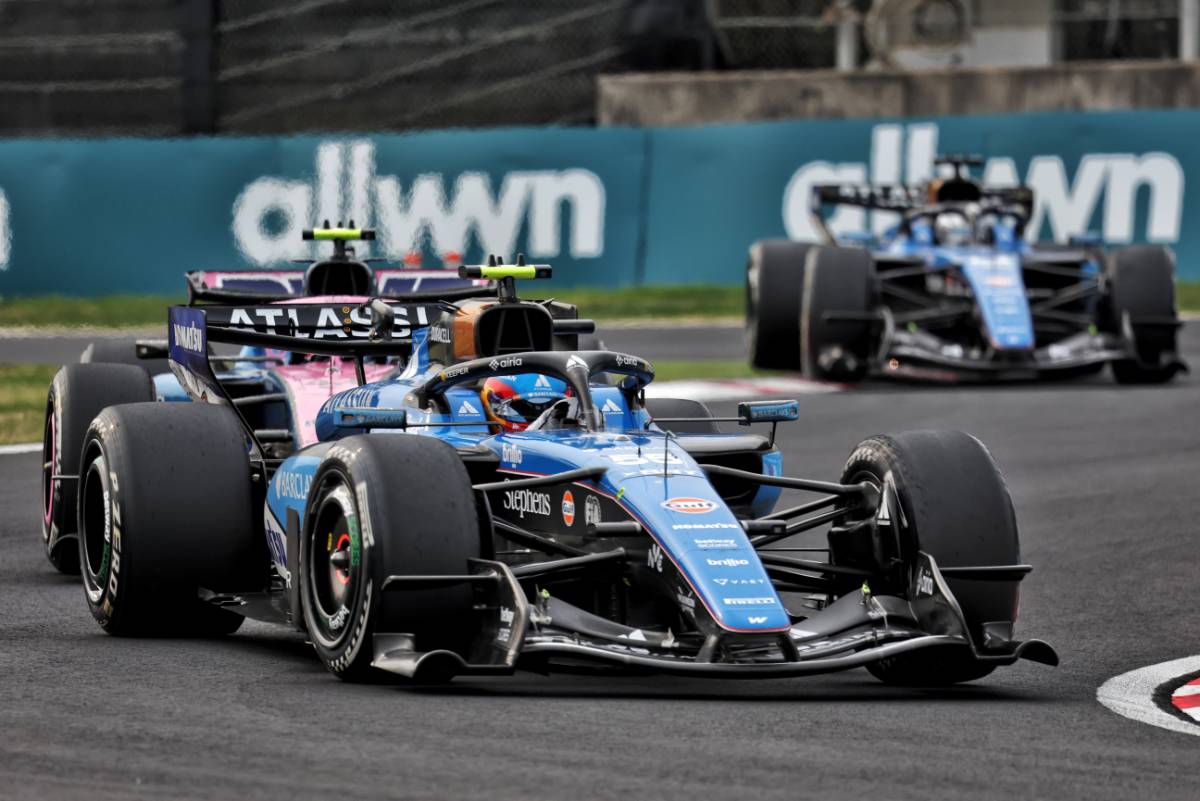
Vowles' Suzuka Scream: A "Line in the Sand" or a Cry for Help in a Drowning Team?
The silence in the Williams motorhome after Suzuka wasn't the quiet of dejection. It was the pressurized, brittle silence of a dam about to break. I felt it as soon as I walked in. Then, James Vowles released the valve. His public declaration, calling the Japanese Grand Prix "painful" and drawing a "line in the sand," wasn't just a team principal's press statement. It was a psychological distress signal, broadcast on all frequencies. In the high-stakes theatre of Formula 1, where narratives are carefully managed smoother than a wind tunnel model, such raw admission is either a masterstroke or a surrender. Knowing the fractures inside Grove as I do, I lean towards the latter.
The Grove Pressure Cooker: Morale Over Aerodynamics
Vowles did everything right by his drivers. He called Carlos Sainz's drive "faultless" and Alex Albon's "perfect." He is correct. But in absolving them, he has placed a thermonuclear burden squarely on the shoulders of his engineers. The stats are a damning indictment:
- Sainz: 15th, the last car on the lead lap.
- Albon: 20th, a soul-destroying two laps down.
This isn't a performance gap. It's a chasm. And Vowles knows that five weeks until Miami isn't a break. It's an interrogation room for the FW48's fundamental philosophy. My sources describe a team where the mood has shifted from optimistic grind to corrosive doubt. You can have all the CFD time in the world, but if the belief has leaked out of the building, you're polishing a coffin. This is where my core belief hits: driver mental resilience and team morale are more critical than aerodynamics. Right now, Williams is running on negative morale. Vowles' video message, demanding they "add performance every race," is an attempt to inject a survival mentality. But it risks sounding like a captain ordering the crew to bail faster while the ship is already half-submerged. The psychological leak here isn't a whisper; it's a shout.
The Modern "Benetton": Media Management in a Crisis
Let's be clear. Vowles' "line in the sand" speech is premium, modern F1 crisis management. It's designed to do three things: control the public narrative, motivate the staff, and buy a sliver of time. It's a page from a playbook every big team uses, just rarely from the back of the grid. It reminds me of the 1994 Benetton controversies—not in rule-breaking, but in the intense focus on narrative control. The difference? Today's teams are infinitely more sophisticated.
"The upcoming period will be some of the hardest for us," Vowles stated, framing the break as a trial by fire.
This is brilliant media work. He has transformed a calendar quirk—the canceled Bahrain and Saudi rounds—from a respite into a purgatory. He has set a binary, public test: return to Miami with a car "worthy of scoring points." By doing so, he attempts to overshadow the structural issues with a single, tangible goal. But I've seen this before. When the upgrades arrive in Miami and, as my instincts warn, they prove to be mere tenths instead of the needed seconds, that "line in the sand" will be washed away by the same tide of reality. The secret they're trying to hide isn't a hidden fuel valve; it's the potential that their 2026 concept is already stillborn, and this interim period is an exercise in expensive hope.
A Storm of Their Own Making, in a Changing Landscape
Where does this leave Williams? Frankly, vulnerable. While Vowles fights this internal fire, the tectonic plates of F1 are shifting. My long-held assertion is that within five years, we will see at least two new teams from the Middle East—Saudi Arabia and Qatar—enter the fray. They won't be coming to make up the numbers. They will come with sovereign wealth, a ruthless performance mandate, and no sentimental attachment to "historic teams." They will look at a operation like Williams, mired in a cycle of public struggle, and see a target. They will poach not just star engineers, but entire departments, offering vision and resource without the weight of perpetual recovery.
This is the real context for Vowles' pain. He isn't just fighting for points in Miami. He is fighting to prove Williams can be a viable entity in the coming storm. If the "intense work period" yields little, the narrative will harden from "team in recovery" to "team in irreversible decline." The morale leak will become a flood. And in the paddock, we will stop asking about upgrade packages and start asking about the expiration date on this legendary team's competitiveness. The line in the sand, I fear, may ultimately mark the boundary of their own relevance.