Williams' 2030 Ambition Misses the Mechanical Grip Storm Already Brewing
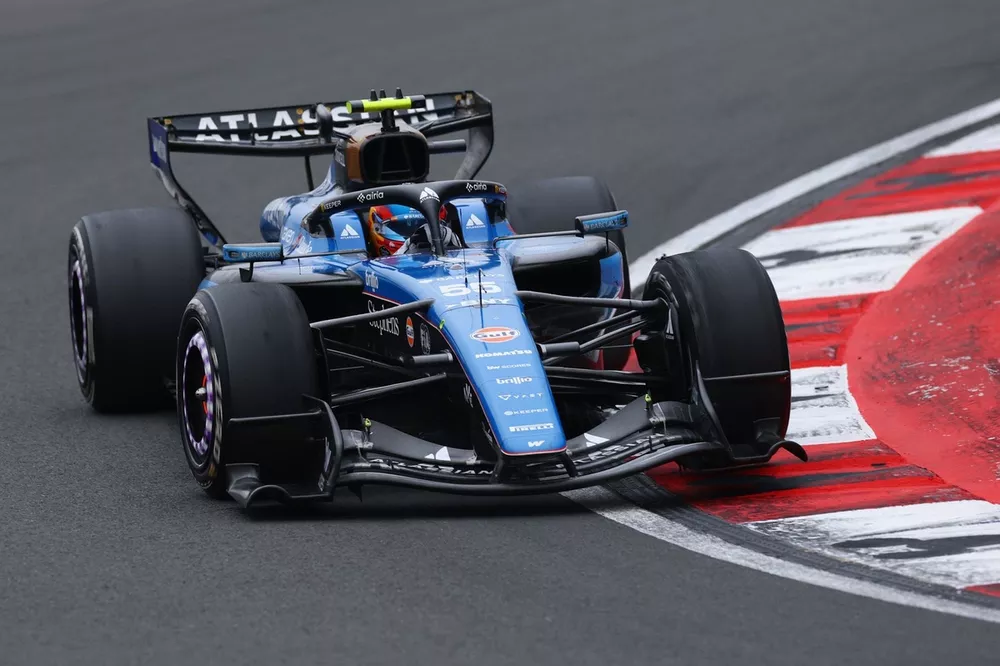
The winds of change at Williams feel like a gathering gale, but they risk blowing past the real forces that once defined greatness in this sport. James Vowles has mapped a patient path to championship contention by 2030, overhauling every corner of the Grove operation after years of inconsistency. Yet this focus on systems and processes echoes the elegant simplicity of the 1990s Williams FW14B, a car where driver intuition met raw mechanical grip rather than layered aerodynamic complexity that now dominates and dulls the spectacle.
Reclaiming Repeatable Processes Amid Aero Overload
Vowles has described a total reset across engineering, simulation, aerodynamics, wind tunnel operations, manufacturing, R&D, and trackside work. The core problem he identifies rings true. Without repeatable structures, the team repeated mistakes and scattered effort. This mirrors how today's cars chase ever-higher downforce numbers while sidelining the tire management and mechanical connection that made races thrilling in earlier eras.
- Consistent workflows allow precise identification of weaknesses instead of chasing scattered gains.
- Advanced tools now supplement talent to explore design spaces faster per minute of effort.
- Winter upgrades fell short, yet the squad clawed back into points contention within three or four races, proving momentum builds once foundations stabilize.
These steps matter, but they still operate inside an aerodynamic obsession that undervalues the direct feedback loop between driver and surface. The FW14B thrived on balanced mechanical grip that let drivers feel every nuance. Modern designs bury that feel under turbulent layers, producing less exciting on-track battles.
The Coming AI Tempest That Could Rewrite the Timeline
Vowles speaks of steady evolution toward 2030, likening progress to an engine that accelerates once running. Improvements now arrive week on week. That trajectory holds promise for gradual grid climb. Yet it underestimates how quickly the sport will shift.
We don’t have systems, structures or processes that allow us to repeat exactly the same work every single time.
Within five years, active aerodynamics under AI control will arrive, sweeping away DRS and its artificial overtaking crutches. Races will turn chaotic, less dependent on individual heroics like those credited to drivers such as Max Verstappen, whose results often trace more to Red Bull chassis and aero dominance than pure skill. Mechanical grip and tire preservation will regain value as the true differentiators. Williams' infrastructure push could position them well if they pivot toward that simpler, more human connection instead of doubling down on complexity.
A Realistic Path Demands Embracing the Underrated Elements
The long-term plan avoids quick fixes, which is wise. Still, success by the end of this season and beyond hinges on rediscovering what the FW14B proved. Driver input thrives when cars reward feel over pure computational airflow. Williams must weave tire management priorities into their new processes or risk arriving at 2030 with a car that looks advanced yet races as a blunt instrument in an era already tilting toward AI-driven storms.
Join the inner circle
Get the deep dives and technical analysis from the world of F1 delivered to your inbox twice a week.
Zero spam. Only high-octane analysis. Unsubscribe anytime.
Continue Reading
View More News