Williams's Three-Wheeling Crisis: A Symptom of F1's Lost Mechanical Soul
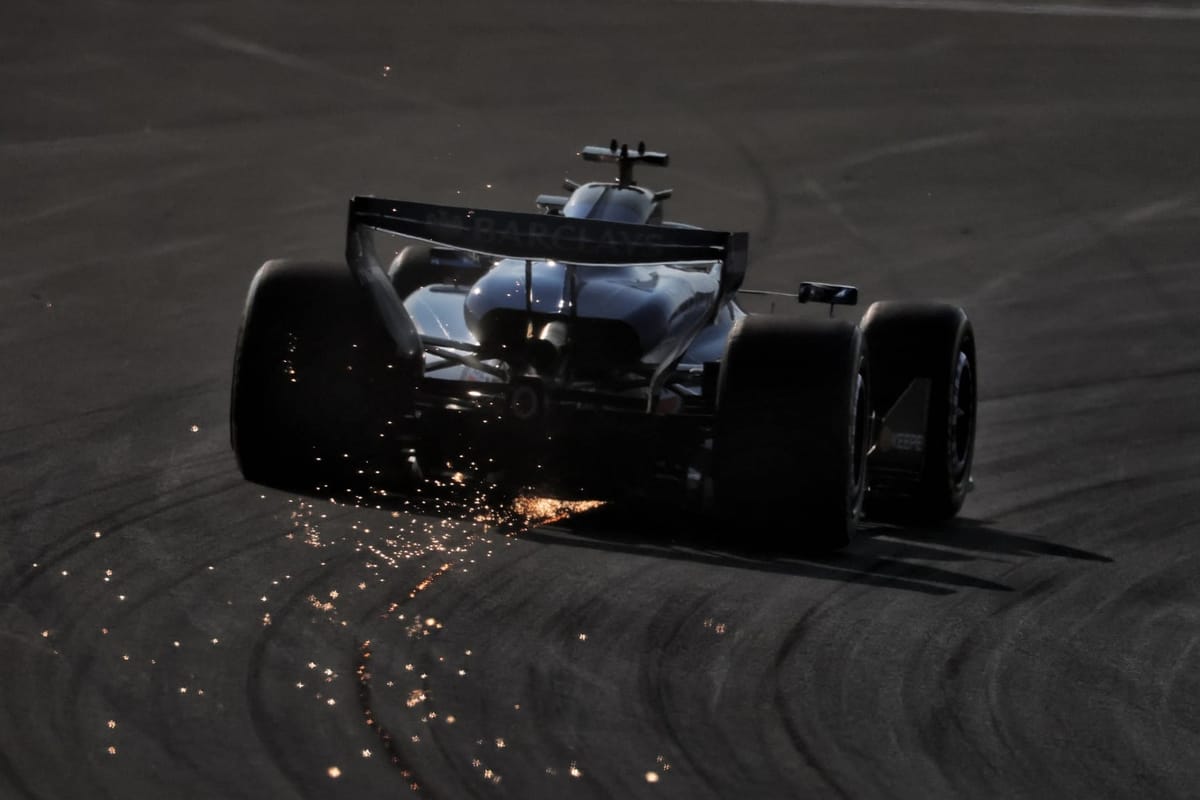
The storm clouds that gathered over Williams's late and overweight car launch have broken into a perfect, debilitating downpour. In Formula 1, a problem has many names: a deficit, a weakness, a development target. But when a driver like Alex Albon points to a single, visceral behavior and calls it the car's "biggest issue," you know you're not looking at a spreadsheet error. You're witnessing a fundamental fracture in the dialogue between machine and asphalt. The FW48's habit of lifting an inside rear wheel in corners—'three-wheeling'—isn't just a handling quirk. It's a ghost from F1's past, a stark reminder of what we've sacrificed in the relentless pursuit of aerodynamic downforce, and a damning indictment of a design philosophy that has forgotten the poetry of mechanical grip.
The Anatomy of a Breakdown: When Aero Demands Betray Mechanical Truth
At its core, this is a story of a broken platform. A modern F1 car is a carefully choreographed dance of forces, where the aerodynamic load is meant to press the tires into the track, increasing grip. The suspension's job is to manage that load, keeping the tire's contact patch as large and as consistent as possible. Williams's FW48 is failing this first principle.
The Destructive Feedback Loop
When the inside rear tire lifts, it triggers a catastrophic chain reaction:
- Mechanical Grip Evaporates: Three tires bear the load of four. The contact patch—the sacred interface between driver and track—shrinks violently.
- The Aerodynamic Platform Collapses: The car's carefully tuned ride height and attitude are thrown into chaos. The floor and diffuser, which generate the majority of downforce on these high-rake designs, suddenly see wildly different airflow. The downforce they promise in the simulation vanishes in reality.
- Driver Confidence Is Shattered: A car that unpredictably changes its balance mid-corner is undriveable at the limit. As Albon lamented after multiple futile setup changes in China, "Nothing seems to fix the car."
This isn't a new weakness for Williams; it's an old one amplified. The team has historically fumbled long, combined braking-and-cornering sequences. The suspension, noted previously as too stiff for Albon's taste, now appears catastrophically so. The suspected culprits—excessive roll stiffness and aggressive ride height settings under load—point to a car built for a theoretical wind tunnel, not the physical world of curbs, camber, and decaying tires.
"It suggests a profound disconnect between simulation and reality. The computer said the platform would be stable. The track is screaming that it's not."
This is where my skepticism for pure-aero dogma screams loudest. We marvel at the downforce numbers of the 2023 Red Bull, attributing Max Verstappen's dominance solely to his skill, when in truth, that car's genius was likely its ability to keep its aero platform mechanically stable, giving him a consistent, planted tool. The driver is the artist, but the chassis is the canvas. Williams has handed its drivers a canvas that tears itself apart under the first stroke of the brush.
A Lesson from History: The Ghost of the FW14B and the Simplicity We Threw Away
Watching this crisis unfold, I can't help but cast my mind back to the Williams FW14B of 1992. That car was dominant, yes, but its active suspension represented a different kind of genius—a mechanical solution to a mechanical problem. It managed the platform with hydraulics and computing, allowing the aero to work in a stable environment. It was complex, but its purpose was fundamentally grounded: keep the tires working.
Today, we try to solve mechanical instability with ever more complex aerodynamic surfaces. We add vortices, slots, and wings to correct a problem born in the suspension geometry and stiffness. It's putting a bandage on a broken bone. The FW48's high-rake design, appearing stiff since testing, is likely a victim of this philosophy. The team has chased aerodynamic downforce with a rake angle that the mechanical components cannot support in dynamic conditions, and the car is literally tripping over itself, lifting a wheel in protest.
This neglect of mechanical grip and tire management is the silent killer of modern racing excitement. When the car is this sensitive, this dependent on a perfect aero platform, driver input is muted. They become system managers, not artists wrestling a beast. The impending shift to AI-controlled active aerodynamics by 2028 will only cement this. It will solve problems like three-wheeling with brutal efficiency, eliminating DRS and creating chaos, but it will further distance the driver from the raw physics of the machine. The "fix" for Williams's issue in 2028 might be an algorithm, not a re-engineering of the chassis's soul.
Conclusion: A Long Road Back to Fundamentals
So, what's next for Williams? The task is Herculean. They are battling the perfect storm: overweight, lacking downforce, crippled by a fundamental balance flaw, and now haunted by reliability gremlins that robbed them of Albon's race start in China. Carlos Sainz's unlikely points finish there is a testament to driver grit, not car performance.
Their path forward is painfully clear, and it's a path the entire grid would do well to remember:
- Survive Japan. Gather what data they can from a broken tool.
- Use the four-week April break not just to cut weight and add downforce, but to re-found the car's mechanical platform. This may require a philosophical retreat, softening the car, re-evaluating the suspension's fundamental kinematics.
- Reconcile simulation with reality. The "enormous" list of problems Albon mentions starts with this disconnect.
Williams's three-wheeling crisis is more than a team's struggle. It's a cautionary tale for Formula 1. In the quest for aerodynamic nirvana, we risk building cars that are brilliant in the virtual world and brittle in the real one. The solution isn't just more complexity; sometimes, it's remembering the simple, profound truth that racing happens where the rubber meets the road. All four tires of it.