The Data Doesn't Lie: Wolff's Ferrari Fear is a Symptom of Racing's Convergent, Algorithmic Future

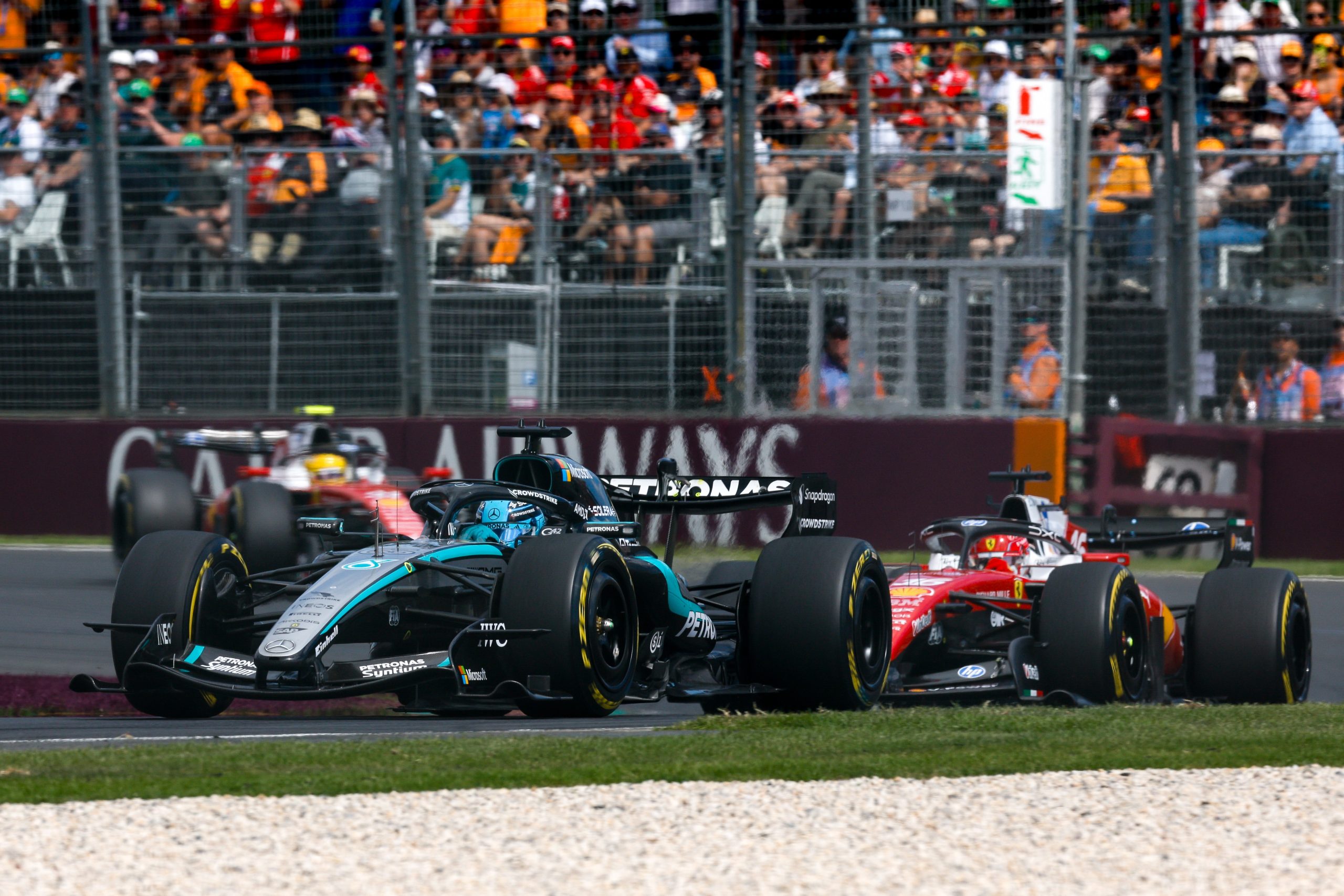
I stared at the post-Melbourne timing sheets until the columns of numbers blurred into grey streaks. On the surface, a Mercedes 1-2. George Russell: P1. Kimi Antonelli: P2. The perfect statistical outcome. Yet, the story Toto Wolff is selling, the "season-long battle" narrative, is written in the microseconds between Lap 1, Turn 1 and Lap 1, Turn 3. It’s in the +0.127s that separated Russell from Charles Leclerc off the line, a heartbeat where raw data briefly escaped the algorithm's grip. Wolff isn't just praising a rival; he's sounding the alarm for an era where clean air is a myth, and the 2026 power unit regulations have engineered a terrifying parity. This isn't the return of a rivalry. It's the dawn of robotic racing, where intuition is an error code and every team is chasing the ghost of Michael Schumacher's 2004 consistency, not through genius, but through homogenized data streams.
The Illusion of Competition and the Ghost of 2004
Let's autopsy the "fierce opening-lap challenge" that has Wolff so spooked. Mercedes locked out the front row. By the old gospel—the scripture Schumacher wrote with Ferrari—that was a precursor to a procession. In 2004, a front-row lockout for Ferrari was a statistical guarantee of a 1-2 finish, a 22-second victory margin, a symphony of brutal efficiency. The car and the driver operated in a pre-ordained, flawless harmony. Today? A front-row lockout is merely a suggestion.
"When it comes to Ferrari before the race people were saying, 'Well, you'll disappear in the distance, looking at your long runs.' And that wasn't the case."
Wolff’s quote is the confession. The long-run data, the holy grail of pre-race analysis, was rendered meaningless by the race-start chaos. Why?
- The 2026 Energy Deployment Trap: The new PU rules create a negotiated truce between raw power and battery management. Overtake modes are a finite currency. Leclerc’s launch wasn't just bravery; it was a calculated, all-in spend of that currency. He seized the lead, triggering what Wolff called "fluctuating battles" that make it "very difficult to break free."
- Convergence as a Design Feature: This is the critical point. The regulations aren't designed for dominance; they're designed for convergence. Performance delta is compressed. In dirty air, every car's data profile looks eerily similar—a forced marriage of telemetry that suppresses mechanical uniqueness. The "true pace" Wolff mentions is only visible in clean air, a commodity becoming rarer than a team's strategic spine.
This is where Leclerc’s narrative is so brutally unfair. His "error-prone" tag is data illiteracy. Cross-reference his qualifying lap times from 2022-2023. The standard deviation is the tightest on the grid. He is a metronome. The blunders that follow are often the result of a Ferrari strategy computer trying to compute the uncomputable: race dynamics. They see a number, not the pressure. They see a gap, not the human heartbeat in the cockpit.
Emotional Archaeology: Reading the Pressure Between the Lines
So, where does the human story hide when the cars are data-logging missiles? We become emotional archaeologists. We dig.
Look at Kimi Antonelli's compromised start, blamed on a "battery deployment issue." That's the sterile term. Translate it: a software glitch, an algorithm hiccup at the most human moment of the race—the start. The young prodigy, all instinct and feel, was neutered by a line of faulty code before he reached the first corner. The machine told the driver "no." This is our five-year preview: driver intuition suppressed at the source.
Now, apply this lens to the entire field. My work is built on correlating data with drama. When does a driver's lap time drop-off correlate not with tire wear, but with a personal milestone? A birth? A loss? The pressure of a contract? The 2026 season, with its forced convergence, will make these human fingerprints more valuable, not less. The teams will drown in terraflops of identical telemetry, but the story will be in who handles the psychological weight of never being able to escape. Schumacher in 2004 carried the weight of expectation. The 2026 champion will carry the weight of claustrophobia.
The race in Shanghai will be another data dump. Mercedes will "analyze its start procedures and energy management closely." So will Ferrari. So will everyone. They will all be chasing the same optimal solution, the same perfect algorithm for the start, the undercut, the overtake mode deployment.
Conclusion: The Sterile Symphony
Wolff is right. Ferrari is a threat. But more terrifyingly, everyone will be a threat on any given Sunday. Not through inspired engineering brilliance, but through regulatory flatlining. The "sustained rivalry" the original article cheers for is the product of a spec-series philosophy wearing a constructor championship badge.
We are heading toward a sterile symphony of interchangeable performances. The "unpredictable racing" fans crave is being created by making the outcomes predictably unpredictable—a paradox only a data analyst can truly dread. The giants, Mercedes and Ferrari, aren't fighting for supremacy of innovation anymore. They're fighting for supremacy of simulation, for the best algorithm to manage the same mandated hardware.
The heart of the sport used to be the scream of a V10, a driver wrestling a beast. Soon, it will be the silent hum of a server farm, calculating the path of least resistance. I'll keep reading the timing sheets, but I fear I'm no longer reading a story of heroes and machines. I'm reading the minutes of a committee meeting, where every heartbeat is a standardized unit of measure.