Wolff's "Horror Show" Diagnosis is Right, But He's Missing the Real Engineering Disease
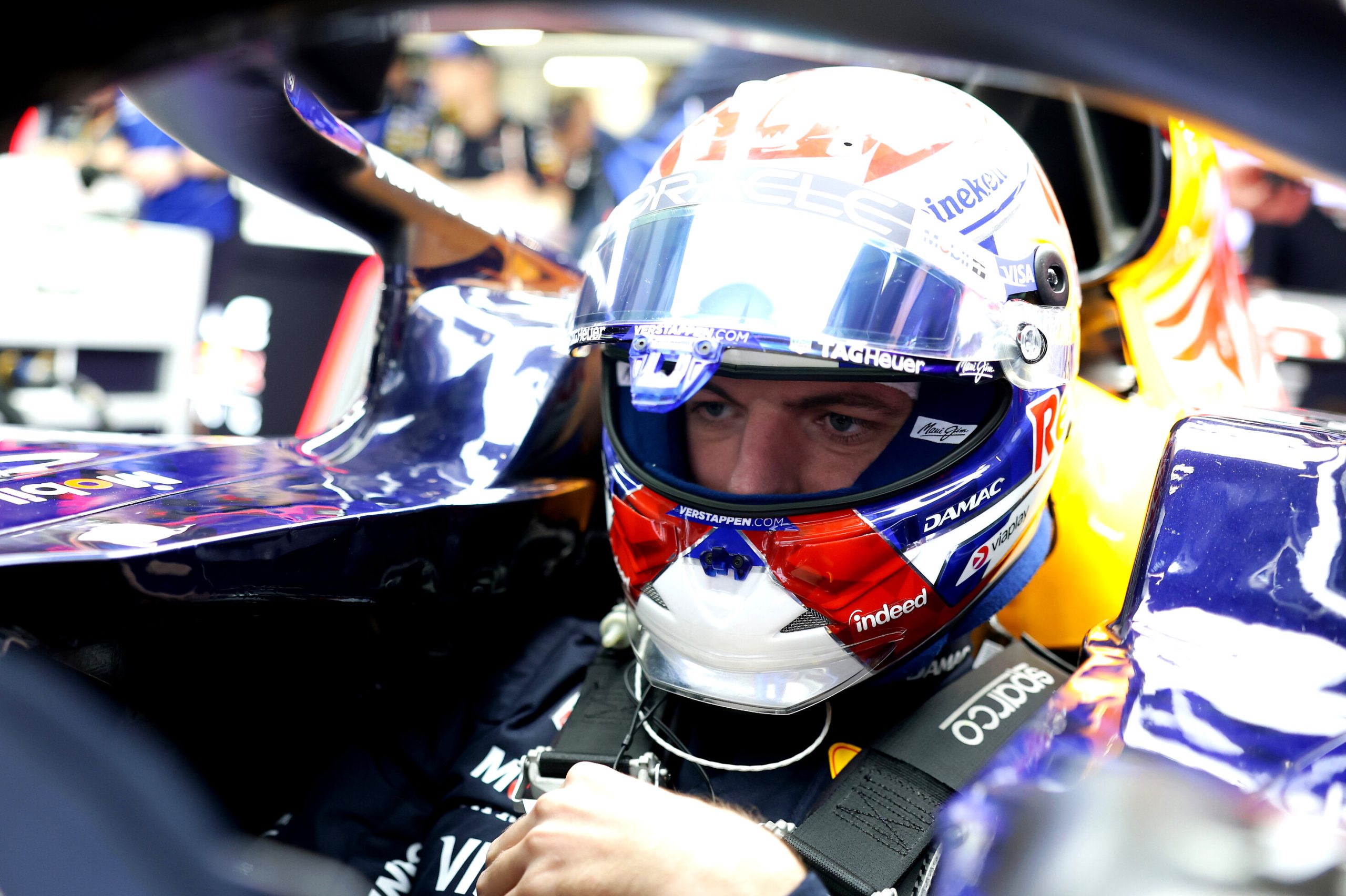
The storm of criticism swirling around Formula 1 has found its latest lightning rod: a frustrated Max Verstappen and a defensive Toto Wolff. After the Chinese Grand Prix debacle, the reigning champion called the racing "Mario Kart." The Mercedes boss shot back, suggesting Verstappen's complaints are just the screams of a driver wrestling a "horror show" of a car. They're both dancing around the truth. This isn't about one bad weekend or a single team's struggles. It's the inevitable symptom of a sport that has, for over a decade, worshipped at the wrong engineering altar. The 2026 regulations are a band-aid on a bullet wound, and the real cure requires looking back to a car that got it right over thirty years ago: the Williams FW14B.
The "Horror Show" is a Symptom of Aerodynamic Overreach
Wolff isn't wrong to point the finger at the Red Bull RB20. His description of Verstappen's qualifying onboard as a "horror show" that is "horrendous to drive" is likely a precise technical assessment, not just gamesmanship. What he's describing is a car operating on the knife-edge of its aerodynamic operating window.
When Downforce Becomes a Tyrant
Modern F1 cars are miracles of aerodynamic complexity. Every surface, from the front wing endplate to the rear brake duct, is a vortex-generating, airflow-steering device. This creates phenomenal cornering speeds, but at a terrible cost: mechanical sensitivity. The car's balance isn't dictated primarily by springs, dampers, and anti-roll bars anymore. It's dictated by the invisible, turbulent air three inches off the sidepod of the car ahead.
"The driver becomes a systems manager, not a sculptor of grip. He's babysitting aero maps, not feeling the tires bite into tarmac."
This is why Verstappen's dominance, particularly in the 2023 season, was so overrated from a pure driving perspective. He was sublime, yes, but he was sublime in a car that was an aerodynamic island, miles ahead of the competition. Put him in a car like this year's RB20—one where that aero platform is fragile—and the "Mario Kart" sensation emerges. The car is unpredictably snapped out of its ideal state by dirty air, making racing a lottery of who can keep their aero stable. It's not racing; it's aerodynamic bingo.
The Ghost of the FW14B: A Simpler, Smarter Solution
We need to talk about the 1990s. The Williams FW14B of 1992 was arguably the most dominant car in history, and it achieved that not through sheer aero complexity, but through active suspension. This system maintained a perfect ride height, giving its aerodynamics a stable, predictable platform to work from. The driver could attack corners with consistency because the mechanical platform was intelligent and responsive. Today, we try to achieve stability with ever-more complex passive aero, fighting the problem with the very thing that causes it. We've chosen the path of greatest resistance.
The Coming AI Revolution and the End of Driver Input
Wolff champions the "entertaining wheel-to-wheel battles" in China as proof of a healthy sport. But what is that entertainment built on? It's built on DRS trains and cars that cannot follow closely through high-speed corners because their aero crumbles. This is a dead-end street.
The Inevitable Rise of Active Aero
The 2026 rules are a half-step. The real paradigm shift is coming, and I predict it will arrive by 2028: AI-controlled active aerodynamics. Imagine a car whose front and rear wings, flaps, and ducts are continuously adjusted by an onboard AI, not by a driver hitting a DRS button. The AI would optimize for straight-line speed, cornering downforce, and—critically—would manage the wake to allow following cars to slipstream without losing all their grip.
- DRS would be eliminated. Overtaking would become a chaotic computational duel between competing AIs.
- Driver skill would be further marginalized. The "art" of tire management and brake balance would be superseded by system optimization.
- The "Mario Kart" effect would be institutionalized. Racing would be a spectacle of technology, not a test of human nuance.
This is the logical conclusion of our current path. We've already sacrificed mechanical grip for aero performance. The next step is to sacrifice driver input for aero optimization.
The Undervalued Art of Mechanical Grip
This is what we're losing, and what Wolff's defense of the "current product" glosses over. The raw, tactile connection between driver, tire, and road—mechanical grip—is what separates great drivers from good ones. It's what allowed a Senna or a Schumacher to feel a car sliding and correct it with throttle and steering, not by hoping the floor's vortex seals re-attached. Today's tire management is about thermal cycles and deg windows set in the simulation booth, not about a driver nursing a car home on raw feel. The sport has become a data optimization exercise, and the driver is one of many sensors in the loop.
Conclusion: A Choice Between Two Futures
The Verstappen-Wolff spat is a proxy war for F1's soul. Verstappen, the purist, feels the sport losing its visceral, driver-centric heart. Wolff, the defender of the commercial product, points to the shiny spectacle.
My technical analysis leads me to a grim conclusion: both are losing.
Wolff is correct that Verstappen's complaints are amplified by a difficult car. But he's wrong to think that makes the complaints invalid. The Red Bull's "horror show" is just an acute case of the chronic disease all teams have: aero-dependency. We are racing simulations that happen to have humans inside them.
The path forward isn't 2026's minor tweaks. It's a fundamental re-balancing. We must legislate for simpler aerodynamics that create less dirty air and place a premium on mechanical grip and powertrain efficiency. We must make the driver the dominant performance variable again. If we don't, the AI-driven active-aero future will consume the sport whole, and the debates between champions and team principals will be rendered quaint. We'll just be arguing over whose software update was better.