2026 F1 Cars Face Wet Weather Chaos in Montreal
Pirelli warns 2026 F1 cars struggle with cold, wet Montreal conditions. Tyre temperatures could cause chaos, with full wets potentially outperforming intermediates. Safety measures are in place, but drivers fear unpredictable handling in the unique circuit layout.
While the Miami Grand Prix start time was adjusted to avoid heavy rain and thunderstorms due to local regulations in Florida, tyre supplier Pirelli was actually hoping for a wet race in the Sunshine State. With both ambient and track temperatures high in Miami, drivers would have found it slightly easier to get the intermediates or full wets into an acceptable operating window. In Montreal, however, the situation is more complicated because both the temperatures and the circuit layout are completely different.
Why it matters:
- Cold temperatures in Montreal could see full wets outperform intermediates, a rare scenario.
- If tyres struggle to generate temperature, drivers risk losing grip completely and creating chaos.
- Safety measures like ride height restrictions and reduced power aim to mitigate unpredictable handling.
The Details:
- Tyre Temperature Issues: Pirelli's Simone Berra noted 11 to 12 degrees air temperature makes warming intermediates difficult. Blankets are set to 70 degrees Celsius.
- Blanket Limitations: Increasing blanket temp to 140 degrees helps opening laps but cannot prevent temp loss later. Drivers lose grip if they cannot regain temperature.
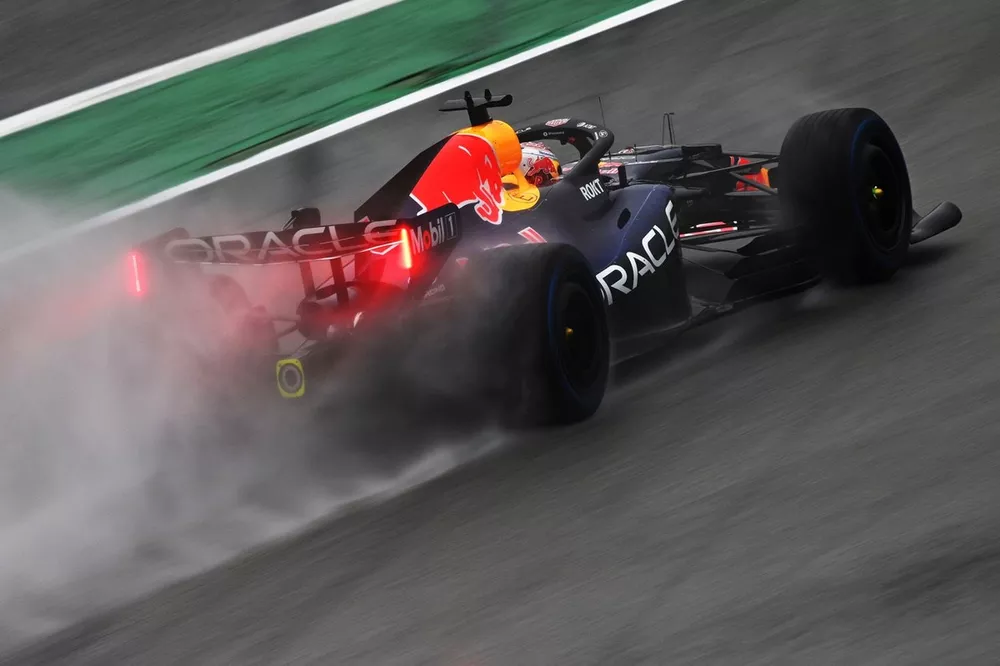
- Driver Concerns: Max Verstappen compared cold tyres to driving on ice. Oscar Piastri stated power units are impossible to handle consistently in rain.
- FIA Safety Protocols: Rain hazard declarations allow modifications. MGU-K deployment reduced to 250 kilowatts. Active aerodynamics only active at the front.
- Circuit Layout: Circuit Gilles Villeneuve has long straights where tyres cool down, and few corners to build temperature.
What's Next:
Teams remain uncertain about power unit behavior in wet conditions. The upcoming Canadian Grand Prix will serve as the first real introduction to 2026 cars in these specific conditions. Even with safety measures, drivers are not yet convinced that these measures will make the 2026 cars properly driveable in the wet. If the weather isn't too bad, the race should proceed, but the risk of chaos remains high if tyres fail to perform. The FIA has issued a rain hazard declaration, just as it did in Miami. This means teams are permitted to make ride-height modifications, boost mode has been disabled, and MGU-K deployment has been reduced from 350 kilowatts to 250 kilowatts. Active aerodynamics in straight line modes are only active at the front of the car.
Don't miss the next lap
Get the deep dives and technical analysis from the world of F1 delivered to your inbox twice a week.
Zero spam. Only high-octane analysis. Unsubscribe anytime.
Join the inner circle
Get the deep dives and technical analysis from the world of F1 delivered to your inbox twice a week.
Zero spam. Only high-octane analysis. Unsubscribe anytime.
Continue Reading
View More News