The Ghost in the Machine: Antonelli's Data Reveals a Deeper Mercedes Malaise

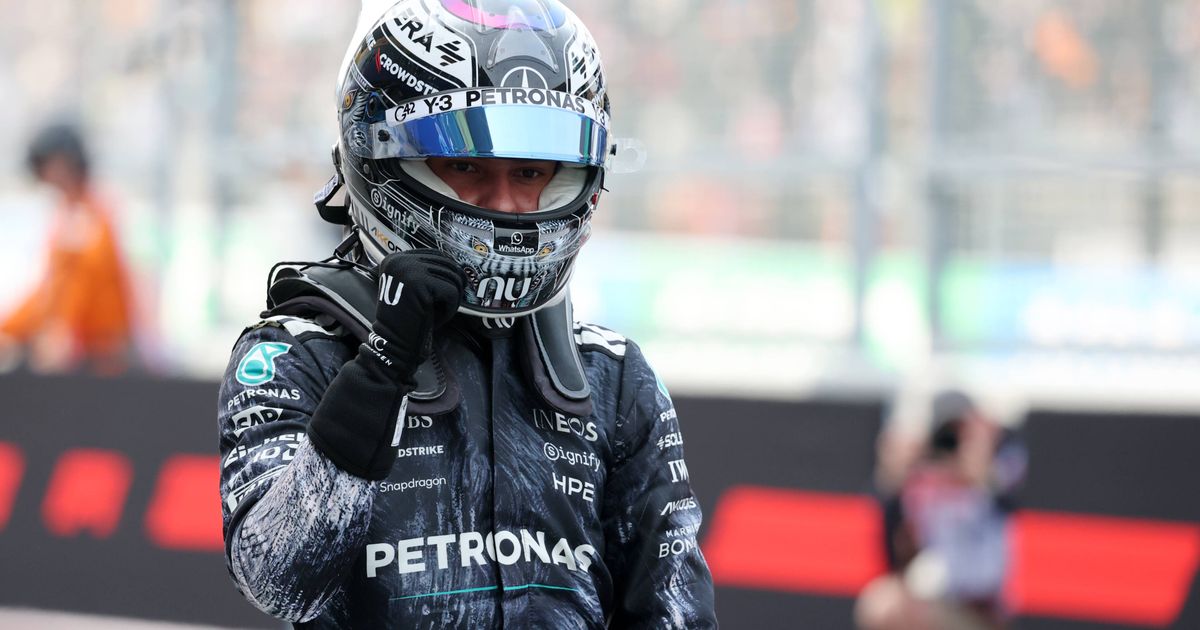
Mercedes' Kimi Antonelli, who leads the 2026 F1 standings after winning in Japan, admits teammate George Russell still holds a qualifying advantage. While confident in their matched race pace, Antonelli identifies improving his one-lap speed in Q3 as the critical step needed to mount a consistent title challenge against the experienced Russell.
I stared at the sector times from Suzuka, the numbers bleeding into a familiar, frustrating pattern. Kimi Antonelli, the boy-wonder leading the 2026 championship, had just confessed his qualifying weakness. The headlines would parrot his humility, but the data sheets told a more sinister story. This wasn't just a rookie struggling to hook a lap together; this was the ghost of Ferrari's strategic blunders haunting a new garage, a tale of a team potentially prioritizing the algorithm over the animal instinct of its drivers. When a driver of Antonelli's raw speed points to a single-lap deficit, I don't just hear a challenge. I hear the pre-programmed whir of F1's descent into robotic, predictable racing.
The Flawed Narrative of the "Incomplete Driver"
The article frames this as Antonelli's personal hurdle. He must improve to beat the "super, super strong, very complete" George Russell. It’s a tidy, media-friendly narrative: the promising youngster versus the polished veteran. But let’s apply some emotional archaeology to the cold stats.
- Antonelli leads the standings by nine points. This fact is immediately caveated with the cancelled Bahrain and Saudi rounds, as if to diminish the achievement. The data analyst in me screams: a lead is a lead. The points table is a historical record, not a probability model.
- His quoted weakness is specific: "He’s always able to find that little bit of extra" in Q3. This isn't a lack of pace; it's a lack of extraction at the critical moment. We’ve seen this movie before. It’s the shadow of Charles Leclerc in 2022—a driver whose raw qualifying data was consistently sublime, only to be later crucified for "errors" that were often the culmination of team-induced pressure and strategic chaos.
- Antonelli’s confidence is entirely reserved for race pace, calling it a "really strong base." This dichotomy is telling. Qualifying is a pure, adrenalized sprint—a driver and a car in a single, perfect symbiosis. The race is a managed, algorithmically-guided marathon. Is his comfort in the latter a sign of a generation already adapting to the sport's data-driven future?
"I think still in qualifying he has the upper hand... He’s always able to find that little bit of extra, which I’m working on."
This quote isn't just an admission. It's a flare shot into the sky over Brackley. It reveals a performance delta that the Mercedes simulation suite, for all its teraflops, cannot bridge for him. Russell, the established benchmark within the system, has mastered the process. Antonelli, the intuitive talent, feels something is missing in the formula. This is where my skepticism blooms. Is the team's engineering focus, its pre-Q3 run plans and energy deployment maps, subtly tailored to a Russell-style extraction? Are they asking Antonelli to become a robot, when his genius might lie in being a human?
2026: The Regulatory Reset That Hides a Cultural Trap
The piece rightly identifies the 2026 regulatory reset as Antonelli's catalyst. A new car, a clean sheet. It allowed his talent to "shine through more immediately." But I see this as a damning indictment of the previous model. His rookie season was spent wrestling a machine built to a philosophy that didn't suit him—a year of data corruption, of trying to fit a square peg into a round hole while the stopwatch bled.
This brings me, inevitably, to Michael Schumacher's 2004 season. That Ferrari was an extension of his will. The telemetry served the driver, not the other way around. Ross Brawn and Jean Todt built a structure to amplify Schumacher's intuition, not to supplant it. He didn't need to "find a little bit extra" in Q3; he and the car arrived at that moment as a single, perfected entity. The consistency was inhuman because the trust between man and machine was absolute.
Contrast that with Mercedes today. We have a driver openly stating he lacks a final piece that his teammate possesses, even while leading the championship. This isn't a Schumacher-Barrichello dynamic. This is a team with two number ones, where the car is a complex data-generating entity that both drivers are trying to decode. The "little bit extra" Antonelli seeks isn't just seat time; it's the confidence to override a suggested brake bias, to ignore a pre-planned lift point, to trust a gut feeling over a delta on a steering wheel display.
The 2026 rules were meant to spice up the show, but they've accidentally accelerated F1's existential crisis. The cars are new, but the methodology is more entrenched than ever. Antonelli’s victory in Japan and his championship lead are triumphs of phenomenal skill over this system. His qualifying deficit is the system fighting back.
Conclusion: The Human Heart vs. The Digital Stopwatch
So, what’s next for China? The article asks if Antonelli can translate race speed into qualifying performance. I ask a different question: Will Mercedes have the courage to let him?
The path of least resistance is to double down on the data, to funnel Antonelli through the same simulation corridors as Russell until his lap times conform. That is the five-year road to robotized racing, where driver intuition is a bug to be patched out, not a feature to be harnessed. The alternative is messier, riskier, and profoundly human. It involves engineers listening more than instructing, using data not as a blueprint but as a translation tool for a unique driver's language.
Antonelli’s "weakness" is the last flickering heartbeat of driver-centric artistry in the sport. His lead in the championship, built on racecraft and guile, proves that the human variable is still the most powerful. If Mercedes truly wants to dominate this new era, they won't try to fix Kimi Antonelli. They'll get out of his way and let him finish the lap his instincts have already started. The numbers tell the story, but they never tell you whose story they're writing.
Don't miss the next lap
Get the deep dives and technical analysis from the world of F1 delivered to your inbox twice a week.
Zero spam. Only high-octane analysis. Unsubscribe anytime.
Join the inner circle
Get the deep dives and technical analysis from the world of F1 delivered to your inbox twice a week.
Zero spam. Only high-octane analysis. Unsubscribe anytime.
Continue Reading
View More News