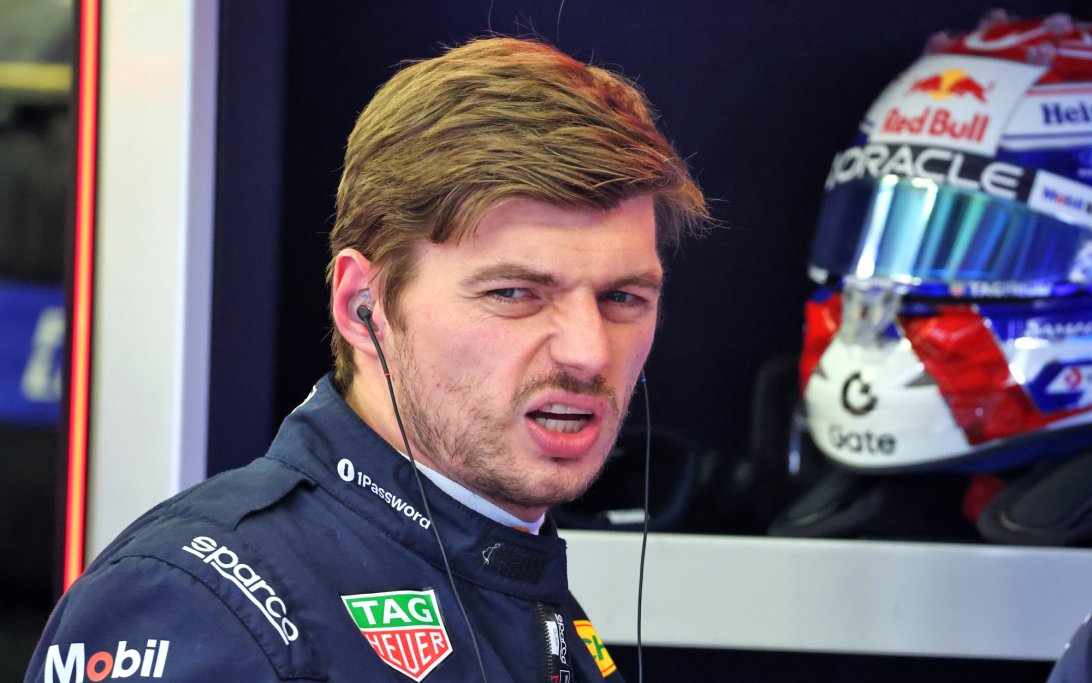
Ecclestone echoes Verstappen's warning that F1 risks losing its DNA and fans
Bernie Ecclestone warns Formula 1 is in danger of losing its fans as it becomes more regulated and resembles Formula E, echoing Max Verstappen's recent criticism. The former boss argues the sport's driver-centric DNA is being eroded by complex rules, predicting confusion and a shift away from pure racing.
Former F1 supremo Bernie Ecclestone has warned that Formula 1 is in "danger" of losing its fans as it becomes more regulated and begins to compete with the all-electric Formula E series. His stark assessment comes after reigning champion Max Verstappen criticized the sport's new power unit rules as "anti-racing," with Ecclestone now amplifying concerns that the championship's core identity is shifting away from the drivers.
Why it matters:
Ecclestone, who shaped the modern commercial era of F1, is questioning the fundamental direction of the sport under its current leadership. His warning touches on a central tension in F1's evolution: balancing technological innovation and sustainability goals with the raw, driver-centric competition that has historically defined its appeal. If the sport's traditional fanbase perceives it as becoming over-regulated and less about pure racing, it risks alienating its core audience while potentially failing to fully capture a new one.
The details:
- A Shared Concern: Ecclestone's comments directly echo recent criticism from Max Verstappen, who likened the new 2026 regulations to "Formula E on steroids," suggesting a convergence in philosophy that prioritizes energy management over flat-out racing.
- The DNA Argument: The 95-year-old former boss argues F1's DNA is "that it's a drivers' world championship and not an engineers' one." He fears the sport is becoming "less about racing" due to an influx of rules dictating driver behavior and car performance.
- A Season of Confusion: Ecclestone predicts "confusion at the start of the season" as teams, media, and fans grapple with the extensively rewritten rulebook, requiring a widespread "re-education" on how to follow the sport.
- Not a Verstappen Advantage: Contrary to some opinions, Ecclestone believes the complex new rules do not favor Verstappen's aggressive, attacking driving style, implying they may neuter the very traits that make top drivers exciting to watch.
The big picture:
The critique from two such influential but different figures—a legendary commercial architect and the current dominant champion—highlights a significant philosophical debate within F1. The sport is actively pursuing a greener, more cost-efficient future with its 2026 engine regulations, but Ecclestone and Verstappen are sounding the alarm that this pursuit may come at the cost of the visceral, unpredictable competition that built its global popularity. While current CEO Stefano Domenicali has expressed confidence in the path forward, this internal discord points to the delicate balancing act F1 management must perform.
What's next:
The true test will come when the 2026 cars hit the track. The reception from fans and the quality of racing under the new rules will ultimately determine if Ecclestone's fears are realized or if F1 successfully navigates its evolution without sacrificing its soul. The sport's leadership will be under pressure to prove that technological advancement and sustainability can coexist with, rather than diminish, the driver-focused spectacle that defines Formula 1.
Don't miss the next lap
Get the deep dives and technical analysis from the world of F1 delivered to your inbox twice a week.
Zero spam. Only high-octane analysis. Unsubscribe anytime.
Join the inner circle
Get the deep dives and technical analysis from the world of F1 delivered to your inbox twice a week.
Zero spam. Only high-octane analysis. Unsubscribe anytime.