F1 bosses reject 'deckchairs on the Titanic' claim over 2026 regulation tweaks
F1 team bosses Binotto and Vasseur defend recent technical regulation changes, dismissing criticism that the sport is merely making superficial fixes to deeper problems.
Senior F1 figures have pushed back against claims that recent technical regulation changes are akin to 'rearranging deckchairs on the Titanic,' insisting the adjustments are meaningful steps to improve racing.
Why it matters:
The debate highlights a growing divide between critics who see the 2026 regulations as fundamentally flawed and team bosses who argue the sport is evolving as it always has. With the power unit split between ICE and batteries set to be revised for 2027, the current tweaks are a stopgap—but one that Audi's Mattia Binotto and Ferrari's Fred Vasseur firmly believe is necessary.
The details:
- During the April break, the FIA, F1, teams, and drivers held discussions to address weaknesses exposed in the first three races of the season.
- Key changes introduced:
- Super-clipping now allowed up to the full 350kw battery capacity, up from a previous 250kw cap.
- Energy deployment reduced from 8MJ to 7MJ.
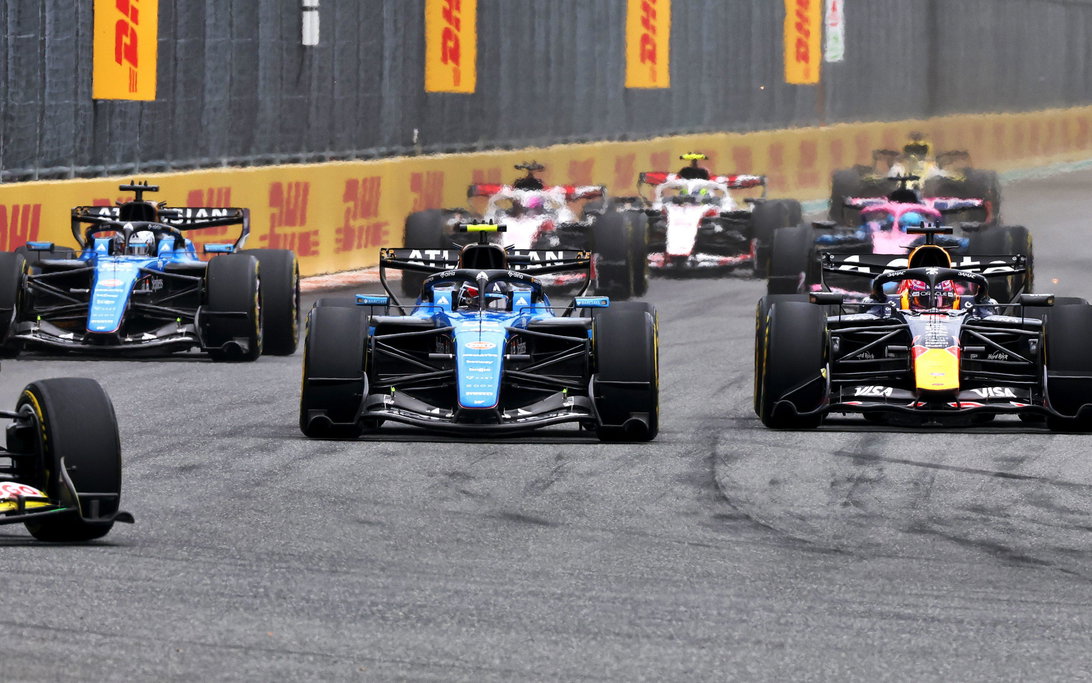
- Drivers felt the changes worked to some extent in Miami, though that circuit's energy-rich nature—with many braking zones for battery recharge—may have masked lingering issues.
- Critics argue the regulations have fundamental flaws, particularly the 50-50 power split between ICE and batteries, which is already slated for a 2027 overhaul.
Between the lines:
Binotto rejected the 'Titanic' analogy outright, noting that drivers adapt to new regulations every cycle. "It's still F1. It's still a challenge," he said. "Fighting for the fastest lap, a winner and a loser—that's our sport."
Vasseur added that some drivers are simply more vocal than others, pointing to similar complaints during the 2022 regulation changes. "[George] Russell or [Kimi] Antonelli are a bit less vocal than some other guys at the back," he said.
What's next:
The effectiveness of these tweaks will be tested at circuits with fewer braking zones, where energy management becomes more critical. If the fixes prove insufficient, pressure will mount for more substantial changes ahead of the 2027 power unit revision.
Don't miss the next lap
Get the deep dives and technical analysis from the world of F1 delivered to your inbox twice a week.
Zero spam. Only high-octane analysis. Unsubscribe anytime.
Join the inner circle
Get the deep dives and technical analysis from the world of F1 delivered to your inbox twice a week.
Zero spam. Only high-octane analysis. Unsubscribe anytime.
Continue Reading
View More News