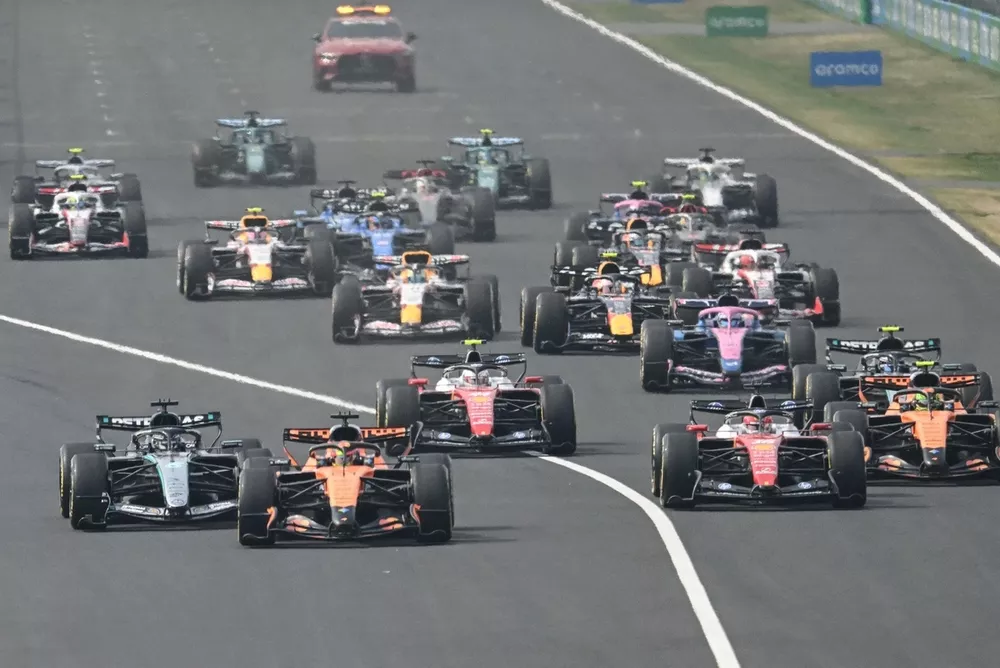
F1 drivers face unprecedented mental strain in 2026 season
F1 analyst Naomi Schiff and driver Liam Lawson highlight the extreme mental toll of the 2026 regulations, which require drivers to constantly manage energy deployment and strategy from the cockpit, leaving them more cognitively drained than ever before.
Sky Sports F1 analyst Naomi Schiff says the mental load on Formula 1 drivers is "probably higher than it ever has been" due to the complex new 2026 regulations. Drivers like Racing Bulls' Liam Lawson have reported feeling "mentally drained" after races, struggling to manage the influx of strategic decisions and energy deployment tactics required from the cockpit.
Why it matters:
The core skill of a racing driver is being tested in an entirely new dimension. If the cognitive demands are too high, it could compromise on-track safety, shift the competitive balance toward drivers who excel at multitasking, and fundamentally change how races are driven and won.
The details:
- Regulation Overload: The 2026 rules introduce a near 50:50 power split between combustion and electric energy, active aerodynamics, a manual Overtake Mode, and a boost button, forcing drivers to become in-race energy managers.
- Lost Recovery Time: Schiff notes that straights, once a brief moment for mental and physical recovery, are now occupied with strategic planning and system management, eliminating crucial rest periods during a Grand Prix.
- Driver Testimony: Liam Lawson's experience at the Japanese GP is illustrative. He described a constant, intense learning process during the race, watching opponents gain and lose positions based on battery deployment choices on different straights.
- Real-Time Strategy: Drivers must now figure out in real-time the consequences of using energy on one straight for an overtake, knowing it will leave them vulnerable on the next. This turns every lap into a high-stakes resource management puzzle.
What's next:
As teams and drivers accumulate more data, standardized strategies for energy deployment will likely emerge, potentially easing the initial cognitive shock. However, the 2026 regulations have permanently elevated the mental athleticism required in F1. The drivers who can best adapt to this constant, high-speed calculus—balancing raw speed with strategic energy preservation—will hold a significant advantage. The sport will be watching closely to see if this increased complexity enhances the spectacle or overwhelms it.
Don't miss the next lap
Get the deep dives and technical analysis from the world of F1 delivered to your inbox twice a week.
Zero spam. Only high-octane analysis. Unsubscribe anytime.
Join the inner circle
Get the deep dives and technical analysis from the world of F1 delivered to your inbox twice a week.
Zero spam. Only high-octane analysis. Unsubscribe anytime.
Continue Reading
View More News