Pirelli Advises Full Wet Tyres for Canadian GP Amid 'Perfect Storm' Forecast
Pirelli is urging drivers to deploy full wet tyres at the Canadian Grand Prix due to a unique 'perfect storm' of cold temperatures and heavy rain. Citing Haas's success in 2024, Pirelli suggests intermediates may struggle in these conditions compared to full wets.
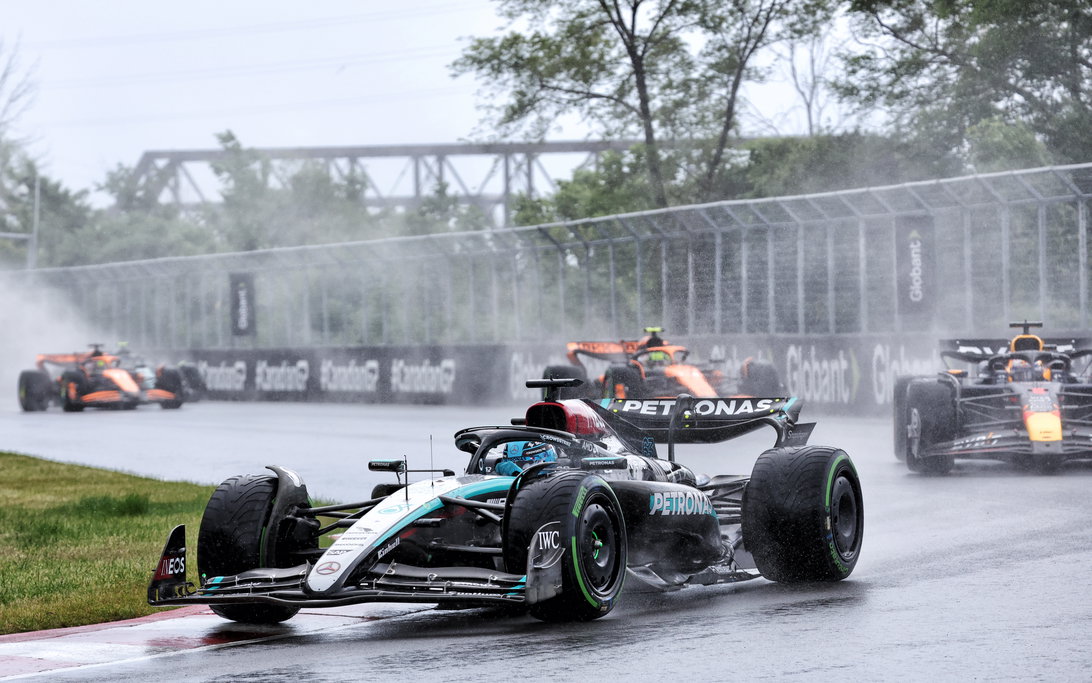
Pirelli has issued a crucial directive to F1 drivers regarding the upcoming Canadian Grand Prix, advising them to consider deploying full wet tyres immediately if heavy rain hits Montreal. This recommendation marks a significant shift from recent years, where teams typically favored intermediate compounds in wet conditions, often leading to red flags if the weather turned too severe. The advice centers on a unique "perfect storm" of cold temperatures and low circuit energy that could dictate the entire race weekend strategy.
Why it matters:
The advice highlights a rare opportunity for strategic disruption. In recent seasons, the intermediate tyre has been the standard for wet weather, but the unique combination of low energy and cold temperatures at Circuit Gilles Villeneuve could flip the script. A successful deployment could allow teams to gain track position without the usual penalties associated with struggling for grip in the cold. Historically, running intermediates in such extreme cold risks losing grip faster than switching to full wets, making this a high-stakes decision for the grid. If the forecast holds, it could define the race narrative entirely, moving away from the traditional intermediate-first approach.
The Details:
- Perfect Storm: Simone Berra, Pirelli's responsible for tyre strategy, identified the convergence of cold air temperatures (11-12 degrees) and a low-energy circuit as the key factors.
- Cold Weather Physics: Berra noted that these conditions were not designed for in the tyre development cycle. The intermediate compound has a lower working range, meaning it struggles more in the cold than the full wet tyre.
- Haas Precedent: The advice is based on a specific example from the 2024 Canadian Grand Prix. Haas drivers Kevin Magnussen and Nico Hulkenberg fitted the blue-walled full wet rubber at the start, gaining considerable ground before switching to intermediates.
- Warm-up Window: Berra emphasized that the warm-up phase is not just about heat; it takes five laps to reach a stable condition. If teams cannot generate temperature to regain grip, the intermediate tyre becomes a liability.
- Circuit Characteristics: The track is known for being low energy, which exacerbates the cooling effect of the rain. The temperature differential between air and track is expected to be minimal, further complicating tyre choices.
- Strategic Flexibility: Teams must decide whether to start on full wet or intermediate. If they cannot get the intermediate working temperature quickly, they risk losing time to those who start on full wets and can maintain grip.
What's next:
Teams are now evaluating their starting strategies based on the Sunday afternoon forecast. If the rain materializes as predicted, the field may see a surge in full wet tyre usage, potentially altering the traditional starting grid dynamics seen in recent Montreal races.
- If the forecast holds, drivers may start on full wet rubber, looking to capitalize on the initial grip advantage before the track dries or conditions shift.
- Should the temperature drop further, the risk of running intermediates increases, making the full wet tyre the safer and potentially faster option.
- This scenario could redefine the starting grid for the Canadian GP, offering a unique chance for midfield teams to challenge the frontrunners if they interpret the weather correctly.
- Ultimately, the decision rests on whether the team can maintain grip in these specific low-temperature windows, where the margin for error is significantly reduced.
- If the "perfect storm" dissipates quickly, the grid might see a chaotic start before the standard intermediate deployment pattern returns.
Don't miss the next lap
Get the deep dives and technical analysis from the world of F1 delivered to your inbox twice a week.
Zero spam. Only high-octane analysis. Unsubscribe anytime.
Join the inner circle
Get the deep dives and technical analysis from the world of F1 delivered to your inbox twice a week.
Zero spam. Only high-octane analysis. Unsubscribe anytime.