Ferrari's Grey Areas: Gary Anderson's Technical Analysis
Former F1 designer Gary Anderson scrutinizes Ferrari's Miami upgrades, warning that regulatory grey areas could undermine the spirit of the rules meant to improve racing.
Ferrari introduced the most new developments of any team at the Miami Grand Prix, but former F1 technical director Gary Anderson raises concerns that some of them may push the boundaries of the regulations' intent. While decisions rest with the FIA, Anderson argues that early in the season, it's crucial to limit how far teams exploit grey areas rather than letting them set a precedent.
Why it matters:
The 2026 regulations aim to create better racing, but teams are prioritizing performance over that goal. Allowing aggressive interpretations now could entrench design directions that stray far from the intended ethos, making it harder to pull back later.
The details:
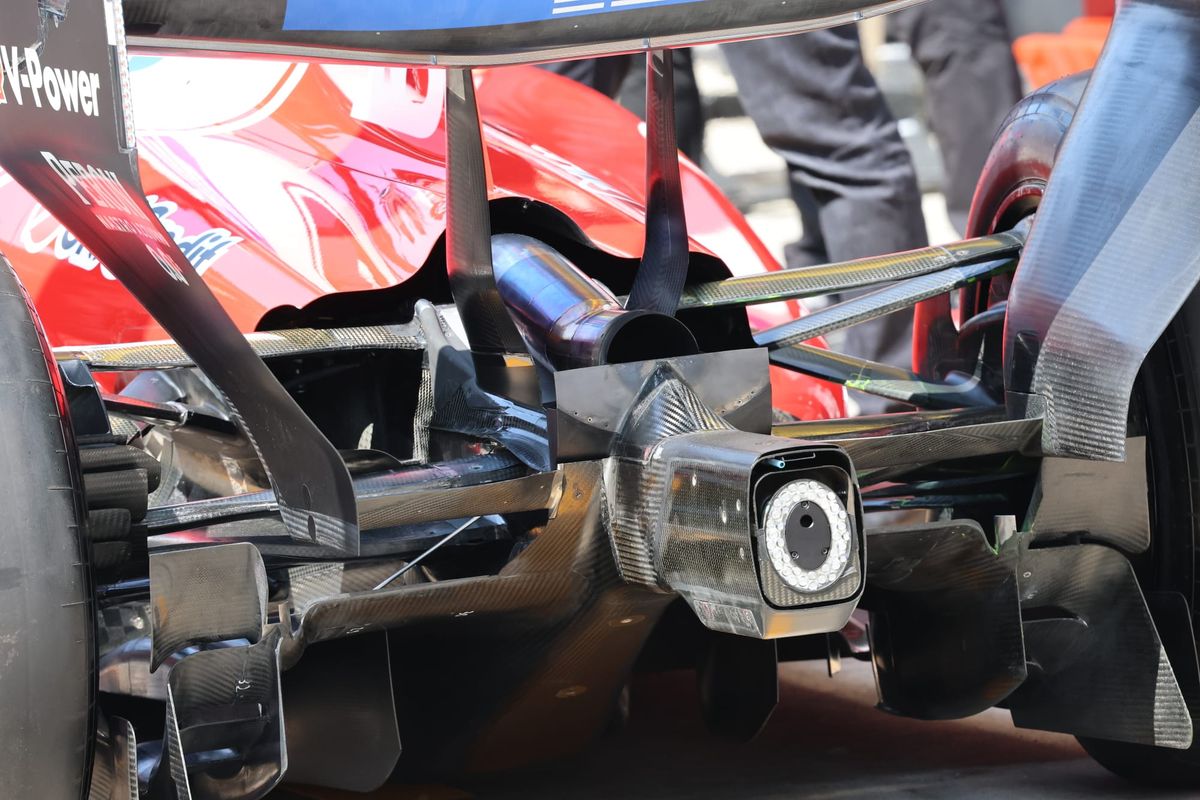
- Exhaust turning vane: Ferrari appears to use a blanking vane near the exhaust outlet (Article 5.9) to create back pressure at high revs, improving throttle response. Anderson believes this contravenes the requirement that the outlet remain unobstructed — a simple fix would be to mandate visibility from behind.
- Diffuser splitter: A new central splitter under the crash box could reduce transverse airflow mid-corner, influencing diffuser performance. The array of turning vanes risks uneven improvement across the diffuser.
- Bargeboards: Multi-element vertical vanes (replacing single vanes) send airflow down the car's sides, effectively generating outwash despite regulations intending in-wash. This improves underfloor sealing.
- Rear wing mounts: Revised structural supports and actuator angles increase stability, especially when the wing is inverted (active aero), while wishbone leg openings have been tidied with softened diffuser curvature.
- Floor edge: The 'mousehole' around the lower wishbone is larger, and floor vanes appear increased — likely improving airflow management.
What's next:
Anderson doesn't call for immediate bans but urges the FIA to clarify ambiguous areas now — like requiring full visibility of the exhaust outlet. With 264 pages of regulations, so many loopholes still exist, and delaying action risks embedding designs that undermine the sport's goal of closer racing.
Don't miss the next lap
Get the deep dives and technical analysis from the world of F1 delivered to your inbox twice a week.
Zero spam. Only high-octane analysis. Unsubscribe anytime.
Join the inner circle
Get the deep dives and technical analysis from the world of F1 delivered to your inbox twice a week.
Zero spam. Only high-octane analysis. Unsubscribe anytime.
Continue Reading
View More News