FIA Confirms 2026 Car Rule Changes After Crunch Meeting
The FIA has approved a set of rule tweaks for 2026 F1 cars, cutting qualifying recharge limits, capping race boost, improving wet‑weather grip and adding a low‑power start detection system. Pending World Motor Sport Council approval, the changes could debut at the Miami Grand Prix.
Core update – The FIA announced on Monday that a package of technical and sporting tweaks for the 2026 Formula 1 cars has been agreed. The changes target qualifying energy limits, race‑boost caps, wet‑weather grip and start‑line safety. They will be put to a World Motor Sport Council vote and, if passed, will be trialled at the Miami Grand Prix.
Why it matters:
- Drivers have complained that the current energy‑harvest rules encourage overly aggressive flat‑out laps in qualifying and create large speed differentials during races.
- Safety concerns have risen around low‑grip conditions and inconsistent start acceleration, which can lead to chain‑reaction incidents.
- By tightening the regulations now, the FIA hopes to preserve overtaking opportunities while delivering a more predictable, safer on‑track experience for the inaugural 2026 season.
The details:
- Qualifying – Maximum recharge reduced from 8 MJ to 7 MJ; peak super‑clip power lifted to 350 kW (up from 250 kW); lower‑energy‑limit events increased from 8 to 12 races.
- Race – Boost power capped at +150 kW (or the car’s current level if higher); MGU‑K stays at 350 kW in key acceleration zones but drops to 250 kW elsewhere, limiting sudden closing speeds.
- Wet conditions – Blanket temperature targets for intermediate tyres raised for better initial grip; maximum ERS torque reduced to aid control; rear‑light signalling simplified for clearer visual cues.
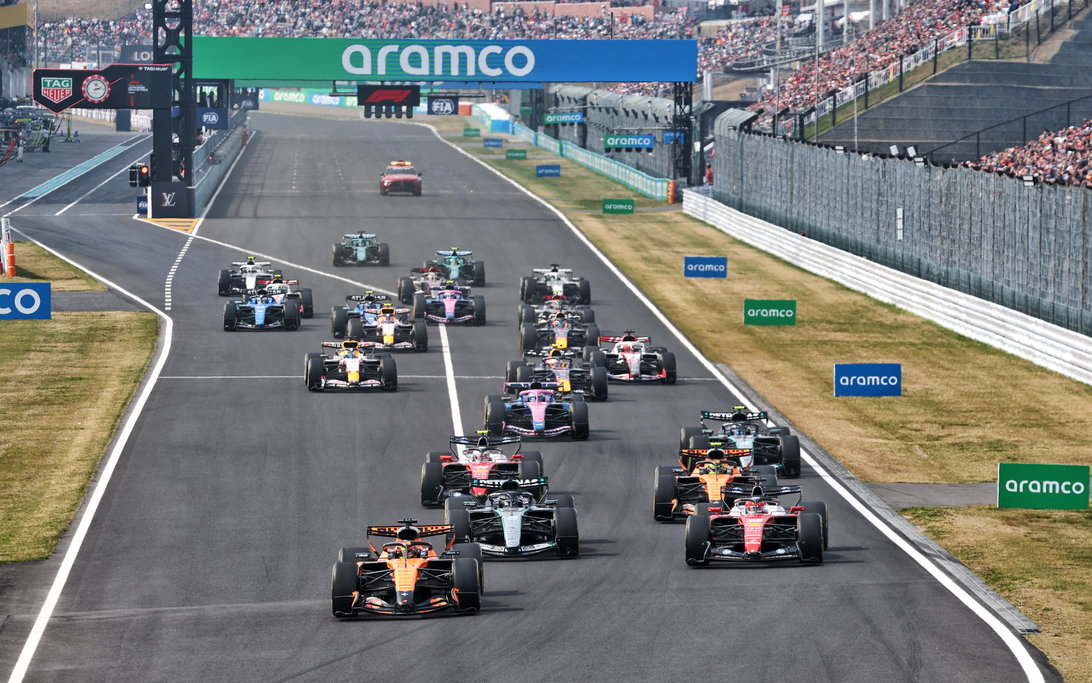
- Race starts – New low‑power start detection automatically deploys MGU‑K when a car’s launch is unusually slow; flashing rear and lateral lights warn following drivers; energy counter reset at the formation‑lap start to fix a known inconsistency.
What's next:
- The proposed package still requires approval from the World Motor Sport Council.
- If approved, the rules will be applied at the Miami Grand Prix, providing the first live data on their impact.
- The FIA will collect performance and driver‑feedback metrics before finalising the regulations for the full 2026 calendar.
Don't miss the next lap
Get the deep dives and technical analysis from the world of F1 delivered to your inbox twice a week.
Zero spam. Only high-octane analysis. Unsubscribe anytime.
Join the inner circle
Get the deep dives and technical analysis from the world of F1 delivered to your inbox twice a week.
Zero spam. Only high-octane analysis. Unsubscribe anytime.
Continue Reading
View More News