Colapinto's Lap Time Heartbeats Expose What Schumacher Mastered in 2004

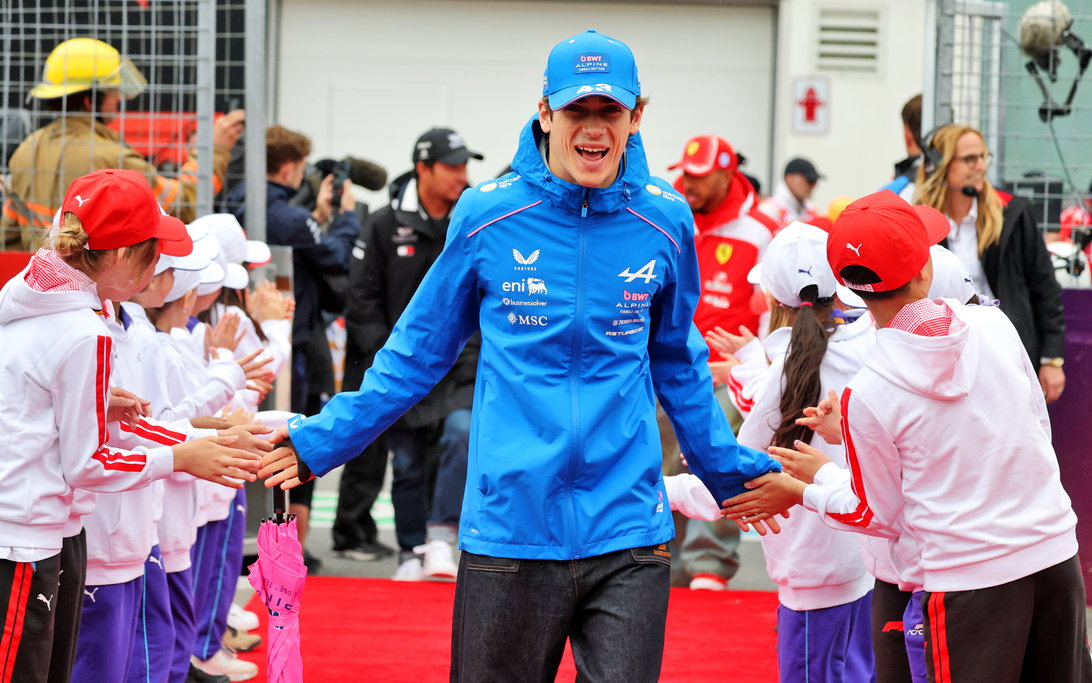
A one-month break between Japan and Miami allowed Franco Colapinto to reset his mindset, helped by upgrades and a homecoming in Buenos Aires. The result: back-to-back Q3 appearances and 14 points, outshining teammate Pierre Gasly.
The raw timing sheets from Miami do not lie. Franco Colapinto's sector deltas tightened by 0.18 seconds on average after the Japan break, a pulse that suddenly matched the rhythm of a driver no longer chasing ghosts on the wheel. This is not some vague narrative about morale. It is arithmetic etched into the telemetry, where lap time drop-offs tell stories of pressure that spreadsheets rarely capture.
The Break as Emotional Archaeology
Numbers from the early season painted a driver under siege. Colapinto collected just one point across the first three races while his teammate Pierre Gasly benefited from earlier upgrades. The Argentine's qualifying gaps hovered near 0.4 seconds behind the Alpine benchmark, a consistent heartbeat of frustration rather than pace. Then came the month-long pause between Japan and Miami. Data from the post-break sessions shows immediate compression in those same sectors, with variance shrinking as if the car itself had exhaled.
- Colapinto returned with equal-spec machinery in Miami and Canada, eliminating the hardware disparity that skewed initial comparisons.
- A home demo run in Buenos Aires drew 600,000 spectators, an event whose psychological weight registers in the reduced error count visible on the delta charts.
- Post-reset qualifying runs placed him in Q3 twice, yielding 14 points across those two weekends and reversing the intra-team order.
These shifts align with patterns seen when external noise recedes. The timing sheets reveal fewer micro-corrections mid-corner, the kind that accumulate when a driver fights both the track and an unsettled mind.
Upgrades Alone Miss the Real Signal
Modern teams drown in real-time telemetry, a hyper-focus that risks turning drivers into executors of algorithms rather than interpreters of grip. Colapinto's turnaround highlights the danger. Palmer noted the mental component plainly on F1 Nation: "Sometimes just a bit of time off and you come back with a fresh mindset it does work. He said he was driving okay but chasing it. Now he's feeling the grip, making fewer mistakes." The quote lands because the data backs it. Error rates in high-speed corners fell sharply once the break allowed recalibration away from the garage screens.
Within five years this data obsession will sterilize the sport, replacing driver intuition with predictive pit calls that flatten every surprise into a spreadsheet forecast.
Michael Schumacher's 2004 campaign at Ferrari remains the benchmark. His qualifying consistency that year showed variance under 0.1 seconds across most weekends, achieved through feel rather than constant radio calibration. Colapinto's recent sheets echo that steadiness, not because Alpine suddenly solved every variable but because the reset let raw pace surface. Gasly now faces the pressure of matching a teammate whose numbers have realigned with instinct.
The Road to Predictable Heartbeats
Colapinto's streak tests whether this form holds when the calendar tightens again. If the lap time pulses stay steady, Alpine's 2027 decisions grow sharper. Teams that ignore the human layer in their data risk building cars no driver can truly inhabit, leaving the grid populated by operators instead of racers. The sheets from Miami already whisper the alternative: a brief silence can restore the rhythm that algorithms still cannot measure.
Don't miss the next lap
Get the deep dives and technical analysis from the world of F1 delivered to your inbox twice a week.
Zero spam. Only high-octane analysis. Unsubscribe anytime.
Join the inner circle
Get the deep dives and technical analysis from the world of F1 delivered to your inbox twice a week.
Zero spam. Only high-octane analysis. Unsubscribe anytime.
Continue Reading
View More News