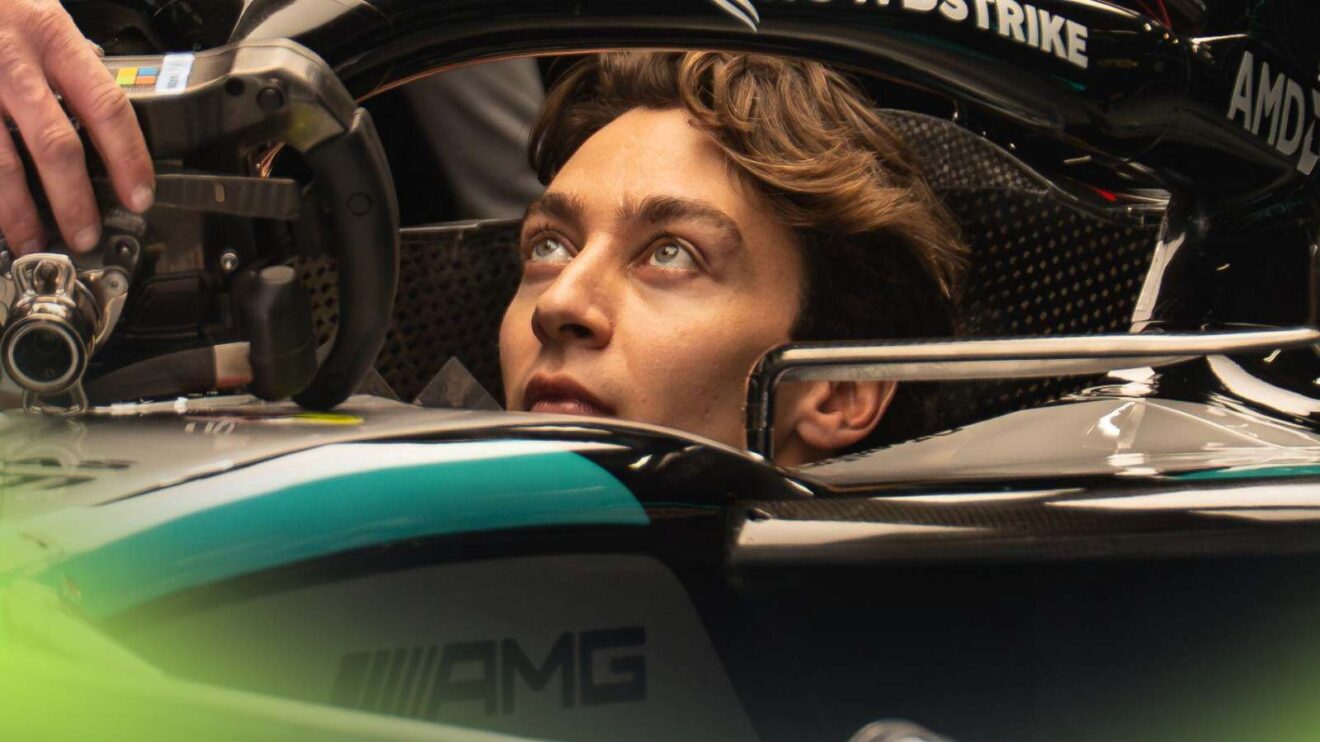
George Russell: Mercedes' 2026 engine not dominating like 2014
George Russell claims Mercedes' new 2026 power unit does not have the crushing advantage its 2014 engine did, with Ferrari and Red Bull now "very close." He argues the team's strong early season results are due to a superior chassis, signaling a more level playing field under the new regulations.
George Russell believes Mercedes does not hold the overwhelming power unit advantage it enjoyed in 2014, stating that rivals Ferrari and Red Bull have produced engines "very close" to the benchmark. The British driver argues that the strong performance of the W17 car this season is therefore more attributable to its chassis, which he feels is not getting enough credit.
Why it matters:
Mercedes' dominance at the start of the last major engine regulation cycle in 2014 defined an era of Formula 1. Russell's assessment suggests the competitive landscape for the 2026 rules is far more balanced from the outset, shifting the focus back to chassis performance and aerodynamic development. If true, it prevents a single-team runaway and could lead to a more contested championship battle across multiple manufacturers.
The details:
- Russell directly contrasted the current situation with 2014, when Mercedes held a "major advantage" and no customer team could compete with the works squad.
- He pointed to the recent success of customer teams using Mercedes power, specifically noting that "the winner of the championship the last two years has been a car with the Mercedes [power unit] in the back of it," referencing McLaren's competitiveness.
- Rival Development: Ferrari brings its own storied engine-building history, while Red Bull Powertrains (RBPT) and Audi began development years in advance. RBPT's significant recruitment drive, including hiring Mercedes HPP stalwart Ben Hodgkinson as technical director, appears to have accelerated its program.
- Credit to the Car: With the power unit gap seemingly minimal, Russell insists the W17's chassis is "fantastic" and is the real differentiator in Mercedes' strong start, including a 1-2 finish in Australia.
What's next:
The early-season form is unlikely to remain static. Russell himself expects the field to "close up quick," citing Max Verstappen's absence from the fight in a previous race as an anomaly. The ongoing development race will now hinge on aerodynamic upgrades and car setup, as teams can no longer rely on a massive power deficit to their rivals. Mercedes' ability to maintain its edge will depend on its chassis development pace matching or exceeding that of Red Bull and Ferrari.
Don't miss the next lap
Get the deep dives and technical analysis from the world of F1 delivered to your inbox twice a week.
Zero spam. Only high-octane analysis. Unsubscribe anytime.
Join the inner circle
Get the deep dives and technical analysis from the world of F1 delivered to your inbox twice a week.
Zero spam. Only high-octane analysis. Unsubscribe anytime.
Continue Reading
View More News