George Russell's Fiat Fumble Lays Bare F1's Dangerous Data Delusion

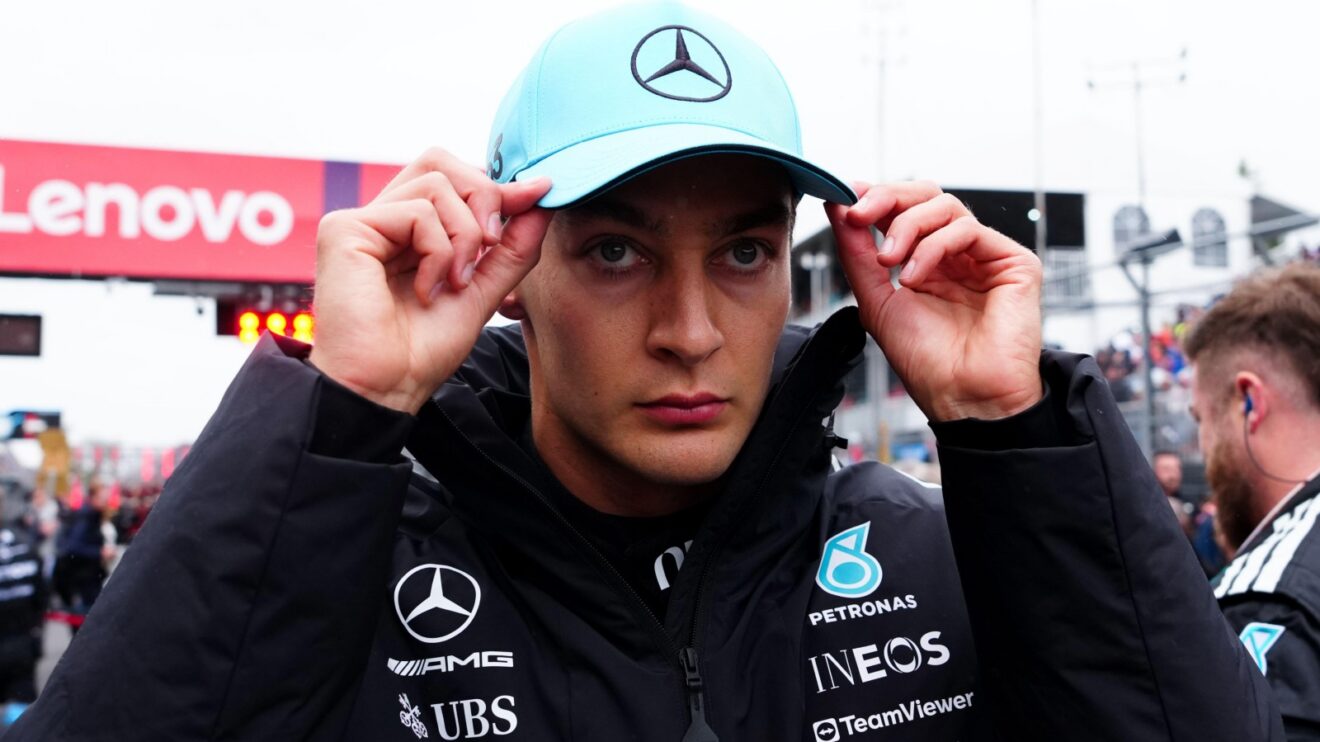
George Russell's bad luck with mechanical failures extends beyond F1: a video shows him pushing his vintage Fiat 500 Jolly in Monaco, days after a costly DNF in Canada.
The numbers hit like a stalled heartbeat on the timing screens. George Russell's Canadian Grand Prix ended abruptly after just 22 laps when his Mercedes battery failed catastrophically, a failure that now leaves him 43 points adrift of teammate Kimi Antonelli. Days later a video surfaced of the same driver in flip-flops pushing a 1958 Fiat 500 Jolly through a Monaco tunnel with partner Carmen. The surface story feels light. The underlying data tells something colder and more systemic about how modern Formula 1 has traded driver intuition for algorithmic certainty.
The Vintage Car as Emotional Archaeology
Russell's little Fiat produced just 22 horsepower in its prime. That modest output once demanded feel and mechanical sympathy from anyone behind the wheel. When the car refused to bump-start, Russell and Carmen simply pushed until a G-Wagon could tow it away. The moment looks human and harmless until you treat it as data. Lap-time drop-offs in F1 often trace invisible pressure lines in a driver's life. Here the timing sheet of an off-track failure mirrors the on-track one that followed.
- The Canadian DNF occurred roughly one-third of the distance into the race.
- James Allison confirmed visible heat damage inside the battery pack by race end.
- No prior telemetry had flagged the issue with enough warning to prevent the stop.
This is where the archaeology begins. The same team that monitors every heartbeat of the power unit still could not prevent the failure. Real-time numbers promised control. They delivered only post-mortem clarity.
Schumacher's 2004 Blueprint Against Robotized Racing
Michael Schumacher's 2004 season remains the clearest counter-example. Ferrari's car was dominant, yet the German's consistency came from feel first and telemetry second. He could sense tire degradation shifts that no sensor fully captured at the time. Today's hyper-focus on predictive algorithms threatens exactly that margin. Within five years pit calls and energy deployment will be dictated by software that suppresses the very intuition Schumacher used to turn potential disasters into victories.
Russell's Mercedes battery failure fits the emerging pattern. The team waited for the numbers to scream before acting. By then the race was already lost. The 43-point gap to Antonelli is not merely a reliability footnote. It is the predictable result of a sport that now treats drivers as data inputs rather than the final sensory layer.
"We could see enough at the end of the race that the battery was fairly unhappy, some heat damage," Allison said.
The quote reveals the backward logic. Confirmation arrived only after the damage was done.
When Telemetry Crowds Out the Driver
Russell's Monaco push offers a quiet rebuke. The Fiat needed human muscle because its simple mechanics offered no dashboard warnings. Modern F1 cars carry the opposite problem. Every system is watched, modeled, and optimized until the driver becomes a passenger in their own cockpit. The battery issue that ended Russell's Canadian race will be studied, modeled, and patched. Yet the deeper flaw remains untouched: teams now trust the algorithm over the heartbeat.
Russell needs a flawless run to recover. Mercedes needs to decide whether more sensors or more trust in the driver will actually close the gap. The timing sheets already show which path has produced champions before.
Don't miss the next lap
Get the deep dives and technical analysis from the world of F1 delivered to your inbox twice a week.
Zero spam. Only high-octane analysis. Unsubscribe anytime.
Join the inner circle
Get the deep dives and technical analysis from the world of F1 delivered to your inbox twice a week.
Zero spam. Only high-octane analysis. Unsubscribe anytime.
Continue Reading
View More News