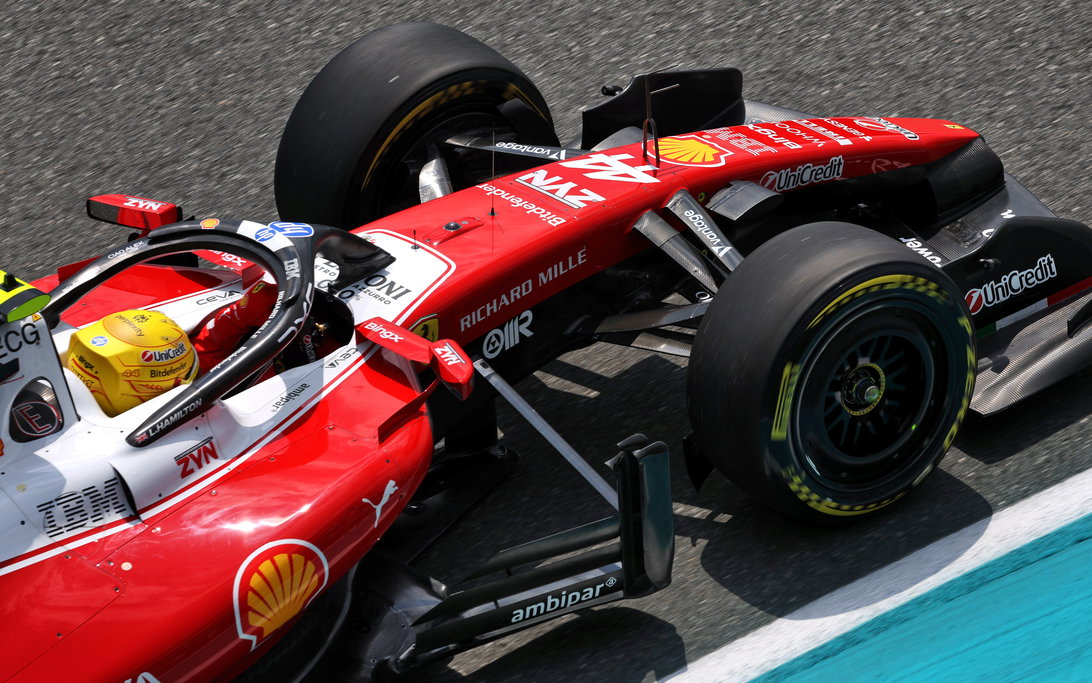
Hamilton considers cutting Ferrari simulator work after Miami setup misdirection
Lewis Hamilton hinted at reducing his simulator work for Ferrari after suggesting it misled his car setup ahead of Miami GP qualifying. While he improved to sixth on the grid, Hamilton felt the virtual work pointed him in the wrong direction, emphasizing the irreplaceable value of real-world track feel as he adapts to his new team.
Lewis Hamilton has suggested he may reduce his simulator workload at Ferrari after feeling it led him astray on car setup ahead of qualifying for the Miami Grand Prix. The seven-time champion qualified sixth, a marked improvement from his Sprint race performance, but believes starting with his final qualifying setup from the beginning would have yielded a better result. His comments highlight the delicate balance between virtual testing and real-world feel as he adapts to his new team.
Why it matters:
The simulator is a critical tool for modern F1 drivers, used to prepare for tracks, test setups, and provide engineering feedback. Hamilton's public questioning of its output for this event is a significant moment, underscoring the challenges of driver adaptation and the absolute primacy of real-world cockpit feel. For Ferrari, integrating a driver of Hamilton's stature and experience involves aligning their technical processes with his instincts, making his feedback on tools like the simulator highly influential for future operations.
The details:
- Hamilton qualified P6 for the Miami GP, which he viewed as a solid step forward from the Sprint where he finished seventh and from Friday's running.
- He attributed the progress to major setup changes made after the Sprint, stating the car felt "miles different."
- Simulator Skepticism: Hamilton revealed that work in Ferrari's Maranello simulator during the April break sent him down the wrong path on setup direction, leading him to declare, "I think I might cut that out."
- Qualifying Analysis: He felt his Q2 session was strong but was unable to extract the maximum from the car in Q3, leaving him dissatisfied with a top-six starting position.
- Retrospective Advantage: Hamilton believes he would have been better served starting the weekend with the qualifying setup, allowing more time to optimize his driving around it.
What's next:
Hamilton expects the car to feel more competitive in the Miami Grand Prix itself, though predicted wet weather adds a major variable. His immediate focus is analyzing the disconnect between the simulator data and the on-track reality.
- His remarks will likely trigger an internal review at Ferrari regarding simulator correlation and how best to utilize Hamilton's pre-race preparation time.
- The long-term impact could see Hamilton personally shifting his preparation bias even more heavily toward real-track running and debriefs, relying less on the virtual tool as he builds his foundational understanding of the Ferrari.
Don't miss the next lap
Get the deep dives and technical analysis from the world of F1 delivered to your inbox twice a week.
Zero spam. Only high-octane analysis. Unsubscribe anytime.
Join the inner circle
Get the deep dives and technical analysis from the world of F1 delivered to your inbox twice a week.
Zero spam. Only high-octane analysis. Unsubscribe anytime.
Continue Reading
View More News