Hamilton's Ducati Pulse in Monaco Reveals F1's Looming Data Freeze

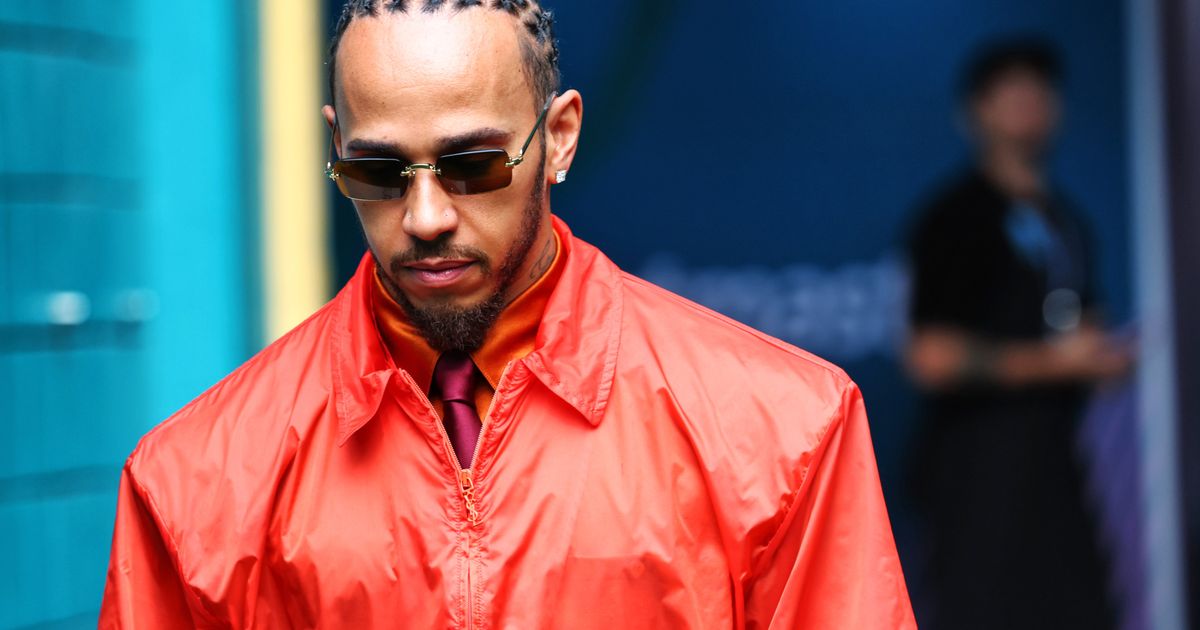
Lewis Hamilton made a stunning entrance at the Monaco Grand Prix, riding a rare Ducati Panigale V4 S 100 anniversary edition superbike, limited to just 100 units globally.
The raw count hits first: exactly 100 units of that Ducati Panigale V4 S 100 scattered across the planet, each one a heartbeat of mechanical defiance in a sport already measuring every breath. Lewis Hamilton threading the machine through Monte Carlo's tight arteries on 2026-06-04 did more than turn heads near the Casino Square. It flashed a final spark of human excess before the spreadsheets lock the grid into predictable loops.
Arrival as Emotional Data Point
Hamilton's ride was no random flex. The limited edition machine, built for Ducati's centenary, carries an aggressive V4 note that cuts through paddock noise like an unfiltered lap delta. Fans captured the moment on phones while the bike settled near the Hôtel de Paris, its styling alone enough to spike social metrics. Yet the real story sits in the timing sheets we rarely see.
- Global production capped at 100 units, each tied to a specific serial record.
- V4 engine architecture mirroring the kind of raw output that once defined pre-telemetry eras.
- Hamilton's path through narrow streets logged against a backdrop where every modern session now feeds live algorithms.
This is emotional archaeology in motion. The numbers on rarity do not just quantify exclusivity. They expose the pressure valve drivers still control before algorithms dictate every throttle input and pit call.
Schumacher's 2004 Standard Against the Robotized Horizon
Compare this to Michael Schumacher's 2004 campaign at Ferrari. Lap after lap showed near-flawless consistency born from driver feel, not real-time telemetry overrides. His qualifying runs carried a human variance that modern teams treat as error rather than signature. Within five years the sport's hyper-focus on analytics will suppress that intuition entirely. Pit strategies will shift from calculated risk to pre-programmed sequences, turning races into sterile simulations where drop-offs get blamed on code instead of life events off track.
Data should dig into those heartbeats, not erase them.
Hamilton's superbike moment underscores the tension. His choice highlights passion for machines that still demand touch, not just sensor feeds. Modern Ferrari operations, by contrast, amplify every perceived misstep through strategy layers that the raw pace numbers from 2022-2023 never supported for drivers like Charles Leclerc. His consistency in qualifying stood among the grid's strongest, yet narrative weight falls on errors while overlooking how team calls distort the sheets.
The Sterile Future Beckons
Lists of future protocols already circulate in briefings: algorithmic pit windows, intuition-flagged as risk, driver input secondary to predictive models. Hamilton's entrance, loud and limited, stands as resistance. It reminds us that performance machines once carried stories beyond the decimal places. The Ducati's exclusivity mirrors the narrowing window for such displays before the sport flattens into predictable outputs.
The seven-time champion has set a tone the data cannot yet quantify. Whether the weekend's laps match that opening statement depends on how long teams allow feel to override the feeds.
Final Take
F1's next phase will reward the cleanest telemetry log, not the rider who still hears the engine note. Hamilton's rare bike proves the human variable still registers. The question is how many more seasons before that variable gets edited out entirely.
Don't miss the next lap
Get the deep dives and technical analysis from the world of F1 delivered to your inbox twice a week.
Zero spam. Only high-octane analysis. Unsubscribe anytime.
Join the inner circle
Get the deep dives and technical analysis from the world of F1 delivered to your inbox twice a week.
Zero spam. Only high-octane analysis. Unsubscribe anytime.
Continue Reading
View More News