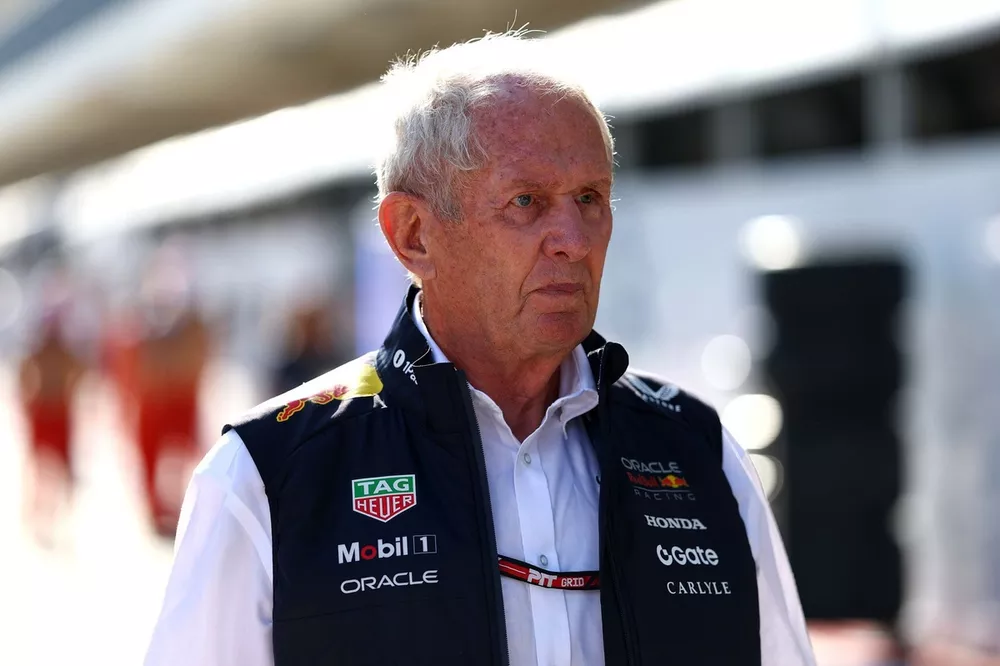
Helmut Marko criticizes 2026 F1 rules, cites flawed power unit concept and safety risks
Helmut Marko has slammed F1's 2026 regulations, calling the 50:50 power unit split unworkable and blaming it for creating artificial racing and dangerous speed differences like the Bearman-Colapinto crash in Japan. He warns the rules reward engineers and energy management over pure driver skill, echoing champion drivers' frustrations as the sport heads into crucial April meetings to discuss fixes.
Former Red Bull advisor Helmut Marko has delivered a pointed critique of Formula 1's 2026 regulations, arguing the core 50:50 power unit concept is fundamentally flawed and has created artificial racing and dangerous speed differentials. He suggests the rules, crafted during a peak of electrification optimism, now misalign with technological and environmental realities, putting the sport's essence at risk.
Why it matters:
Marko’s criticism adds significant weight to growing driver discontent, most notably from Max Verstappen, and underscores urgent safety and sporting concerns. With key stakeholder meetings scheduled for April to decide on potential tweaks, his analysis highlights the pressure on the FIA and F1 to correct a regulatory direction that many feel prioritizes manufacturer appeal over pure racing competition and driver skill.
The details:
- Marko identifies the root cause as the mandated near-50:50 split between internal combustion engine (ICE) and electrical power, a concept he says "sounds good on paper, but it doesn’t work."
- He argues the rules were finalized two years ago amid a belief that electric power was "the only way," a view that has since changed with the development of CO2-neutral fuels and a resurgence of the ICE's relevance.
- The practical failure, according to Marko, stems from the constant need to harvest and manage energy, forcing drivers to lift, coast, and downshift on straights—actions that prevent them from pushing the car to its true limit.
- Safety Hazard: He cited the Japanese GP incident between Oliver Bearman and Franco Colapinto, where a ~50 km/h speed differential occurred due to one car harvesting energy, as a critical danger that "has to be avoided."
- Artificial Competition: Marko agrees with Lewis Hamilton's assessment that 2026 will reward the best energy manager, not necessarily the fastest driver. He condemns this shift, stating overtakes achieved via battery charge levels are "more than artificial" and detract from F1's core identity.
What's next:
All stakeholders are set to reconvene on April 20th, following technical and sporting group meetings, to decide on potential changes for the 2026 season and beyond. Marko acknowledges it's a new regulation that deserves a chance, but predicts most necessary development will occur in the software domain to mitigate the current shortcomings. The outcome of these meetings will be crucial in determining whether F1 can address the performance and safety flaws while retaining the driver-centric challenge that defines the sport.
Don't miss the next lap
Get the deep dives and technical analysis from the world of F1 delivered to your inbox twice a week.
Zero spam. Only high-octane analysis. Unsubscribe anytime.
Join the inner circle
Get the deep dives and technical analysis from the world of F1 delivered to your inbox twice a week.
Zero spam. Only high-octane analysis. Unsubscribe anytime.
Continue Reading
View More News