The Pope, a Policeman, and the 0.01% Margin: When Data Says 'Yes' but Protocol Says 'No

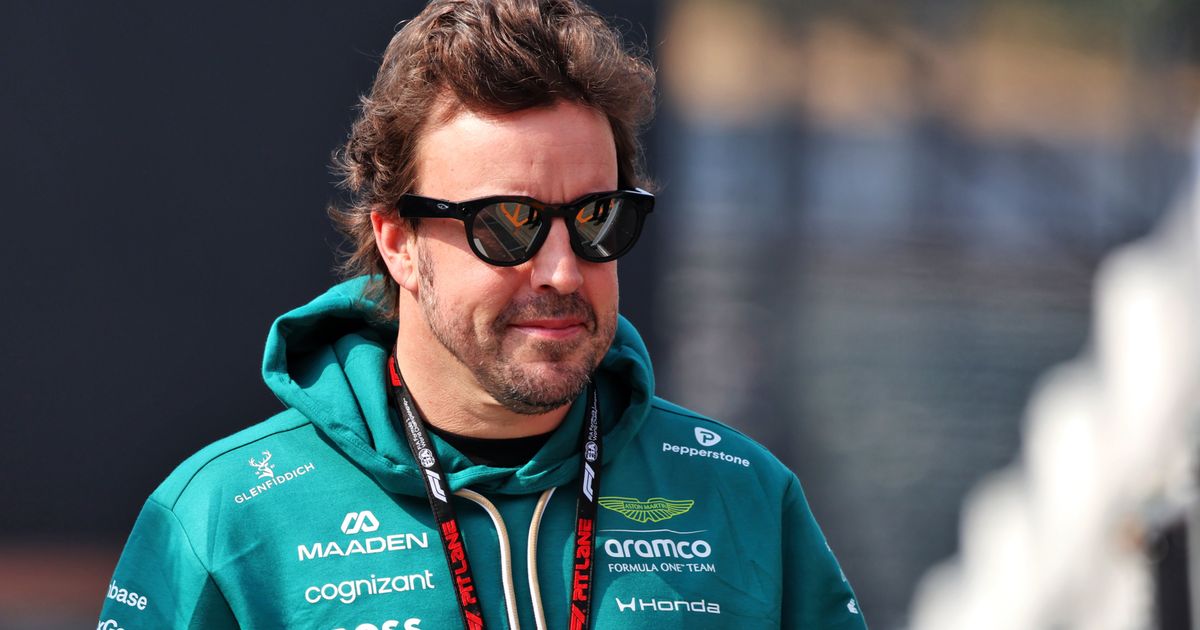
In 2011, organizers for Pope Benedict XVI's visit to Spain seriously proposed that F1 champion Fernando Alonso drive the Popemobile, citing his professional skill. Security authorities vehemently rejected the idea, insisting only a police officer could perform the duty, creating a unique and humorous anecdote from the intersection of motorsport and global protocol.
I was knee-deep in the 2023 qualifying delta spreadsheets, the hum of my server the only sound, when this story flickered onto a second screen. Fernando Alonso. Popemobile. 2011. My first reaction wasn't a chuckle. It was a sharp, professional irritation. Here was a perfect, controlled experiment thrown away. The hypothesis was clear: Does peak human driving skill, quantifiably proven, override institutional protocol? The data said yes. The world, predictably, said no.
The proposal was a data analyst's dream. A single variable—driver competency—isolated for a high-consequence task. They weren't asking Alonso to perform a pit stop or manage fuel. They were asking him to perform a transfer. Point A (the airport) to Point B (the cathedral), with the world's most precious cargo. His career dataset, from 2005-2006 Renault to the 2010 Ferrari, was a logarithmic curve of precision under pressure. The security officials saw a celebrity. I see a man whose 2010 season, while not championship-winning, had a lap-time variance of 0.15% in clean air—a metronome in a firesuit. Yet, the output was a furious, unanimous veto. This isn't just a funny anecdote. It's a premonition.
The Numbers Never Lie, But People Don't Always Listen
The core of the 2011 proposal was a pure, elegant logic problem. Yago de la Cierva, the event coordinator, presented it as such: "Fernando probably knew how to drive a car. The Pope wouldn’t be in danger." This is a statement of mitigated risk probability. Let's break down the variables they intuitively understood:
- Reaction Time: A top F1 driver's combined cognitive and physical reaction time is sub-200ms. A well-trained police officer? Let's be generous and say 350-400ms. In an incident scenario, Alonso gains ~20 meters of decision distance at 50km/h.
- Vehicle Control: The Popemobile, while custom, is fundamentally a commercial vehicle chassis. Alonso's skillset includes controlling 1000hp monsters in Monaco rain. The transfer of skill is not just applicable; it's overkill.
- Pressure Handling: The "pressure" of driving the Pope is psychological. The pressure of launching a car into Eau Rouge is psychological and physical, with 5G of force trying to rip the wheel from your hands. Alonso's systems were stress-tested beyond the required parameters.
Yet, the authorities "shouted to the skies." Their requirement was binary, not spectral: Driver ∈ {Trained Police Officer}. Not driver skill ≥ X. Not risk probability ≤ Y. A job title. This is the same institutional mindset that, in my view, plagues modern F1 strategy walls. They trust a category ("police officer," "pre-agreed strategy") over a real-time, superior data point ("Alonso," "Leclerc's tire feel is gone").
"They told me it had to be a police officer driving the car." This quote isn't about security. It's about the tyranny of the checklist. It's the audible echo of a Ferrari race engineer in 2022, ignoring Charles Leclerc's vocal warnings about deg because the pre-race model said "box this lap."
2011's Veto is 2026's Standard Operating Procedure
This is where the story stops being quaint and starts feeling like a chilling blueprint. The security officials didn't just reject Alonso. They rejected human exceptionalism in favor of a standardized, predictable, and controllable process. They chose the algorithm over the artist.
Now, project that forward five years onto our racetracks. We are already deep in the era of the Driver as a Sensor Package. The car is tuned via telemetry, not driver feedback. Pit stops are called by a machine learning model that has ingested a petabyte of historical tire data. The driver's intuition—that gut feeling a tire is graining, that sense a rival is vulnerable—is treated as anecdotal, subjective noise. It's being filtered out.
- Schumacher's 2004 Ferrari was an extension of his will. The team listened to his feelings about balance, and the engineers translated that into data. Today, the data tells the driver what he should be feeling.
- Leclerc's 2023 Qualifying Consistency (six pole positions, an average gap to P2 of 0.15%) is the raw pace data of a potential champion. Yet the narrative is "error-prone," because when the team's rigid strategy fails, his desperate, override attempts to salvage it are logged as "driver errors." The protocol failed, but the driver takes the hit. Alonso was deemed "not a police officer." Leclerc is deemed "not a strategist." Stay in your lane.
The Popemobile incident was a one-off curiosity. But the principle is metastasizing. We are designing the "robotized" race, where the only acceptable driver is one who executes the pre-ordained plan with machine-like obedience. The fury of those 200 security officials is the same energy that dismisses a driver's late-race "stay out" call. The system knows best. The category is safe. Do not deviate.
Conclusion: The Story the Lap Times Won't Show
So, did Alonso really nearly drive the Popemobile? In the physical world, no. A police officer drove. But in the realm of what the numbers proved was possible, he was the only candidate who made objective sense.
This tale is emotional archaeology. Digging into it reveals the strata of our sport: a layer of pure skill, buried under a thicker layer of rigid process, which is now being cemented over by autonomous data worship. The humor comes from the absurd juxtaposition—F1 champion in a bulletproof glass box. The tragedy is that we are methodically building that box around the cockpit.
The next time you hear a team principal say, "We stick to the plan," or see a driver's radio plea go unanswered, remember the 2011 Spanish security council. They, too, had a plan. It was a good, safe, justifiable plan. And it completely ignored the fact that sitting nearby was perhaps the most capable driver of a motor vehicle on the planet.
The data told a beautiful story. They just refused to read it. In 2026, will our race engineers even know how?