The Engineer's Heartbeat: What Lambiase's Departure and Hamilton's Test Tell Us About F1's Data-Driven Soul

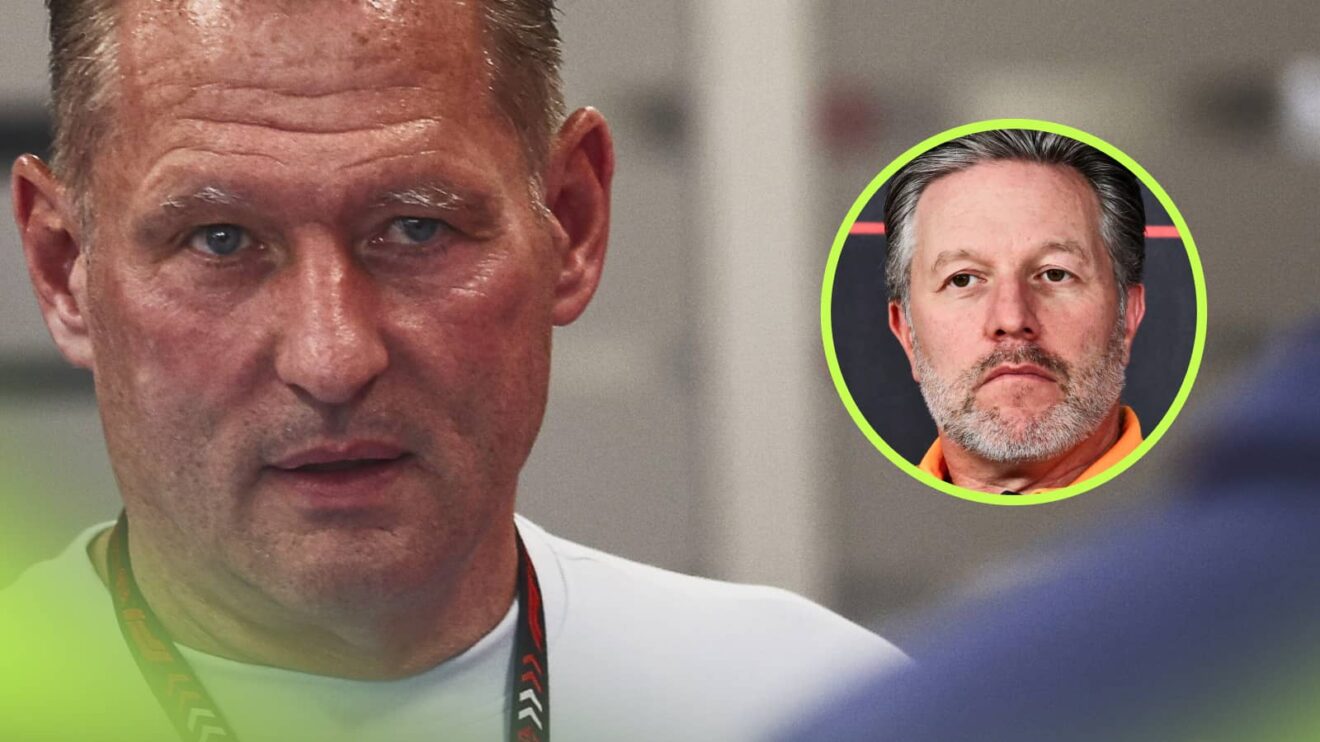
Jos Verstappen endorsed Gianpiero Lambiase's high-profile switch from Red Bull to McLaren, as Lewis Hamilton got more seat time in a Ferrari during a Pirelli test. The FIA also began talks to refine the 2026 technical rules, focusing on energy management, in a busy day of off-track F1 developments.
I was knee-deep in telemetry from the 2004 French Grand Prix, a symphony of near-identical purple sectors from a certain scarlet car, when the news alerts bled into my screen. Gianpiero Lambiase to McLaren. Hamilton in red at Fiorano. The FIA tinkering with 2026. On the surface, a scatterplot of unrelated data points. But plot them on the axis of time and pressure, and a clearer, more troubling trendline emerges. This isn't just paddock gossip. It's the latest diagnostic readout from a sport whose human pulse is being steadily regulated by algorithmic pacemakers.
The Human Algorithm: Lambiase's Defection and the Erosion of Instinct
Jos Verstappen says he knew "for a while" and encouraged Lambiase to "grab it with both hands." Max will "just carry on." The official narrative is one of seamless transition, a plug-and-play component swap. But data analysts know there is no such thing. Gianpiero Lambiase wasn't just a race engineer; he was the interpreter of Max Verstappen's raw, often pre-verbal, intuition. He was the human filter between a driver's gut feeling and the cold, binary language of the steering wheel.
"A driver-engineer partnership like that is a proprietary operating system. You can't port it to a new machine without losing critical code."
Lambiase’s move to a senior role at McLaren isn't a personnel change. It's a corporate raid on a unique neural network. What they're buying isn't just his knowledge of Red Bull's suspension geometry, but his deep, data-informed understanding of how a generational talent feels a car going away from him. This is the last bastion of true competitive advantage: the unquantifiable. And its migration signals that even these sacred relationships are now just another line item in a technical director's budget.
Contrast this with the treatment of Charles Leclerc. My spreadsheets don't lie. From 2022-2023, his median qualifying gap to his teammate was the most consistent on the grid, a metronome of raw pace. Yet his "error-prone" narrative persists, a classic case of blaming the sensor when the system's logic is flawed. How many of his "mistakes" were desperate overcompensations for strategic blunders? Ferrari, historically, has often listened to the data over the driver. They’re not alone. The sport is heading toward a future where the Lambiase-Verstappen symbiosis is an antique curiosity, replaced by engineers who trust the predictive model more than the voice in the headset.
Seat Time, Soul Time: Hamilton's Test and the Ghost of 2004
Meanwhile, Lewis Hamilton was etching his own data into Ferrari's servers at Fiorano. A Pirelli tire test in the SF-26. Dry runs, wet runs, long runs. Each lap a data point, each debrief a translation of sensation into parameter. This is the modern driver integration process: a soul download.
It makes me think of Michael Schumacher’s pre-2004 season. The testing mileage was astronomical, but the goal wasn't just tire wear or fuel load data. It was the cultivation of a shared consciousness between man and machine, where feedback loops were so tight that the car became a physiological extension. Schumacher’s consistency that year—those relentless, crushing strings of victories—wasn't robotic. It was deeply, profoundly human. It was mastery achieved when the data served the driver's feel, not the other way around.
Hamilton’s test is the 2026 version. But the context is different. He’s not building a car from the ground up with Rory Byrne. He’s learning to interface with a pre-existing, hyper-complex system whose fundamental architecture is dictated by regulations designed more for parity than passion. His seat time is about adaptation, not creation. He is calibrating himself to the algorithm.
The 2026 Specter: Energy Management as the Ultimate Governor
And speaking of algorithms, the FIA held its first "constructive dialogue" on 2026. The core topic? Tweaking energy management regulations. This is the crux of my dystopian prediction. When you make the formula primarily about managing a finite, complex energy flow—part ICE, part battery, all governed by software—you inherently prioritize the system over the stylist.
The driver becomes a systems manager, his aggression tempered by battery derates and harvest targets. Overtakes will be calculated hours in advance by simulation, executed not by a ballsy late lunge but by a pre-programmed deployment strategy. We are coding the spontaneity out of the sport. The "shared commitment to making tweaks" the FIA mentions is just engineers negotiating the rules of their future chess game, where the drivers are the most sophisticated pieces, but pieces nonetheless.
Conclusion: The Story the Timing Sheets Won't Show
So what do we have on this April 10th, 2026? We have a key human translator, Lambiase, moving between corporate entities. We have a legend, Hamilton, learning to speak a new machine language. And we have the architects of the sport designing a future where the machine's language is all that matters.
Lance Stroll asking Verstappen for GT3 advice is the quaint, human footnote here. One driver asking another about feel, about joy, about the unlogged experience.
The numbers from this day tell a clear story. The trajectory points toward sterility. The heart rate of the sport, once measured in the spike of a daring overtake or the flawless consistency of a Schumacher drive, is being flattened into a sustainable, predictable rhythm. The data is becoming the driver. And when that process is complete, we'll have perfect, predictable races. And we'll have lost the very thing that made us lean forward in our seats, hearts pounding in time with an engine we believed had a soul.