The Engineer's Exit: Why Lambiase's Move to McLaren Exposes the Coming AI Storm in F1
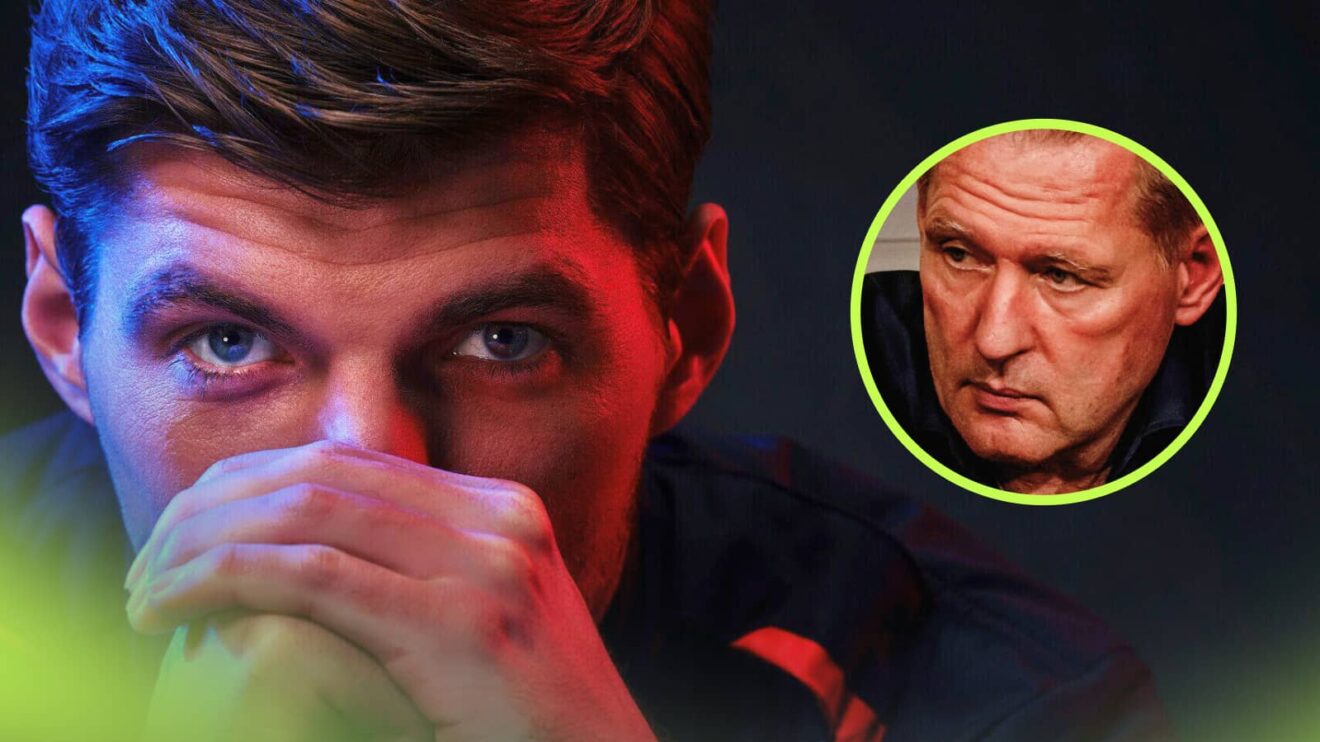
Jos Verstappen says Max's camp knew of and supported Gianpiero Lambiase's move to McLaren, encouraging the engineer to take the opportunity. While Max once suggested he'd retire without Lambiase, his father now believes the champion will continue, though the final call rests with Max as Red Bull prepares for a major personnel change.
The news that Gianpiero Lambiase, the architect of Max Verstappen's in-race strategy, is leaving Red Bull for McLaren by 2028 is being framed as a personal loyalty test. Will Max follow? The real story, however, isn't about driver sentiment. It's about the inevitable, seismic shift in what a "race engineer" even means. This isn't just a personnel change; it's a canary in the coal mine for the end of driver-centric dominance. By 2028, the role Lambiase is vacating may be obsolete, managed not by a human whispering over the radio, but by an AI system controlling active aero surfaces in real-time.
Jos Verstappen's revelation that the camp encouraged Lambiase to seize this "huge opportunity" isn't just gracious—it's strategically astute. They're getting out ahead of the storm.
The Myth of Driver Dependency and the Reality of the Machine
Let's cut through the hype. The narrative that Max Verstappen's four-title dynasty would crumble without Lambiase is a comforting fiction for those who want to believe this sport is still purely about the man in the cockpit. Jos's downplaying of his son's past "I'd stop" ultimatum is the first crack in that facade. Things have changed, he says. Of course they have.
Verstappen's dominance, particularly in the monolithic 2023 season, was a triumph of Red Bull's chassis and aerodynamics operating in a perfectly stable regulatory window. The car was a force of nature—a predictable, high-downforce platform that reduced variables. In such a machine, the driver's job, while immense, becomes one of execution within very wide margins. The real "genius" was often in the pre-race simulation and the strategic calls during it—Lambiase's domain.
"The final decision is up to Max," says Jos. But that decision will be less about loyalty and more about cold calculation: can Red Bull provide the next-generation tool, the 2026+ car, that continues to mask the diminishing returns of pure driver input?
This is where history offers a lesson we're ignoring. The 1990s Williams FW14B, with its active suspension and semi-automatic gearbox, was a mechanical and computational marvel. It made the car adaptable, but it also began the process of insulating the driver from the raw physics of the track. Today, we've swapped mechanical complexity for aerodynamic insanity. Our cars are bundles of vortices and flexing floors, where a millimeter of ride height change destroys performance. The driver's feel is filtered through a dozen synthetic layers. Lambiase's departure signals that the next step in this evolution is not more human nuance, but less.
2028: The Tipping Point Towards AI Chaos
McLaren didn't hire Lambiase as a direct successor to Andrea Stella. They created a new role: Chief Racing Officer. This is a critical detail. It's not about replacing one person; it's about building a structure for a new era. By 2028, the technical regulations will have been shaken by the 2026 power unit and aerodynamic reset. This is the breeding ground for the next revolution.
My firm belief is that by 2028, Formula 1 will be pioneering AI-controlled active aerodynamics. DRS, that clunky, binary overtaking aid, will be gone. In its place, complex surfaces around the car will micro-adjust in real-time, not by a driver pressing a button, but by an algorithm responding to sensor data on gap closure, tire wear, and predicted airflow disruption from the car ahead.
- The Race Engineer's Role Transforms: The human "GP" becomes a high-level overseer, setting aggression parameters for the AI, not calling for discrete rear wing adjustments. The strategic mind is encoded.
- Mechanical Grip Re-emerges: With downforce dynamically managed by code, the foundational setup—suspension kinematics, tire warm-up, mechanical balance—becomes the true differentiator. This is the raw connection we've sacrificed. Teams obsessed with sealed floors and bargeboards have neglected this art, and they will be forced to relearn it.
- Chaotic, Less Driver-Dependent Racing: Races could become more unpredictable, with AI systems making millisecond decisions. But is it more exciting if the driver is a system monitor? Overtakes may be engineered by competing algorithms, not just bravery on the brakes.
Lambiase was also approached by Aston Martin, a team pouring resources into a silver-bullet factory. His choice of McLaren is telling. McLaren, under Stella, has shown a methodical, systems-engineering approach. They are building not just a fast car, but a resilient technical culture capable of weathering this coming shift. Securing Lambiase is about importing the decision-making patterns of the current dynasty to prepare for the next, very different, war.
Conclusion: The Human Element in the Machine's Shadow
So, will Max Verstappen leave Red Bull in 2028? Jos is likely right that he will "just carry on," but for reasons far beyond loyalty. He will stay if Red Bull can best build the machine—and the machine intelligence—that defines the next era. His skill is undeniable, but its amplification has always been, and will increasingly be, a function of engineering.
The sentimental focus on the Verstappen-Lambiase breakup misses the profound underlying current. This move is a strategic evacuation from a role facing existential change. Lambiase isn't just changing teams; he's positioning himself at the helm of a new kind of racing operation. The true impact of his departure won't be measured in Verstappen's radio silence, but in whether Red Bull understands that the voice they need to replicate by 2028 may not be a human one at all. The storm of AI-driven adaptation is coming, and the teams building the best shelter—or the best lightning rod—will be the ones left standing.