Key questions loom over F1's final race before lengthy break
The Japanese Grand Prix is F1's final race before a five-week break, placing immense importance on the outcome for every team. Key storylines include Honda's struggle at its home race, the true competitive balance between Mercedes and Ferrari at a high-speed circuit, and whether the 2026 regulations will compromise Suzuka's iconic corners. The results will define development directions during the long hiatus.
Formula 1 heads into a five-week hiatus following this weekend's Japanese Grand Prix, making the Suzuka event a critical final checkpoint for teams to gather data and address issues before the long pause. The race will test Honda's troubled homecoming, the burgeoning Mercedes-Ferrari fight, and whether the 2026 cars can do justice to one of the sport's greatest circuits.
Why it matters:
This is the last competitive session for over a month, offering teams a final chance to evaluate their cars and make crucial development decisions during the break. For Honda and Aston Martin, it's a high-pressure home event amidst public struggles. For the championship narrative, it could solidify Mercedes' early dominance or signal a shift if Ferrari can mount a sustained challenge at a high-speed track.
The details:
- Honda's Home Woes: The Japanese manufacturer admits its power unit is still plagued by performance and reliability issues, specifically vibrations and energy management. While durability may have improved, a poor showing at Suzuka would be a significant embarrassment, especially with future partner Fernando Alonso in the Aston Martin.
- Alonso's Antics: The Spaniard's history with Honda is infamously sour. His recent on-track gestures mocking the engine's performance signal he has lost patience. A difficult weekend could reignite public tensions between driver and future power unit supplier.
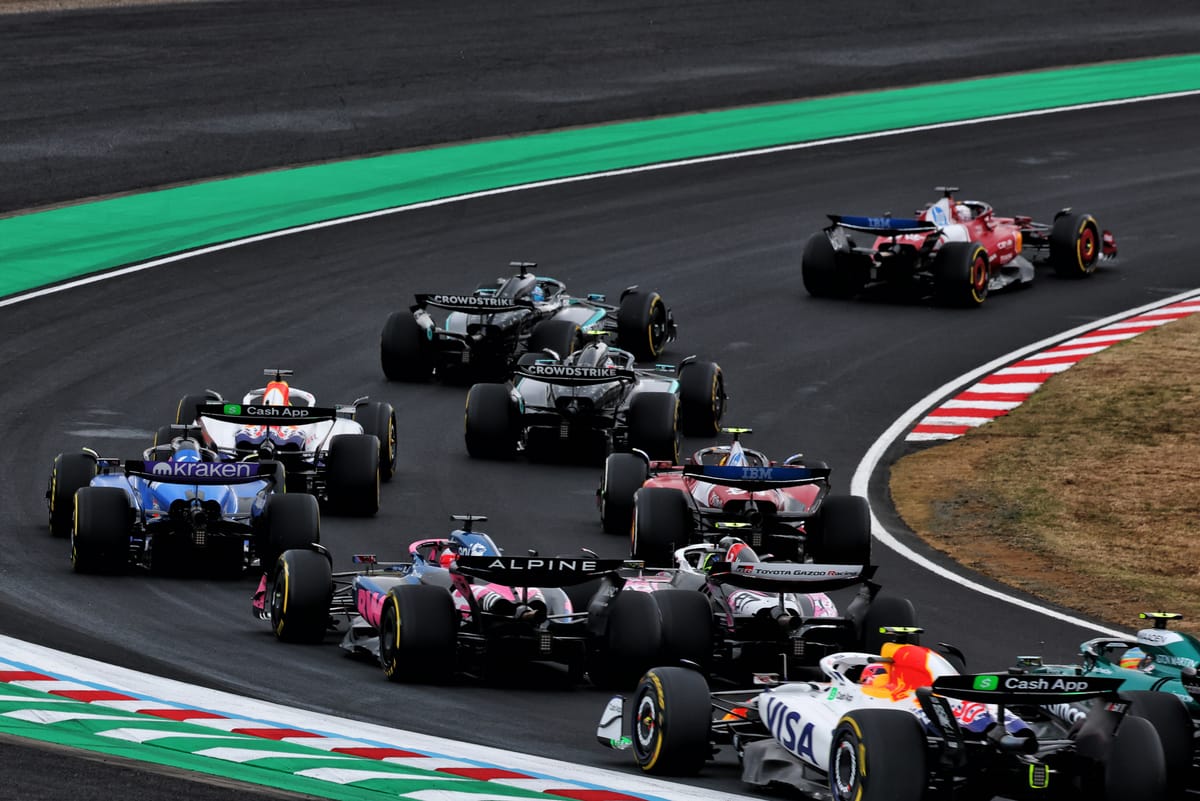
- Mercedes vs. Ferrari at a True Test: Suzuka's fast, flowing layout will be the first real test of aerodynamic philosophy between the top two teams. If Ferrari's chassis is genuinely competitive, this is the circuit where it could challenge Mercedes' early-season supremacy, provided the cars can overtake.
- 2026 Rules vs. Suzuka's Soul: The new energy management regulations, which reward lifting in fast corners to harvest energy, threaten to neuter iconic sections like 130R and the Esses. This weekend will reveal if the trade-off for better racing is worth sacrificing the pure speed that defines Suzuka.
- Antonelli's Momentum: After his maiden win in China, all eyes are on whether Kimi Antonelli can consistently match or beat teammate George Russell. A strong head-to-head performance at Suzuka would confirm him as a true title threat alongside his more experienced teammate.
- McLaren's Damage Limitation: The reigning champions are having a disastrous title defense. A clean weekend with both cars scoring solid points is the minimum target before major upgrades arrive in Miami. Solving recurring Mercedes power unit reliability issues is paramount.
- Red Bull's Recovery Bid: Team principal Laurent Mekies has predicted a step forward in Japan. The team needs a clear return to the front to stem the narrative of decline and begin appeasing a frustrated Max Verstappen, who has been openly critical of the 2026 rules.
What's next:
The five-week gap until the Miami Grand Prix will be a frantic development race. Teams will analyze the Suzuka data—a track that stresses every part of the car—to finalize upgrade packages. For Honda and McLaren, it's a race against time to solve fundamental reliability problems. For Ferrari and Red Bull, it's a chance to close the gap to Mercedes. The results in Japan will set the tone and priorities for the entire break, shaping the competitive order for the next phase of the season.
Don't miss the next lap
Get the deep dives and technical analysis from the world of F1 delivered to your inbox twice a week.
Zero spam. Only high-octane analysis. Unsubscribe anytime.
Join the inner circle
Get the deep dives and technical analysis from the world of F1 delivered to your inbox twice a week.
Zero spam. Only high-octane analysis. Unsubscribe anytime.
Continue Reading
View More News