Leclerc's Silent Vow: How Mental Clarity Forged Ferrari's Longest Bet
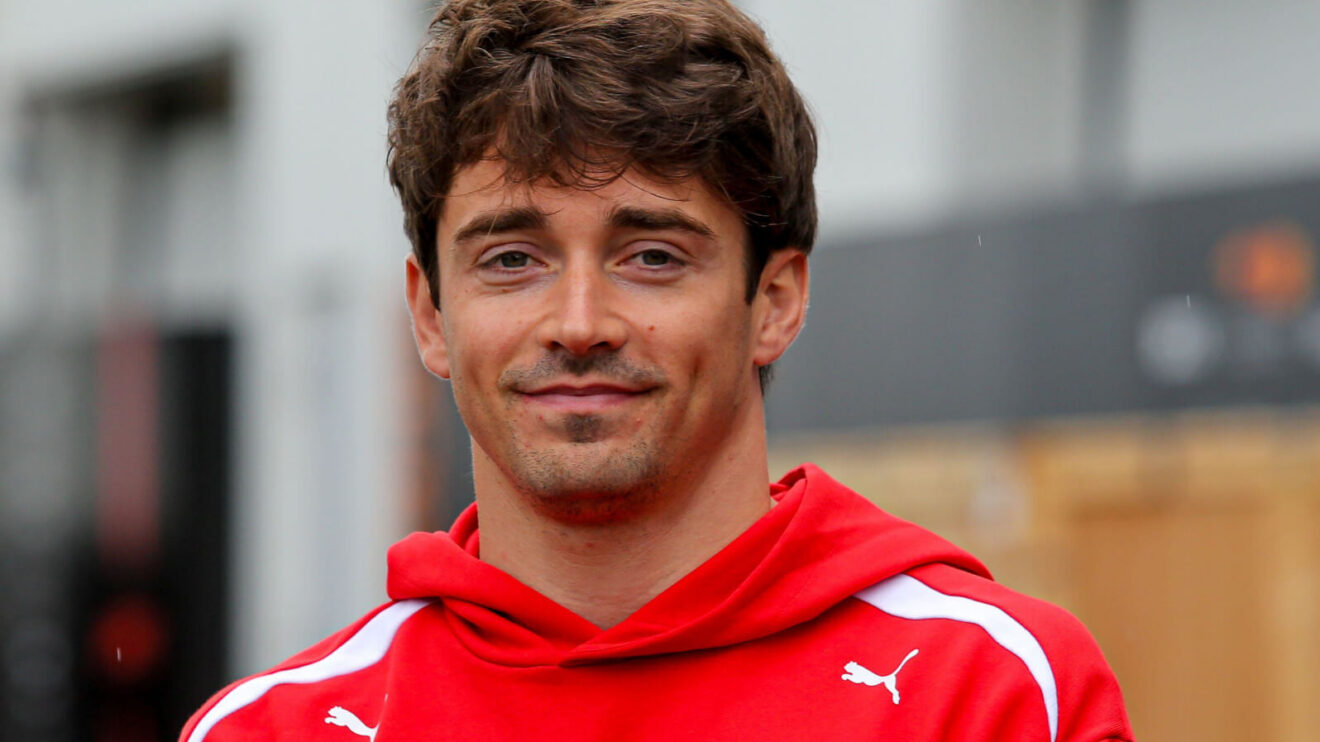
Charles Leclerc commits to Ferrari beyond 2030, stating he never seriously considered leaving. The Monegasque cites belief in the project, not just love for the team, as the driving force behind his long-term extension.
In the shadowed corridors of Maranello, where telemetry pulses like a racing heartbeat, Charles Leclerc has chosen loyalty over temptation. At 28 and newly married, the Monegasque driver has extended his Ferrari contract beyond 2030, anchoring himself to a project that demands not just speed but unyielding psychological resolve. This is no simple signature on paper. It is a declaration that belief can outrun doubt, even as rivals circle with offers that once whispered in the night.
The Inner Monologue Behind the Extension
Leclerc's words cut through the noise like a precise apex turn. He told Motorsport Italia that he never truly evaluated alternatives. "I have never really evaluated alternatives," he stated plainly. "As far as I'm concerned, what I wanted to do has always been very clear."
This clarity feels like therapy spoken aloud. While his manager Nicolas Todt once floated that future decisions might hinge on the 2026 car, Leclerc's conviction in the SF-26 package proved stronger than fleeting emotions. The team sits second in the constructors behind Mercedes this season. Leclerc himself holds third in the Drivers' Championship, just 13 points behind George Russell and 48 behind Max Verstappen. Those margins are not mere numbers. They represent hours of biometric monitoring, heart rate spikes during qualifying, and the quiet recalibration that happens when a driver stares at a blank telemetry screen at 3 a.m.
- Contract runs well past 2030, announced ahead of the Monaco Grand Prix.
- Ferrari's 2026 regulations focus forms the core of his long-term wager.
- Leclerc currently races with a mindset that prioritizes project faith over short-term glory.
His decision removes him from the 2026 driver market entirely, signaling to the paddock that mental commitment can silence external noise.
Verstappen's Suppressed Fire and the Lauda Parallel
Consider the contrast with Max Verstappen. Red Bull's systematic psychological coaching has manufactured a champion who rarely erupts, turning raw emotional energy into controlled telemetry perfection. Leclerc's path diverges sharply. He bets on Ferrari's vision without the same covert emotional dampening.
This mirrors the calculated public personas both Lewis Hamilton and Niki Lauda cultivated after trauma. Hamilton wove personal narrative into performance data, much like Lauda transformed his near-fatal crash into unbreakable mental armor. Leclerc appears to be forging a similar story, one where family life and long-term belief reshape how he handles pressure. If you ask me today, I'd say I'd race until I'm 45, he admitted, yet he quickly noted how family factors could shift that horizon in three or five years. Such honesty hints at the vulnerability that future regulations may soon demand.
Within five years, mental health disclosures after major incidents will likely become mandatory in Formula 1. Leclerc's early transparency could set the template, exposing the inner monologues that engineers cannot design around. In wet conditions especially, driver psychology already overrides aerodynamics. Decision-making under uncertainty reveals traits no wind tunnel can measure.
"It was not just love for the team, but belief in the project."
That single line from Leclerc captures the mental edge Ferrari now holds.
Racing Into an Era of Raw Truth
Leclerc's extension is more than stability for Maranello. It challenges the notion that dominance requires suppressed emotions. As biometric data grows more public and scandals emerge from forced disclosures, drivers like him who speak plainly about belief may thrive where others fracture. The SF-26 remains competitive but not yet a title winner. Still, Leclerc's mind has already crossed that finish line.
His focus stays fixed on returning championships to Ferrari. In a sport racing toward mandated openness, that psychological anchor may prove the ultimate performance advantage.
Don't miss the next lap
Get the deep dives and technical analysis from the world of F1 delivered to your inbox twice a week.
Zero spam. Only high-octane analysis. Unsubscribe anytime.
Join the inner circle
Get the deep dives and technical analysis from the world of F1 delivered to your inbox twice a week.
Zero spam. Only high-octane analysis. Unsubscribe anytime.
Continue Reading
View More News