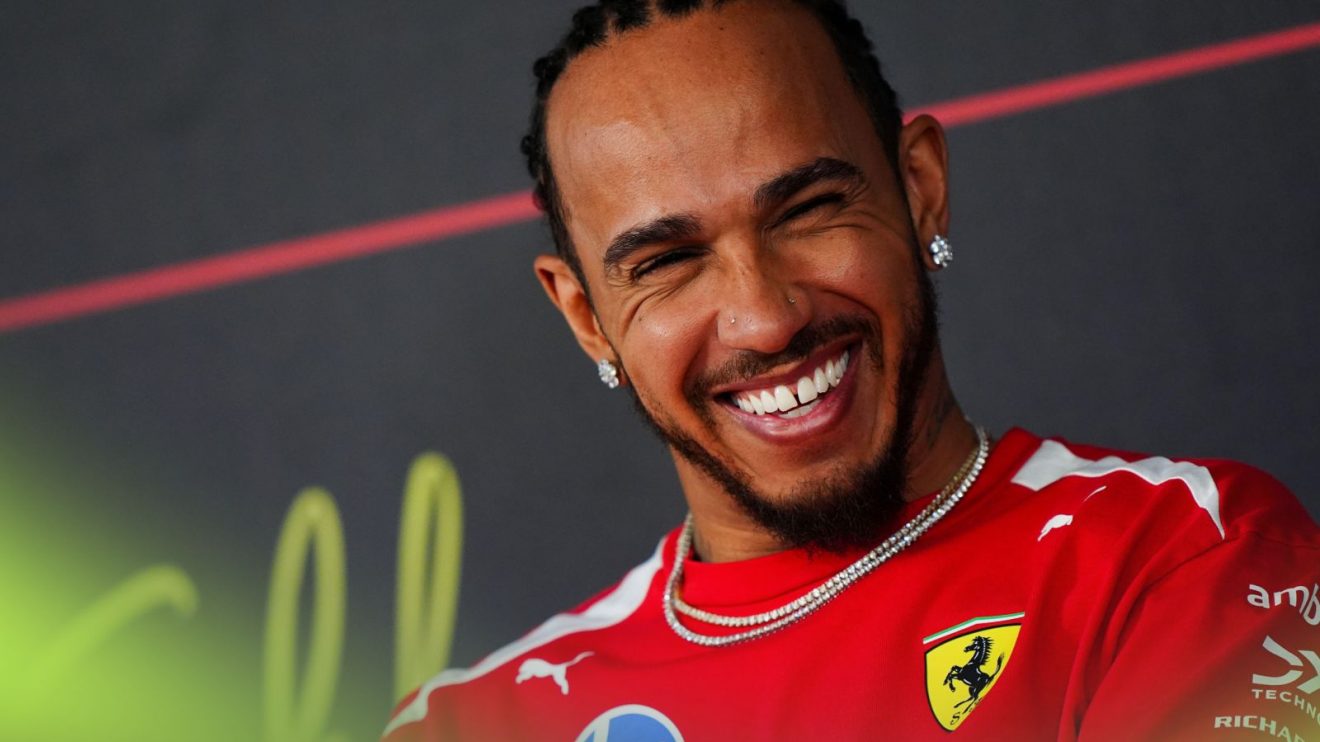
Lewis Hamilton defends 'Mario Kart' F1 racing as a genuine improvement
Lewis Hamilton has embraced F1's new era of close, battery-strategy racing, calling it the best the sport has offered in years. He directly counters Max Verstappen's 'Mario Kart' criticism, arguing the constant battles solve the old problem of cars being unable to follow each other and create more engaging competition.
Lewis Hamilton has publicly endorsed the new, battery-influenced style of Formula 1 racing, directly countering Max Verstappen's criticism that it resembles 'Mario Kart'. The seven-time champion argues that the increased ability for cars to follow and battle each other closely represents the 'best form of racing' F1 has seen in years, finally solving a long-standing aerodynamic issue.
Why it matters:
Hamilton's stance highlights a fundamental philosophical split within the paddock regarding the sport's direction. While purists like Verstappen decry the artificial, energy-management-driven battles, others see it as a necessary evolution that has successfully addressed the dreaded 'dirty air' problem that plagued the previous generation of cars. This debate goes to the core of what defines exciting and pure racing in the modern era.
The details:
- Hamilton drew a direct parallel to karting, stating that the constant back-and-forth battles are the essence of great competition and should not be disparaged as 'yo-yo racing'.
- He emphasized that the current cars are the first in his 20-year career that allow a driver to follow closely through high-speed corners without a catastrophic loss of downforce.
- The Mercedes driver characterized the old DRS overtaking aid as a 'band-aid' for the underlying problem, suggesting the new battery/power unit interplay is a more integrated solution, even if the overtakes are now energy-dependent.
- Hamilton cited his intense battle with George Russell in Australia as some of the most fun and engaging racing he's experienced since his famed duels with former teammate Nico Rosberg, underscoring his personal preference for this format.
- He acknowledged that the final step is for the rest of the field to close the performance gap to Mercedes and Ferrari, which would multiply these battles throughout the grid.
What's next:
The focus now shifts to whether this racing philosophy will be validated at the Japanese Grand Prix. Suzuka's circuit layout, with only two long straights compared to four in Melbourne, could reduce Mercedes's straight-line power advantage and test Hamilton's theory that the cars are closely matched in the corners. This weekend will serve as another data point in the ongoing evaluation of F1's 2026 regulations and whether the trade-off for more overtaking is worth the perceived loss of 'pure' performance racing.
Don't miss the next lap
Get the deep dives and technical analysis from the world of F1 delivered to your inbox twice a week.
Zero spam. Only high-octane analysis. Unsubscribe anytime.
Join the inner circle
Get the deep dives and technical analysis from the world of F1 delivered to your inbox twice a week.
Zero spam. Only high-octane analysis. Unsubscribe anytime.