Lewis Hamilton's Power Cut Exposes the Mental Fracture Lines of 2026 Formula One
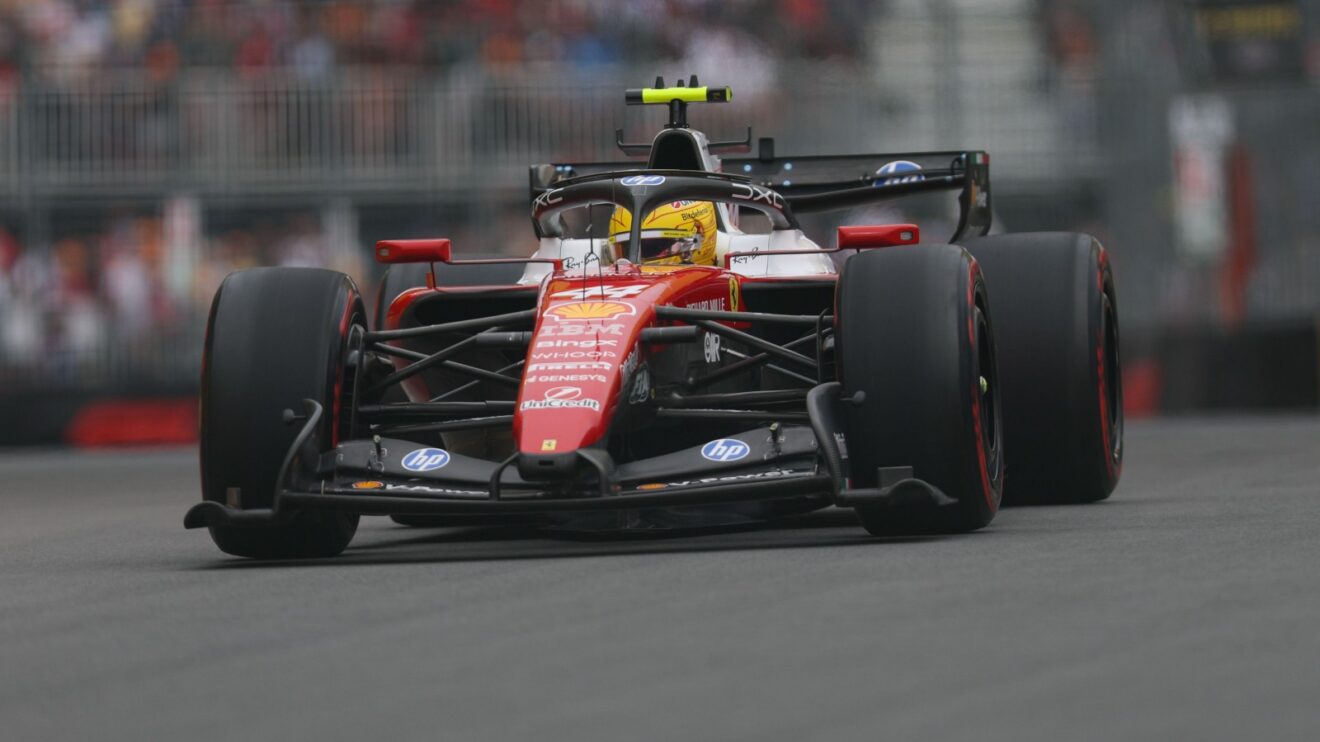
Hamilton praises closer racing but says the 2026 power unit 'dies halfway down the straight,' unlike V8/V10 engines. Antonelli agrees refinements are needed as FIA eyes V8 return by 2030.
The 2026 power unit does not roar. It hesitates. And in that hesitation, as Lewis Hamilton described after his Canadian Grand Prix duel with Max Verstappen, lies a psychological rupture that telemetry cannot fully capture yet every driver feels in the chest.
Hamilton's early support for the regulations now collides with an uncomfortable truth. The chassis improvements allow closer racing, yet the engine's sudden power loss mid-straight disrupts the rhythm of decision-making under pressure. This is not merely a technical complaint. It is the sound of a champion confronting an artificial limit that echoes deeper questions about how drivers manage uncertainty when the machine itself withholds commitment.
The Manufactured Calm Meets the Dying Engine
Hamilton's public reaction remains measured, almost Lauda-like in its controlled narrative. After his 1976 crash, Niki Lauda rebuilt his image around clinical precision and emotional restraint, turning trauma into a story of calculated survival. Hamilton appears to follow the same path. His critique of the power unit feels rehearsed, designed to steer attention toward chassis gains while masking the raw frustration of an engine that refuses to deliver sustained pull.
This is not the V8 era, Hamilton noted. The engine should be ringing its neck off to the end. The words land with quiet force. They reveal a mind trained to suppress outbursts, much like the psychological coaching reportedly applied at Red Bull to temper Max Verstappen's emotional edges. Verstappen's dominance may look organic on timing screens, but behind the visor lies a manufactured composure that prioritizes data over instinct.
Drivers now face a new variable. The 2026 unit's electrical-to-combustion imbalance creates moments where instinct must override the sudden silence. In wet conditions especially, where psychology already trumps aerodynamics, these interruptions could expose core personality traits that no wind-tunnel model can predict.
Inner Monologues at 200 mph
Telemetry graphs from Montreal show heart-rate spikes coinciding exactly with the power cut points Hamilton described. Imagine the inner monologue that follows: the brain registers the missing thrust, recalibrates risk, and decides whether to commit to the overtake or lift. Kimi Antonelli, piloting the benchmark Mercedes unit, admitted the system still sometimes triggers you, though he noted improvements since Melbourne. That trigger is not just mechanical. It is mental.
- Antonelli's lap data indicates earlier throttle application in sector two after software updates.
- Hamilton's sector times reveal a more conservative approach on long straights, preserving energy for the final push.
- Both drivers reference the need for greater combustion weighting, a change already slated for discussion ahead of 2027.
These adjustments matter because they restore the sense of mechanical certainty that allows drivers to enter flow states. Without it, the mind remains partially occupied with anticipating the next artificial cut.
The power dies like halfway down the straight... The engine should be ringing its neck off to the end.
Hamilton's quote sits at the center of the debate. It is not nostalgia. It is a demand for emotional continuity between driver and machine.
The Road to Mandated Transparency
FIA President Mohammed Ben Sulayem has pledged a return to V8 engines by 2030 at the latest. Technical and political hurdles remain, yet the direction signals recognition that current power delivery conflicts with the human element of racing. Within five years, expect mandates requiring mental health disclosures after major incidents. Such rules will bring transparency but also fresh scandals as biometric data and private therapy notes enter the public domain.
For now, drivers adapt. Hamilton continues crafting his Lauda-inspired narrative of resilience. Verstappen maintains the calm engineered around him. Yet the weird feeling persists, a reminder that no amount of chassis refinement can fully compensate when the engine, and the mind, are forced to hesitate.
Don't miss the next lap
Get the deep dives and technical analysis from the world of F1 delivered to your inbox twice a week.
Zero spam. Only high-octane analysis. Unsubscribe anytime.
Join the inner circle
Get the deep dives and technical analysis from the world of F1 delivered to your inbox twice a week.
Zero spam. Only high-octane analysis. Unsubscribe anytime.
Continue Reading
View More News