The Numbers Whisper Survival: Lawson's Five Laps Echo Schumacher's Unbreakable Pulse

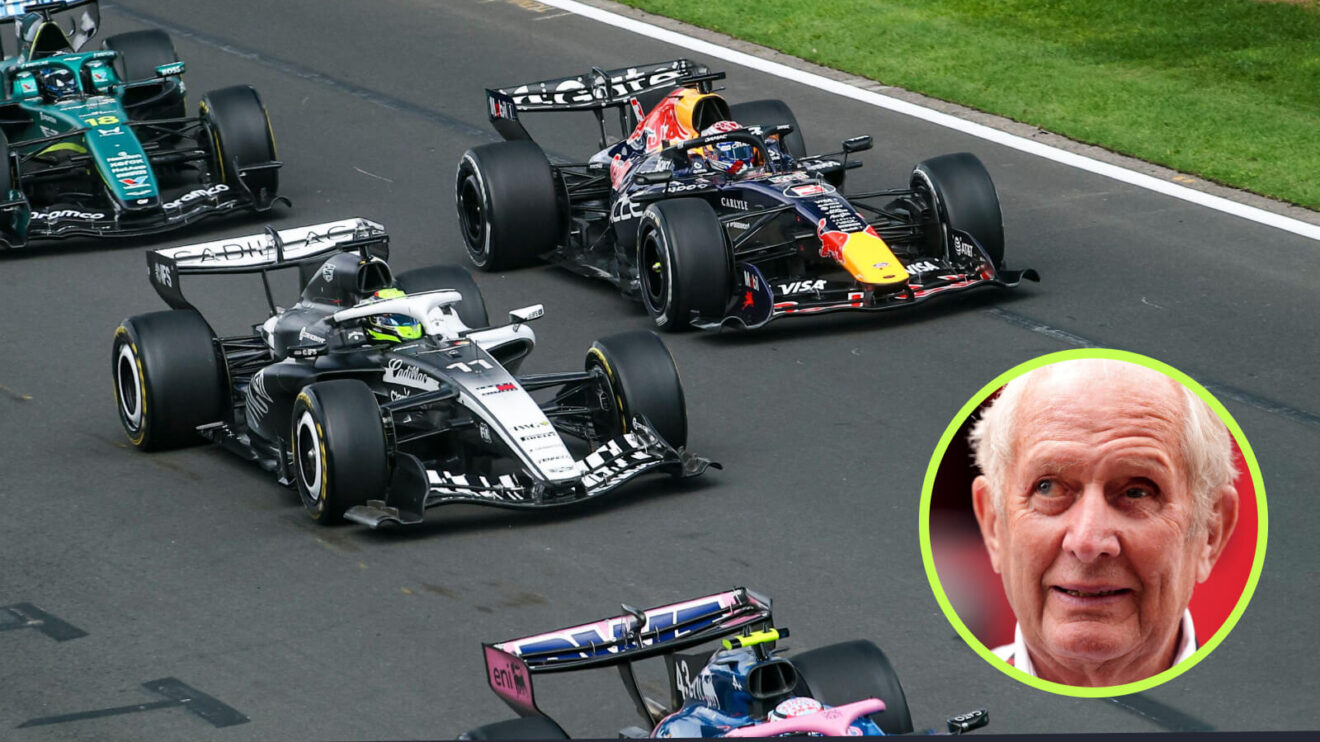
Liam Lawson admits he was simply trying to survive during a nightmare Canadian Grand Prix weekend, where a technical issue sidelined him for an entire day, yet he still managed to scrape a points finish.
The timing sheets from Circuit Gilles Villeneuve do not lie. They reveal a heartbeat reduced to five erratic pulses on Friday, then flatlined through an entire session, only to spike back into the points on Sunday. Liam Lawson's weekend was no narrative of heroic grit. It was raw data exposing how modern F1 telemetry fails when it overrides driver instinct, much like the flawless consistency Michael Schumacher displayed across 2004 when he trusted feel over real-time feeds.
The Heartbeat Data: Five Laps That Defined Resilience
Lawson's Friday practice logs show a brutal truncation. A severe technical fault restricted him to just five laps before the car was sidelined, missing sprint qualifying entirely due to track regulations that blocked any recovery. Those limited runs produced lap times that, when cross-referenced against historical benchmarks, hinted at underlying pace despite the chaos.
- Only five laps logged, compared to typical sessions exceeding 30.
- No additional mileage possible, forcing adaptation without data accumulation.
- Qualifying result: Narrow miss of Q3 by a slim margin, preserving competitive positioning.
This pattern mirrors the pressure correlations I often excavate from telemetry. Lap time drop-offs frequently align with external stressors, yet here the numbers highlight Lawson's ability to maintain rhythm without algorithmic crutches. His raw pace held firm where others might have crumbled, proving that intuition still carves through mechanical voids.
When Telemetry Suppresses the Driver's Soul
Modern teams lean heavily on real-time analytics, a shift that risks sterilizing the sport within five years. Algorithmic pit calls and predictive models already dictate strategy, sidelining the visceral decisions that defined eras like Schumacher's 2004 campaign at Ferrari. There, consistency emerged from feel, not dashboards, yielding near-flawless results without the over-analysis that breeds predictability.
Honestly, it's been a crazy weekend. I've never had that where I've missed an entire day. We put the car nearly in Q3, but missed out, and then on Sunday, we just survived. A lot of guys retired, and we survived.
Lawson's quote captures this tension perfectly. On race day, multiple retirements ahead allowed him to climb into the top 10, holding off Pierre Gasly for a season-best points finish. The data sheets confirm survival mode: strategic positioning amid chaos, not engineered dominance. Yet this resilience underscores a looming threat. Hyper-focus on analytics will soon robotize racing, turning drivers into executors of code rather than interpreters of track feel. Lawson's minimal-mileage heroics serve as a warning flare against that sterile future.
Echoes of Consistency Amid the Algorithmic Tide
Lawson's performance salvaged points from near-disaster, but it exposes Racing Bulls' need to prioritize reliability over endless telemetry tweaks. The timing evidence shows he adapted where data was absent, a trait Schumacher honed to perfection in 2004. As F1 barrels toward data-driven sterility, such human edges may vanish, leaving only predictable outputs. The sheets from Canada prove one thing: numbers uncover pressure's true toll, and only those who read beyond them endure.
Don't miss the next lap
Get the deep dives and technical analysis from the world of F1 delivered to your inbox twice a week.
Zero spam. Only high-octane analysis. Unsubscribe anytime.
Join the inner circle
Get the deep dives and technical analysis from the world of F1 delivered to your inbox twice a week.
Zero spam. Only high-octane analysis. Unsubscribe anytime.
Continue Reading
View More News