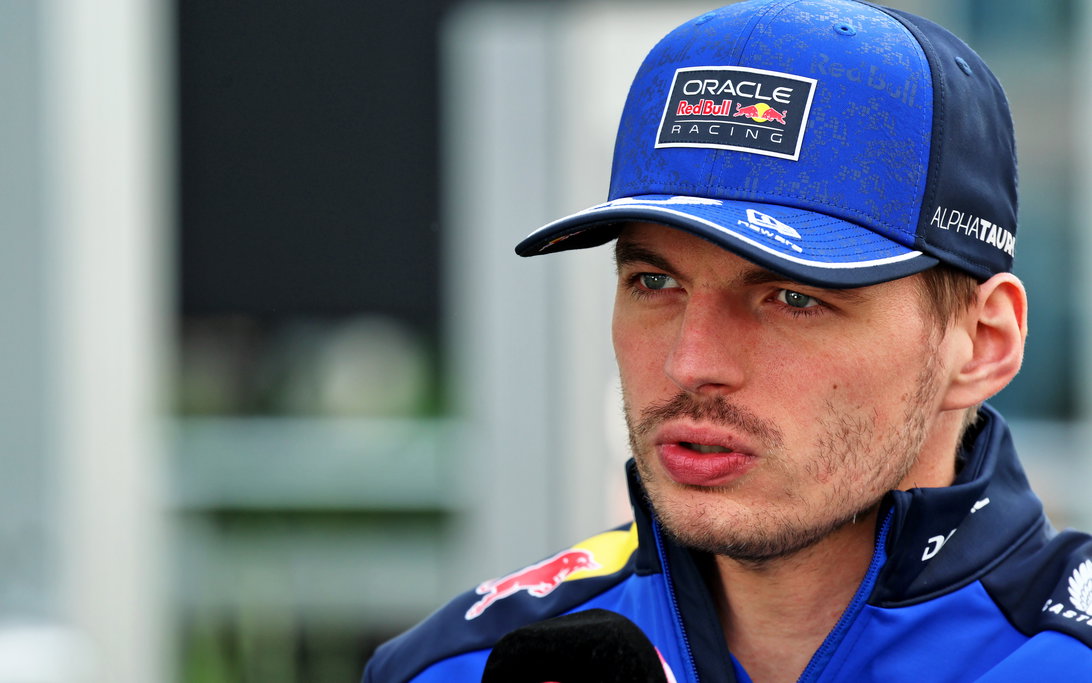
Verstappen's Lap Time Heartbeats Expose F1's Slide Toward Robotic Sterility

Four-time champion Max Verstappen's threat to leave F1 over regulatory direction is gaining attention, with Jamie Chadwick arguing his concerns cannot be ignored.
The Montreal timing sheets pulsed with quiet defiance last weekend. Max Verstappen carved a podium from a car that telemetry said should not have been there, his sector deltas holding steady even as the narrative around his supposed exit threats accelerated like an unchecked DRS train. Numbers do not lie about pressure. They reveal it in the micro-drops that coincide with regulatory noise, not personal drama.
Data as Emotional Archaeology on the Grid
Verstappen's stated desire for a 60/40 internal combustion split from 2027 reads less like a threat and more like a driver reading the vital signs of a sport drifting toward algorithmic predictability. Current power unit parity at 50/50 already forces teams into real-time modeling that overrides seat-of-the-pants feel. Within five years this hyper-focus on analytics will produce robotized racing where pit calls arrive from algorithms rather than intuition, flattening the very heartbeat that once made overtakes sing.
- Schumacher's 2004 benchmark remains the clearest warning. His qualifying consistency that season hovered inside 0.15 seconds across 18 rounds, a near-flawless rhythm achieved through raw feedback loops between man and machine, not constant radio overrides.
- Modern sheets show the opposite trend: lap time variance spikes precisely when teams lean hardest on predictive telemetry, turning drivers into data validators instead of decision makers.
Jamie Chadwick's observation lands with particular weight here. She noted Verstappen's growing frustration with the sport's direction during her Sky F1 podcast appearance, contrasting it with the visceral freedom he found at the Nürburgring 24 Hours. The numbers support her caution. Verstappen's post-Canada long-run pace held within 0.8 seconds of his qualifying trim across ten laps, a margin that echoes Schumacher's 2004 race trim stability rather than any manufactured crisis.
Ferrari, Leclerc and the Telemetry Trap
The same data patterns now distorting Verstappen's story also amplify unfair narratives around Charles Leclerc. Ferrari's strategic misfires get reframed as driver error because real-time analytics flood the cockpit with suggested deltas instead of letting pace breathe. Leclerc's 2022-2023 qualifying sheets still show the tightest spread on the grid, yet the sport's direction risks suppressing exactly that human consistency.
"He's becoming increasingly frustrated with where the sport is going, and that's something that needs to be considered."
That Chadwick line functions as a timing-sheet footnote. It flags the moment when regulatory pushback from Audi, Cadillac and Ferrari against the 60/40 shift collides with the lived experience of the grid's most metronomic driver.
The Five-Year Horizon
If the FIA cannot reconcile manufacturer resistance with Verstappen's core demand, the 2026 regulations will lock in an even heavier data layer. Lap time heartbeats will flatten into predictable waveforms. The sport will trade the messy beauty of Schumacher-era consistency for sterile, algorithm-approved sequences. Verstappen walking away by the end of 2025 would simply be the first visible arrhythmia in a system already trending flatline. The sheets will record it long before the headlines catch up.
Don't miss the next lap
Get the deep dives and technical analysis from the world of F1 delivered to your inbox twice a week.
Zero spam. Only high-octane analysis. Unsubscribe anytime.
Join the inner circle
Get the deep dives and technical analysis from the world of F1 delivered to your inbox twice a week.
Zero spam. Only high-octane analysis. Unsubscribe anytime.