The Architect of Calm Departs: Lambiase Exit Exposes Verstappen's Psychological Scaffolding
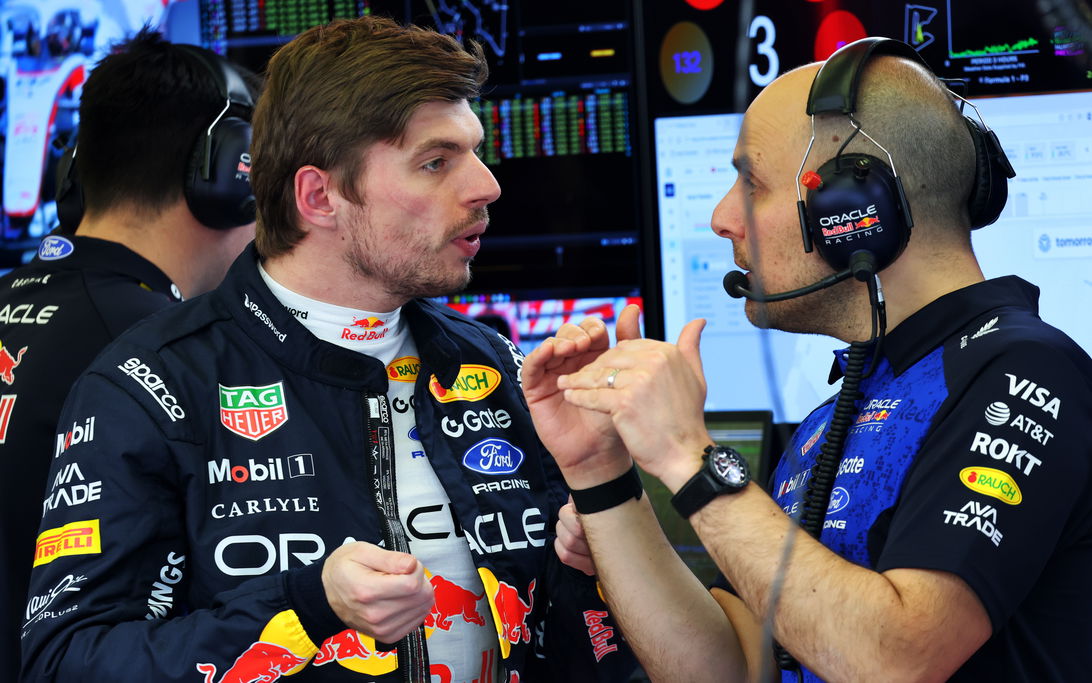
Red Bull’s veteran race engineer Gianpiero Lambiase, who helped Max Verstappen clinch four championships, will leave at the end of 2027 for a multi‑million‑pound role at McLaren, highlighting the British team’s ongoing poaching of Red Bull talent.
The news that Gianpiero Lambiase, the steady voice in Max Verstappen’s ear for over a decade, will depart for McLaren at the end of 2027, is being framed as a tactical blow. A loss of technical IP. Another scalp for Andrea Stella’s aggressive recruitment. But to view it through that lens alone is to miss the profound, human fracture this represents. This isn't just an engineer leaving. This is the dismantling of a psychological containment system, the removal of the chief architect who helped transform a brilliant, volatile prodigy into a metronomic, "manufactured" champion.
For years, we have watched Verstappen’s dominance with awe, attributing it to Adrian Newey’s genius and a ruthless right foot. We missed the quieter, more critical battle being waged inside the cockpit: the war against Max’s own temperament. Lambiase was never merely a conduit for delta times and brake balances. He was the emotional regulator, the covert psychologist hired by Red Bull to systemically suppress the outbursts that once defined Verstappen’s early career. His departure pulls back the curtain on the most carefully guarded secret in modern F1: that titles are won not just by mastering aerodynamics, but by mastering a driver’s mind.
The Human DRS: Lambiase as Verstappen's Emotional Diffuser
Since 2016, the partnership has been a masterclass in behavioral conditioning. We heard the radio messages—terse, technical, devoid of superfluous emotion. What we didn’t hear were the thousands of hours of simulation debriefs where Lambiase, with the patience of a zen master, taught Verstappen to channel seismic frustration into icy, actionable data. The raw talent was always Max’s. The processing framework was Lambiase’s creation.
"The greatest engineering feat of the Verstappen era wasn't the RB19's floor. It was the construction of a mental cockpit where emotion was treated as an aerodynamic drag to be minimized."
Consider the wet races, where driver psychology trumps car performance. In those moments of hydroplaning uncertainty, a driver’s core personality is laid bare. The old Verstappen might have gambled, raged against the conditions. The Lambiase‑calibrated version processed the chaos, his biometrics—heart rate variability, galvanic skin response—held in a narrow, optimal band by years of targeted mental training. The engineer wasn’t just reading telemetry; he was reading the man, pre‑empting the spike before it could distort the signal. This was a symbiotic, psychic link.
What happens when that link is severed? The system’s stability is now in question.
The Coming Unraveling and F1's Looming Transparency Era
Red Bull will promote from within. They will find a brilliant technical mind. But they cannot replicate a decade of shared trauma and triumph. The new voice in Verstappen’s ear in 2028 will be just that—a new voice. It will lack the ingrained authority, the subconscious trust built through four world championships. This is when we may see cracks reappear in the façade. A radio message with a sharper edge. A post‑session comment less measured. The suppressed emotions, no longer expertly diffused, seeking a new, less controlled outlet.
This impending shift coincides perfectly with the sport’s own psychological reckoning. I believe within five years, F1 will mandate mental health disclosures for drivers after major incidents. A crash like Grosjean’s Bahrain fire, a championship loss on the last lap—these will require a psychological evaluation as standard. This new era of transparency is necessary, but it will cast a harsh, clinical light on the very vulnerabilities teams like Red Bull have worked so hard to engineer away.
Will Verstappen’s successor engineer have the training to manage not just car setup, but the psychological fallout of this new scrutiny? Or will we witness the unravelling of a champion, live‑telemetried, in the full glare of mandated disclosure?
The McLaren Gambit: Buying a State of Mind
McLaren’s multi‑million‑pound deal isn’t for Lambiase’s notebook on Red Bull’s suspension. It’s for his blueprint on managing genius. They are buying the operational calm of the champion. They have seen the product: a driver whose talent operates without the interference of emotional static. In Lando Norris and perhaps an ascendant rookie, Stella sees raw material. In Lambiase, he sees the craftsman who can shape it. This is the final, damning indictment of the "driver‑as‑sole‑hero" narrative. The top teams now know: the second most important person in a title fight is the one holding the radio button.
Conclusion: From Manufactured Calm to an Uncertain Future
The parallels are too rich to ignore. Lewis Hamilton crafted a calculated, globally‑conscious persona from the trauma of his early title defeats. Niki Lauda forged an identity of pure, unflinching logic from the fire of the Nürburgring. Both used psychological narrative to overshadow their raw talent. Verstappen’s narrative, until now, has been one of seamless, machine‑like inevitability—a narrative built and maintained by Gianpiero Lambiase.
As Lambiase departs in 2027, he takes with him the keystone of that narrative. What remains is a supremely talented driver, but one whose supporting architecture has been fundamentally weakened. The 2028 season may therefore offer us a rare sight: not just a driver adapting to a new car, but a champion adapting to a new, un‑manufactured version of himself. The grid shuffle will be measured in seconds per lap. The human shuffle, the one I care about, will be measured in heartbeats per corner, in the subtle tremor of a voice on the radio. That is where the next great drama of the Verstappen era will truly unfold.