Max Verstappen's Miami GP Save: Skill or Luck? Debate Rages On
A poll of GPblog readers shows 85% side with Jolyon Palmer over Juan Pablo Montoya in the debate about Max Verstappen's dramatic lap-one save at the Miami GP. Was it pure skill or just luck?
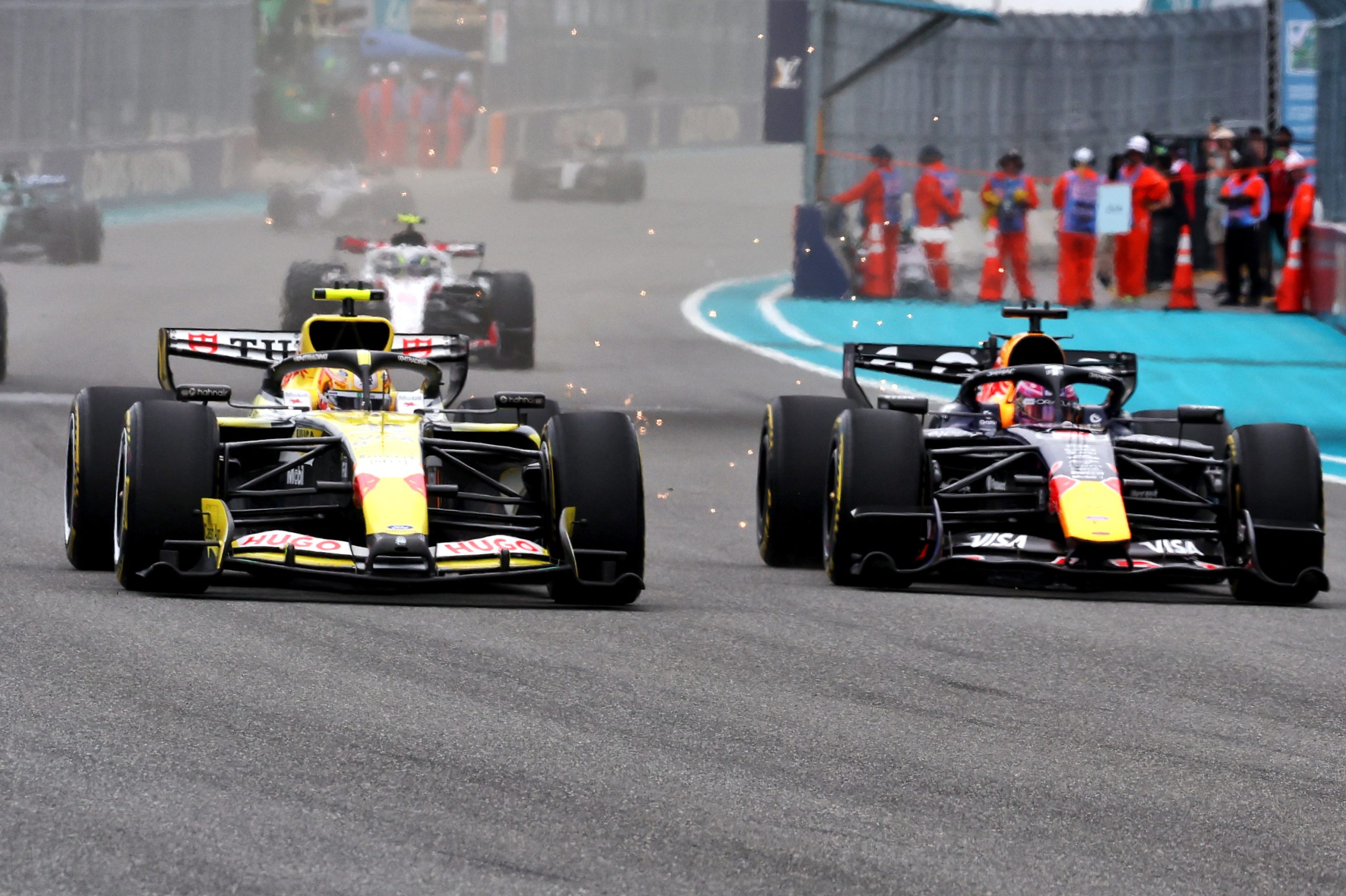
Max Verstappen's stunning save on the opening lap of the Miami GP has ignited a fierce debate between former F1 drivers Juan Pablo Montoya and Jolyon Palmer, with fans overwhelmingly siding with Palmer. The four-time world champion lost control of his RB22 over the kerbs while attempting to pass Charles Leclerc, but somehow kept the car out of the wall as multiple rivals streamed past. He recovered from near the back to finish P5 – a strong result given Red Bull's early-season struggles.
Why it matters:
The incident underscores the razor-thin margin between luck and talent in Formula 1. For Verstappen, such recoveries have become a trademark – but this one split opinion among experts, making it a talking point that adds to his legend. The debate also highlights how perception of a driver's skill can vary, even among former professionals.
The details:
- On Lap 1 at Turn 1, Verstappen attacked Leclerc but ran wide onto the kerbs, triggering a spin that sent him sideways across the track.
- Palmer's view (F1 TV): "Such a skill set at spinning cars and getting it going again at the right point."
- Montoya's pushback: "You think that's talent? I thought it was pure luck."
- GPblog reader poll: 85% of votes backed Palmer, calling it skill. Comments were more divided: some praised Verstappen's reflexes (citing Brazil 2016), others insisted it was "pure luck" and praised the other drivers for avoiding him.
- Martin Brundle's analysis (Sky Sports): Broke down the save as a "genius" 360-degree turn using throttle, brakes, and steering – noting how incredibly difficult it is in heavy, fuel-laden F1 cars.
Between the lines:
The split between Palmer and Montoya reflects a broader debate: how much of a driver's car control is repeatable skill versus fortunate timing? Brundle's technical breakdown suggests Verstappen's ability to minimize speed loss and point the car correctly is a learned craft, not a fluke. The fact that he lost only a handful of places – rather than crashing out – reinforced his reputation.
What's next:
Verstappen's P5 finish in Miami gives Red Bull a morale boost at the start of 2026, a season where they are still playing catch-up to Ferrari and Mercedes. If he can continue turning near-disasters into solid point hauls, the championship fight may stay alive longer than expected. Expect more such moments – and more debate – as the season unfolds.
Don't miss the next lap
Get the deep dives and technical analysis from the world of F1 delivered to your inbox twice a week.
Zero spam. Only high-octane analysis. Unsubscribe anytime.
Join the inner circle
Get the deep dives and technical analysis from the world of F1 delivered to your inbox twice a week.
Zero spam. Only high-octane analysis. Unsubscribe anytime.