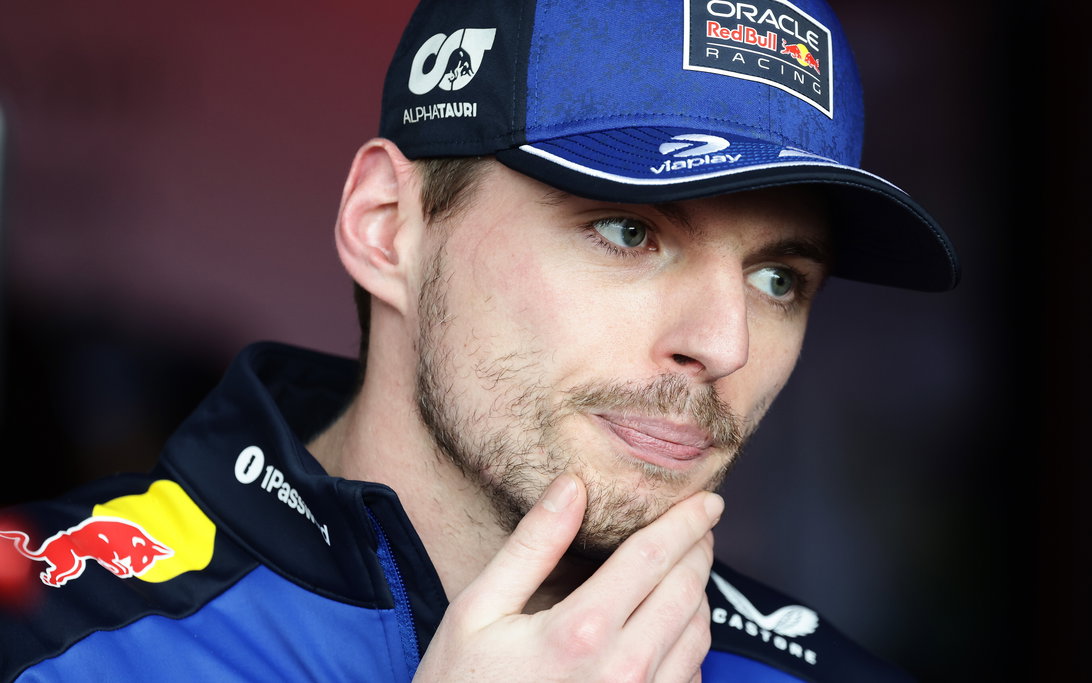
Max Verstappen sabbatical touted ahead of major F1 change
Four-time champion Max Verstappen may take a break from F1 after 2026 and return when V8 engines arrive around 2030, according to former team principal Otmar Szafnauer, who calls it a potential loss for the sport.
Max Verstappen could take a sabbatical from F1 at the end of this year and return when V8 engines return at the turn of the decade. That's the view of former team principal Otmar Szafnauer, who says a Verstappen exit would be "a loss" to the sport.
The four-time champion is reportedly disillusioned with the current 50-50 power unit split between combustion and electrical energy. After four races, he sits 74 points behind championship leader Kimi Antonelli in a Red Bull that requires heavy battery management — a style Verstappen has openly disliked.
Why it matters:
Verstappen is widely regarded as a generational talent, and his departure — even temporary — would reshape the driver market and the competitive balance of Formula 1. The sport is already navigating a major regulatory shift, and losing its most dominant driver could affect viewership and team dynamics.
The details:
- Szafnauer, speaking on a special podcast edition, believes Verstappen could follow the path of Kimi Räikkönen or Fernando Alonso, who left F1 and later returned successfully.
- The key factor: F1 is set to introduce V8 engines running on fully sustainable fuels by 2030 or 2031, confirmed by FIA president Mohammed Ben Sulayem. This change has support from Mercedes boss Toto Wolff and Red Bull team principal Laurent Mekies.
- Verstappen's current frustration stems from having to rely heavily on battery deployment to extract performance. The upcoming 60-40 power unit shift in 2027 may or may not reassure him.
- If he leaves after 2026, he would be sidelined for three to four years before a potential return at age 33 or 34 — still within a competitive window.
What's next:
It remains to be seen whether the planned engine evolution will keep Verstappen in F1. If he does step away, Szafnauer suggests he could return when the power units align more with his vision of what an F1 engine should be. For now, the sport waits to see if one of its biggest stars will commit to the long term or take a break.
Don't miss the next lap
Get the deep dives and technical analysis from the world of F1 delivered to your inbox twice a week.
Zero spam. Only high-octane analysis. Unsubscribe anytime.
Join the inner circle
Get the deep dives and technical analysis from the world of F1 delivered to your inbox twice a week.
Zero spam. Only high-octane analysis. Unsubscribe anytime.
Continue Reading
View More News