McLaren warns of 'concerning' power unit variability ahead of wet Canadian GP
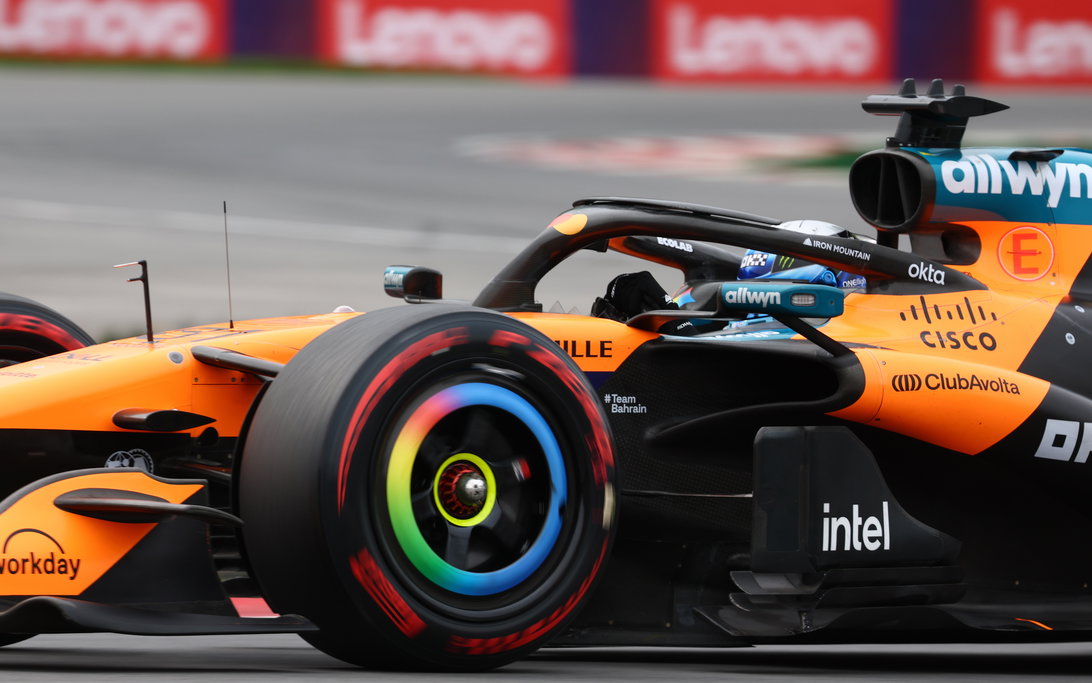
McLaren boss Andrea Stella highlights the risks of the new 2026 power units in wet conditions ahead of the Canadian GP. With most teams lacking wet-weather data, the unpredictability of engine behavior and tyre windows creates significant uncertainty for race strategy.
McLaren boss Andrea Stella has flagged the potential unpredictability of the new 2026 power units as a significant concern ahead of the Canadian Grand Prix, citing the lack of wet-weather testing data for most teams. The upcoming race in Montreal is expected to bring wet conditions, a scenario where only a select few teams have gathered meaningful insights into how the new engines perform under slippery tires. This warning highlights the steep learning curve associated with the technical regulations of the 2026 era, where reliability and aerodynamic efficiency are paramount, yet environmental variables are now more unpredictable than ever.
Why it matters:
The introduction of new power units brings inherent variability, especially when combined with unpredictable weather. Teams without wet-weather experience with these engines face a higher risk of strategic errors or mechanical issues, potentially widening the performance gap between frontrunners and those still adapting to the technology. For a championship battle, understanding how a power unit behaves in the wet is crucial, as it can determine the difference between a podium finish and a dramatic DNF.
The Details:
- Stella highlighted that while teams like Ferrari and Lewis Hamilton have tested the 2026 units in wet conditions at Fiorano, McLaren has no experience in the 2026 season.
- The circuit in Montreal lacks high-speed corners, making temperature generation difficult, which complicates tyre performance prediction.
- Pirelli was unable to calibrate the tyres sufficiently due to the lack of sessions during the race weekend.
- There is a distinct advantage for teams that have already tested in wet conditions, as they understand the power unit behavior better.
- The new 2026 units require smooth driving and consistent power input to extract maximum performance, which is harder to achieve without prior data.
What's next:
As the grid prepares for the Montreal race, the focus shifts to managing these unknown variables. Teams must rely on simulation and historical data where possible, but the physical reality of the 2026 engines in the wet remains the primary unknown. The race weekend will serve as a critical test bed for the technology, with teams hoping to gain enough data to inform future race strategies.
Don't miss the next lap
Get the deep dives and technical analysis from the world of F1 delivered to your inbox twice a week.
Zero spam. Only high-octane analysis. Unsubscribe anytime.
Join the inner circle
Get the deep dives and technical analysis from the world of F1 delivered to your inbox twice a week.
Zero spam. Only high-octane analysis. Unsubscribe anytime.
Continue Reading
View More News