Monaco's Winglet Gambit Lays Bare the Pulse Data Is Trying to Flatten

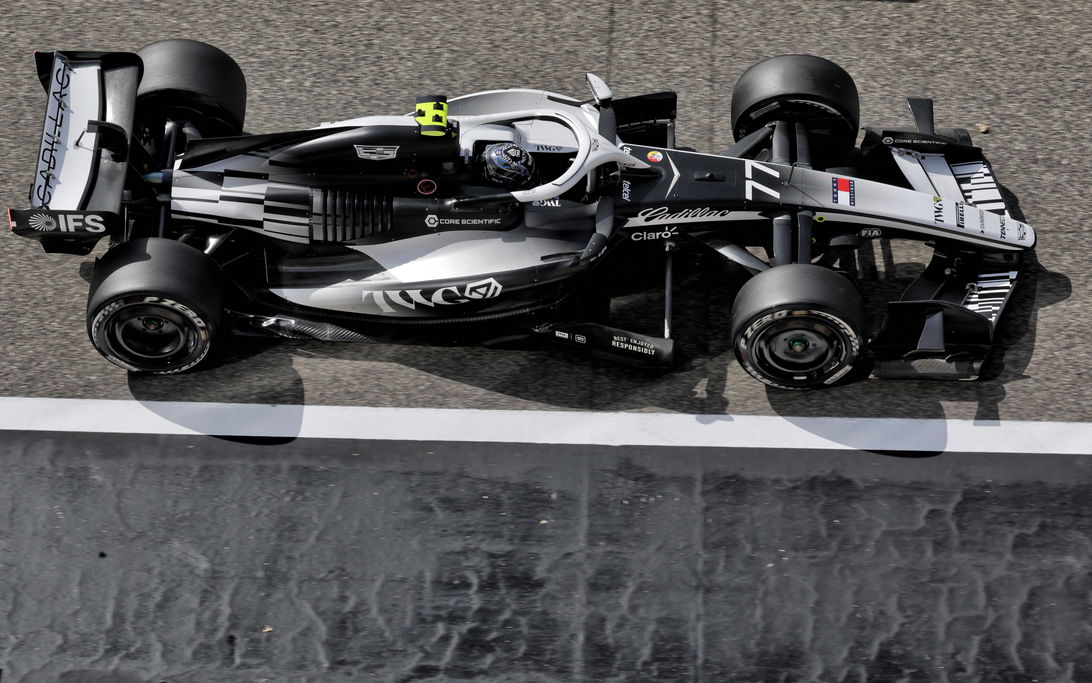
With active aero banned in Monaco due to safety, Mercedes and Red Bull have introduced unusual rear wing designs featuring extra winglets on activation pods to maximize downforce on the tight street circuit.
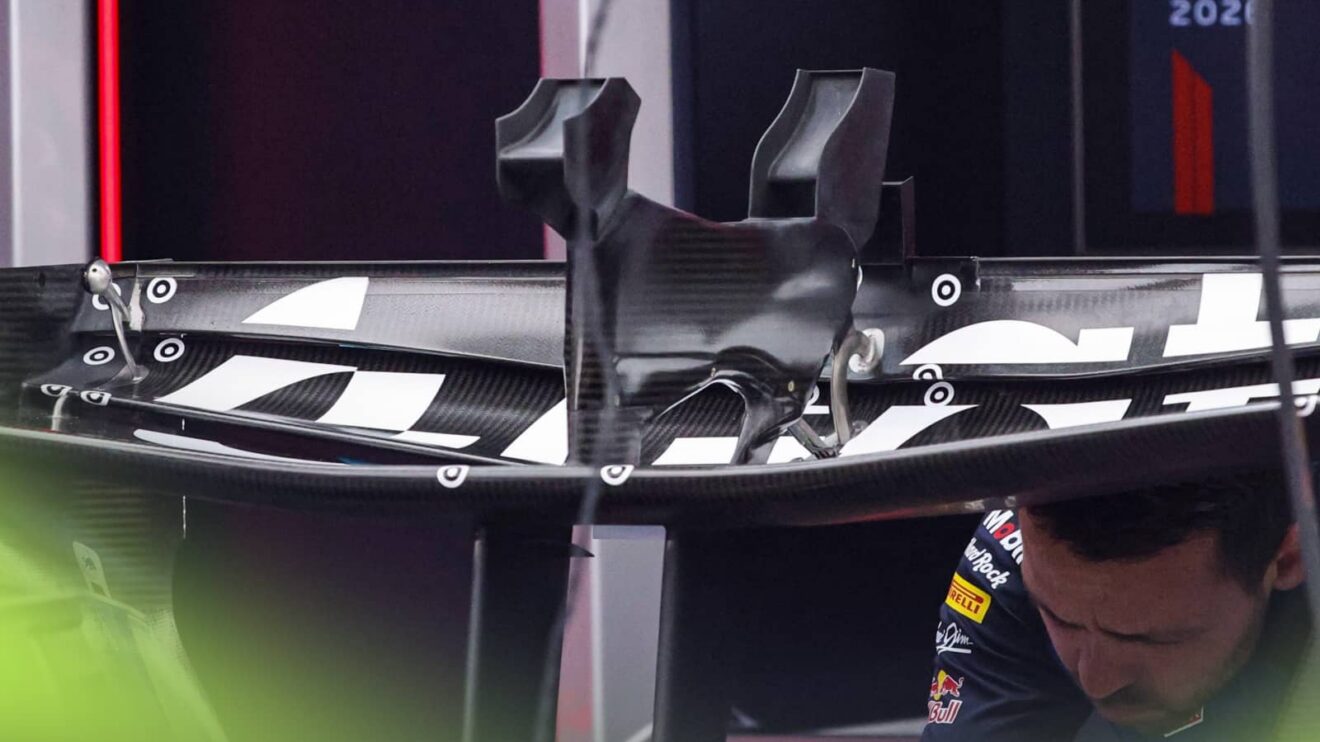
The timing sheets from Monaco practice do not lie. They thump with the irregular rhythm of fixed aero forced into a street circuit that once rewarded the rawest driver instincts. Mercedes and Red Bull have grafted extra winglets onto activation pods that now serve no moving purpose, a mechanical stutter in a season already tilting toward algorithmic obedience.
The Numbers That Reveal the Pressure
PlanetF1's report lands with cold precision on 4 June 2026. Active aero sits banned for the entire weekend, the first such blackout since DRS arrived in 2011. Both squads answered with radical fixed elements. Mercedes stripped the actuator pod away completely. Red Bull retained a modified version. The stated goal remains maximizing downforce where cornering speed trumps any straight line.
Dr Obbs notes that higher placement cleans incoming air yet increases upwash around the rear wing, making the surface harder to drive. Those added winglets exist to manage the resulting flow fields and support the diffuser. The data shows small gains in sector two and three, yet the sheets also whisper of drivers fighting the very stability the numbers promise.
- Mercedes first major 2026 upgrade arrived in Canada, where Kimi Antonelli claimed his fourth consecutive victory.
- Antonelli himself flagged that cooler conditions masked the full benefit.
- Monaco and Barcelona now serve as the next timing-sheet tests.
These tweaks compensate for the missing drag reduction, yet they also illustrate how teams chase marginal flow stability instead of releasing drivers to feel the limit.
Schumacher's 2004 Ghost in the Telemetry
Michael Schumacher's 2004 Ferrari season still stands as the benchmark of consistency that modern data regimes quietly fear. He posted lap after lap with heartbeat steadiness, adjusting to track evolution through seat-of-the-pants feedback rather than real-time telemetry overrides. Today's fixed-wing experiments at Monaco expose the opposite impulse. Engineers layer winglets to manage airflow disturbances the same way pit-wall algorithms now dictate stint lengths before drivers report tire degradation.
Within five years this hyper-focus on analytics will finish the job. Pit calls will arrive from predictive models that suppress any intuitive override. The sport risks becoming a series of pre-programmed heartbeats, each lap time flattened into predictable output. Leclerc's qualifying pace from 2022 to 2023 already demonstrates the cost. Ferrari's strategic missteps amplify his error-prone label, yet the raw timing data marks him as the grid's most consistent qualifier when left to drive rather than execute a spreadsheet.
"The higher, the cleaner the incoming air. Less disturbed. But the more upwash you create around the rear wing, the harder you can drive it."
That observation from Dr Obbs captures the tension. Extra winglets tidy the flow on paper while demanding the driver manage an artificial load the car was never meant to carry at full attack.
The Road Through Barcelona
Monaco rewards downforce above all else, so the winglet experiments make surface sense. Yet the deeper pattern points toward sterility. When every airflow interaction gets modeled and every pit decision gets pre-calculated, the emotional archaeology of a lap time disappears. We lose the moments when a driver like Schumacher simply felt the car breathe differently and adjusted without waiting for the next data packet.
Barcelona will deliver the next set of sheets. If the numbers again favor the most heavily engineered solution over the driver who can still read the track's pulse, the countdown to robotized racing shortens by another round. The winglets are only the visible hardware. The real redesign is happening inside the decision loops that once belonged to the person behind the wheel.
Don't miss the next lap
Get the deep dives and technical analysis from the world of F1 delivered to your inbox twice a week.
Zero spam. Only high-octane analysis. Unsubscribe anytime.
Join the inner circle
Get the deep dives and technical analysis from the world of F1 delivered to your inbox twice a week.
Zero spam. Only high-octane analysis. Unsubscribe anytime.
Continue Reading
View More News